
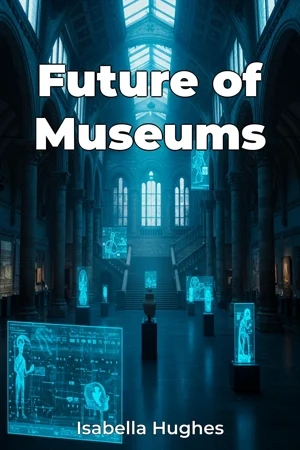
About This Book
Are museums on the verge of a technological renaissance, or are they facing an existential crisis in an increasingly digital world? "Future of Museums" delves into this critical juncture, exploring how technological advancements, evolving audience expectations, and shifting cultural landscapes are reshaping these institutions. This book examines not just the technologies themselves but also their profound implications for art, accessibility, and the very definition of a museum's role in society. This book argues that the survival and relevance of museums in the 21st century hinge on their ability to strategically integrate technology while preserving their core mission of stewardship and education. We must adapt. It is not simply about adding digital bells and whistles; it’s about fundamentally rethinking how museums connect with audiences, preserve cultural heritage, and foster understanding in an age of rapid technological change. The book begins by establishing the historical context of museums, tracing their evolution from repositories of artifacts to dynamic centers of cultural exchange. It then introduces three key themes: the integration of artificial intelligence (AI), the creation of truly immersive digital experiences, and the ethical considerations surrounding technology in museums. The AI section investigates applications such as personalized tours, automated cataloging, and enhanced accessibility for visitors with disabilities. The digital experience exploration assesses virtual reality (VR), augmented reality (AR), and interactive installations that redefine visitor engagement. Finally, the volume addresses critical questions regarding data privacy, algorithmic bias, and the potential for technology to exacerbate existing inequalities. The book proceeds by examining case studies of museums around the world that are pioneering innovative approaches to technology integration. These examples showcase both successful strategies and cautionary tales, providing practical insights for museum professionals. We analyze how these institutions are utilizing data analytics to understand visitor behavior, employing AI to curate personalized exhibits, and leveraging digital platforms to reach global audiences. "Future of Museums" draws upon a blend of academic research, industry reports, and interviews with museum directors, curators, and technologists. It also incorporates data from visitor surveys and usage analytics to provide a comprehensive and evidence-based analysis. This book connects to the fields of art history, computer science, and sociology, providing a multidisciplinary perspective on the challenges and opportunities facing museums. Connections to art history highlight the importance of preserving artistic integrity in the digital realm, while insights from computer science offer a deeper understanding of the technological capabilities and limitations. Sociological perspectives shed light on the impact of technology on social equity and cultural representation within museums. This book adopts a balanced and analytical tone, avoiding hype while acknowledging the transformative potential of technology. It aims to provide a practical guide for museum professionals and a thought-provoking exploration for anyone interested in the future of cultural institutions, recognizing the ongoing debate surrounding the appropriate use of technology in cultural heritage spaces. The target audience includes museum professionals, students of museum studies, art historians, technologists working in the cultural sector, and anyone interested in the intersection of art, culture, and technology. This book provides valuable insights for strategic planning, professional development, and a deeper understanding of the evolving museum landscape. While covering a broad range of technological applications, the book intentionally limits its scope to focus on the strategic and ethical considerations, rather than providing detailed technical manuals. Readers will come away with a framework for responsible technological implementation. "Future of Museums" demonstrates how museums can harness technology to enhance visitor experiences, expand their reach, and preserve cultural heritage for future generations. It acknowledges the controversies surrounding issues such as the deaccessioning of physical collections in favor of digital archives and the potential for algorithms to perpetuate biases, offering strategies for navigating these ethical dilemmas.
Are museums on the verge of a technological renaissance, or are they facing an existential crisis in an increasingly digital world? "Future of Museums" delves into this critical juncture, exploring how technological advancements, evolving audience expectations, and shifting cultural landscapes are reshaping these institutions. This book examines not just the technologies themselves but also their profound implications for art, accessibility, and the very definition of a museum's role in society. This book argues that the survival and relevance of museums in the 21st century hinge on their ability to strategically integrate technology while preserving their core mission of stewardship and education. We must adapt. It is not simply about adding digital bells and whistles; it’s about fundamentally rethinking how museums connect with audiences, preserve cultural heritage, and foster understanding in an age of rapid technological change. The book begins by establishing the historical context of museums, tracing their evolution from repositories of artifacts to dynamic centers of cultural exchange. It then introduces three key themes: the integration of artificial intelligence (AI), the creation of truly immersive digital experiences, and the ethical considerations surrounding technology in museums. The AI section investigates applications such as personalized tours, automated cataloging, and enhanced accessibility for visitors with disabilities. The digital experience exploration assesses virtual reality (VR), augmented reality (AR), and interactive installations that redefine visitor engagement. Finally, the volume addresses critical questions regarding data privacy, algorithmic bias, and the potential for technology to exacerbate existing inequalities. The book proceeds by examining case studies of museums around the world that are pioneering innovative approaches to technology integration. These examples showcase both successful strategies and cautionary tales, providing practical insights for museum professionals. We analyze how these institutions are utilizing data analytics to understand visitor behavior, employing AI to curate personalized exhibits, and leveraging digital platforms to reach global audiences. "Future of Museums" draws upon a blend of academic research, industry reports, and interviews with museum directors, curators, and technologists. It also incorporates data from visitor surveys and usage analytics to provide a comprehensive and evidence-based analysis. This book connects to the fields of art history, computer science, and sociology, providing a multidisciplinary perspective on the challenges and opportunities facing museums. Connections to art history highlight the importance of preserving artistic integrity in the digital realm, while insights from computer science offer a deeper understanding of the technological capabilities and limitations. Sociological perspectives shed light on the impact of technology on social equity and cultural representation within museums. This book adopts a balanced and analytical tone, avoiding hype while acknowledging the transformative potential of technology. It aims to provide a practical guide for museum professionals and a thought-provoking exploration for anyone interested in the future of cultural institutions, recognizing the ongoing debate surrounding the appropriate use of technology in cultural heritage spaces. The target audience includes museum professionals, students of museum studies, art historians, technologists working in the cultural sector, and anyone interested in the intersection of art, culture, and technology. This book provides valuable insights for strategic planning, professional development, and a deeper understanding of the evolving museum landscape. While covering a broad range of technological applications, the book intentionally limits its scope to focus on the strategic and ethical considerations, rather than providing detailed technical manuals. Readers will come away with a framework for responsible technological implementation. "Future of Museums" demonstrates how museums can harness technology to enhance visitor experiences, expand their reach, and preserve cultural heritage for future generations. It acknowledges the controversies surrounding issues such as the deaccessioning of physical collections in favor of digital archives and the potential for algorithms to perpetuate biases, offering strategies for navigating these ethical dilemmas.
"Future of Museums" explores the pivotal role of technology in reshaping museums, examining how digital advancements influence art, accessibility, and the core purpose of these institutions. It argues that museums must strategically integrate technology to remain relevant, not just by adding digital features but by fundamentally rethinking audience engagement and cultural heritage preservation. The book highlights how some museums are using AI for personalized tours and VR/AR for immersive experiences, while also raising critical questions about data privacy and algorithmic bias. Beginning with an overview of museum history, the book progresses through three key segments: AI applications, immersive digital experiences, and ethical considerations. Case studies from around the world illustrate both the successes and failures of technology integration, offering valuable insights for museum professionals. For example, data analytics are helping museums understand visitor behavior, enabling them to curate more engaging and personalized exhibits. Drawing on academic research, industry reports, and expert interviews, "Future of Museums" provides a balanced analysis of technology's transformative potential. It connects art history, computer science, and sociology to offer a multidisciplinary perspective, addressing controversies like deaccessioning and algorithmic bias. The book aims to guide museum professionals in responsible technology implementation, ensuring cultural heritage is preserved and accessible for future generations.
Book Details
ISBN
9788233998417
Publisher
Publifye AS
Your Licenses
You don't own any licenses for this book
Purchase a license below to unlock this book and download the EPUB.
Purchase License
Select a tier to unlock this book
Need bulk licensing?
Contact us for enterprise agreements.