
About This Book
Why do some museum exhibits ignite furious public debate, spark political intervention, and even provoke outrage? "Controversial Exhibits" delves into the fascinating and often turbulent world where art, history, and public perception collide, exploring specific instances where museum displays have transcended mere presentation to become flashpoints of cultural conflict. This book examines the complex dynamics at play when institutions dedicated to preserving and interpreting the past find themselves at the center of heated present-day controversies. The core of this investigation rests on three main pillars: the power of representation, the politics of memory, and the ethics of display. How museums choose to represent historical events, cultural artifacts, or marginalized communities has profound implications for shaping public understanding and national narratives. The "politics of memory" acknowledges that history is rarely a neutral recitation of facts; rather, it is a contested terrain where different groups vie for recognition and validation. Finally, the "ethics of display" questions the moral responsibilities of museums in presenting potentially sensitive or offensive material, balancing their educational mission with the need to respect diverse perspectives. Understanding these controversies requires a grasp of the social and political contexts in which they arise; factors such as shifting cultural norms, evolving historical interpretations, and the rise of identity politics all play crucial roles. Knowledge of basic museum practices – acquisition, curation, interpretation – will also enhance comprehension. The central argument of "Controversial Exhibits" is that these confrontations are not isolated incidents, but rather symptoms of deeper societal tensions surrounding issues of identity, power, and historical accountability. Examining these case studies offers valuable insights into the challenges and responsibilities facing museums in an increasingly polarized world. The book unfolds in a structured manner. It begins by introducing the key concepts of representation, memory, and ethics in the museum context, setting the stage for the case studies that follow. Subsequent chapters will each focus on a specific controversial exhibit, dissecting the curatorial choices, the public reactions, and the ultimate outcomes. These case studies will span a range of subjects and historical periods, from debates over the depiction of colonialism to disputes concerning the display of religious artifacts or human remains. The concluding chapter synthesizes the lessons learned from these examples, offering practical recommendations for museums seeking to navigate potentially sensitive topics and foster constructive dialogue. This analysis draws upon a variety of sources, including museum archives, exhibition catalogues, media coverage, public opinion surveys, and scholarly articles from the fields of art history, museum studies, and cultural studies. The book also incorporates interviews with curators, artists, activists, and members of the public who have been directly involved in these controversies. "Controversial Exhibits" connects to broader discussions in sociology, political science, and communications studies by examining the role of museums in shaping public discourse and influencing social change. It also intersects with legal and ethical frameworks surrounding freedom of expression, cultural heritage, and the rights of marginalized groups. What sets this book apart is its balanced and nuanced approach, avoiding simplistic judgments and instead seeking to understand the complex interplay of factors that contribute to these controversies. It offers a critical perspective on the role of museums as sites of both preservation and contestation, highlighting their potential to promote dialogue and understanding, but also their vulnerability to becoming battlegrounds for cultural wars. Written in an accessible and engaging style, the book aims to appeal to a broad readership, including museum professionals, students, art enthusiasts, historians, and anyone interested in the power of museums to shape our understanding of the world. It is particularly relevant for those working in or studying fields related to cultural heritage, public history, and arts administration. As a work of non-fiction, this book adheres to the standards of accuracy, objectivity, and thorough research expected of the genre. This book’s scope focuses on exhibits within established museums, thereby excluding performance art or street installations. It also does not delve into the financial aspects of museums. It offers readers tools to analyze controversies surrounding museum exhibits, fostering critical engagement with cultural institutions. The book also touches on ongoing debates about repatriation, decolonization, and the role of museums in addressing social injustice, acknowledging that these are complex and evolving conversations.
Why do some museum exhibits ignite furious public debate, spark political intervention, and even provoke outrage? "Controversial Exhibits" delves into the fascinating and often turbulent world where art, history, and public perception collide, exploring specific instances where museum displays have transcended mere presentation to become flashpoints of cultural conflict. This book examines the complex dynamics at play when institutions dedicated to preserving and interpreting the past find themselves at the center of heated present-day controversies. The core of this investigation rests on three main pillars: the power of representation, the politics of memory, and the ethics of display. How museums choose to represent historical events, cultural artifacts, or marginalized communities has profound implications for shaping public understanding and national narratives. The "politics of memory" acknowledges that history is rarely a neutral recitation of facts; rather, it is a contested terrain where different groups vie for recognition and validation. Finally, the "ethics of display" questions the moral responsibilities of museums in presenting potentially sensitive or offensive material, balancing their educational mission with the need to respect diverse perspectives. Understanding these controversies requires a grasp of the social and political contexts in which they arise; factors such as shifting cultural norms, evolving historical interpretations, and the rise of identity politics all play crucial roles. Knowledge of basic museum practices – acquisition, curation, interpretation – will also enhance comprehension. The central argument of "Controversial Exhibits" is that these confrontations are not isolated incidents, but rather symptoms of deeper societal tensions surrounding issues of identity, power, and historical accountability. Examining these case studies offers valuable insights into the challenges and responsibilities facing museums in an increasingly polarized world. The book unfolds in a structured manner. It begins by introducing the key concepts of representation, memory, and ethics in the museum context, setting the stage for the case studies that follow. Subsequent chapters will each focus on a specific controversial exhibit, dissecting the curatorial choices, the public reactions, and the ultimate outcomes. These case studies will span a range of subjects and historical periods, from debates over the depiction of colonialism to disputes concerning the display of religious artifacts or human remains. The concluding chapter synthesizes the lessons learned from these examples, offering practical recommendations for museums seeking to navigate potentially sensitive topics and foster constructive dialogue. This analysis draws upon a variety of sources, including museum archives, exhibition catalogues, media coverage, public opinion surveys, and scholarly articles from the fields of art history, museum studies, and cultural studies. The book also incorporates interviews with curators, artists, activists, and members of the public who have been directly involved in these controversies. "Controversial Exhibits" connects to broader discussions in sociology, political science, and communications studies by examining the role of museums in shaping public discourse and influencing social change. It also intersects with legal and ethical frameworks surrounding freedom of expression, cultural heritage, and the rights of marginalized groups. What sets this book apart is its balanced and nuanced approach, avoiding simplistic judgments and instead seeking to understand the complex interplay of factors that contribute to these controversies. It offers a critical perspective on the role of museums as sites of both preservation and contestation, highlighting their potential to promote dialogue and understanding, but also their vulnerability to becoming battlegrounds for cultural wars. Written in an accessible and engaging style, the book aims to appeal to a broad readership, including museum professionals, students, art enthusiasts, historians, and anyone interested in the power of museums to shape our understanding of the world. It is particularly relevant for those working in or studying fields related to cultural heritage, public history, and arts administration. As a work of non-fiction, this book adheres to the standards of accuracy, objectivity, and thorough research expected of the genre. This book’s scope focuses on exhibits within established museums, thereby excluding performance art or street installations. It also does not delve into the financial aspects of museums. It offers readers tools to analyze controversies surrounding museum exhibits, fostering critical engagement with cultural institutions. The book also touches on ongoing debates about repatriation, decolonization, and the role of museums in addressing social injustice, acknowledging that these are complex and evolving conversations.
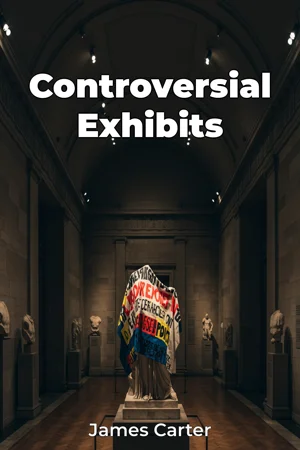
"Controversial Exhibits" explores the turbulent intersection of art, history, and public perception within museum displays, revealing how these institutions can become flashpoints of cultural conflict. The book delves into the power of representation, the politics of memory, and the ethics of display, examining how museums shape public understanding and national narratives. For instance, debates often arise when exhibits confront sensitive topics, such as the depiction of colonialism or the display of religious artifacts, highlighting deeper societal tensions. This book offers a unique, balanced perspective on museum controversies by analyzing specific cases, drawing from diverse sources like museum archives, media coverage, and interviews with curators and the public. It acknowledges that history is rarely neutral and that museums, while dedicated to preservation, are also vulnerable to becoming battlegrounds for cultural wars. The book progresses by introducing key concepts before dissecting individual controversial exhibits, ultimately offering practical recommendations for museums seeking to navigate sensitive topics and foster constructive dialogue.
Book Details
ISBN
9788233998240
Publisher
Publifye AS
Your Licenses
You don't own any licenses for this book
Purchase a license below to unlock this book and download the EPUB.
Purchase License
Select a tier to unlock this book
Need bulk licensing?
Contact us for enterprise agreements.