
About This Book
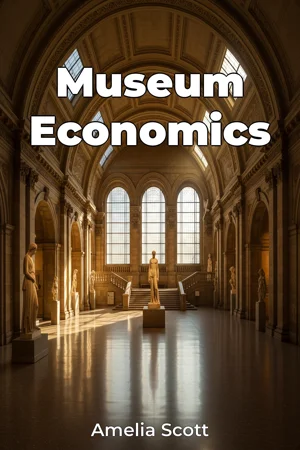
Can museums, institutions dedicated to preserving and showcasing cultural heritage, truly thrive in an increasingly market-driven world? This book, "Museum Economics," delves into the financial heart of museums, exploring the multifaceted strategies these institutions employ to generate revenue, secure funding, and ultimately, sustain operations on a global scale. It's crucial to understand museum economics because their financial stability directly impacts their ability to fulfill their educational missions, preserve cultural heritage, and contribute to community enrichment. This book zeroes in on core economic principles as they apply to museums: revenue diversification, philanthropic strategies, and operational efficiency. Revenue diversification examines how museums move beyond traditional sources like ticket sales to embrace diverse income streams such as retail operations, food and beverage services, facility rentals, and digital content. Philanthropic strategies address the essential role of donations, grants, sponsorships, and membership programs in sustaining museum activities. Operational efficiency focuses on how museums can optimize resource allocation, streamline processes, leverage technology, and enhance visitor experience to maximize revenue generation and minimize operational costs. Museums have historically relied on a mix of public funding, private philanthropy, and earned income. However, shifts in government priorities, economic downturns, and evolving audience expectations have intensified the need for innovative financial strategies. This book provides a comprehensive overview of these strategies and their implications for the long-term viability of museums around the world. The central argument of "Museum Economics" is that a financially sustainable museum intelligently balances mission-driven values with sound economic principles. This book posits that museums can achieve long-term stability by adopting hybrid economic models that leverage diverse revenue streams, cultivate robust philanthropic relationships, and prioritize operational efficiency. This argument is crucial for museum professionals, policymakers, donors, and anyone invested in the future of cultural institutions. The book is structured to provide a comprehensive understanding of museum finance. After introducing fundamental economic concepts and the unique characteristics of the museum landscape, it explores revenue generation through admissions, retail, and auxiliary services. A deep dive into fundraising, grants, and donor relations follows, highlighting best practices and innovative approaches to securing philanthropic support. The book culminates in an examination of operational efficiency and strategic financial planning, including budgeting, cost management, and performance measurement. Case studies and real-world examples illustrate the practical application of these principles, making the book accessible to a wide audience. The analysis presented is supported by a wide range of evidence, including financial statements from museums of varying sizes and types, industry reports, academic research, and case studies. The book also draws on surveys of museum visitors, donors, and staff to provide insights into effective revenue generation and fundraising strategies. "Museum Economics" connects to various disciplines, including economics, marketing, and management. The integration of economic principles helps museums understand demand elasticity, pricing strategies, and revenue optimization. Marketing insights enhance museums' ability to attract visitors, engage donors, and build brand loyalty. Management theories provide frameworks for improving organizational structure, streamlining operations, and fostering a culture of financial responsibility. What sets this book apart is its emphasis on practical applications and real-world examples. It synthesizes economic theory with actionable strategies, providing museum professionals with the tools and knowledge they need to navigate the complex financial landscape. Written in a clear and concise style, the book avoids jargon and technical language, making it accessible to both seasoned professionals and those new to the field. The target audience includes museum directors, financial officers, development staff, board members, students of museum studies, and anyone interested in the economics of cultural institutions. This book offers valuable insights for navigating the financial challenges and opportunities facing today's museums. The content is limited to the economic aspects of museums, focusing primarily on financial sustainability and revenue generation. While issues like cultural policy are touched upon, a deep discussion of these topics is beyond the scope of this book. Museum professionals can immediately apply the insights from "Museum Economics" to their daily work. Strategies for revenue diversification, fundraising, and operational efficiency can be implemented to improve financial performance and ensure long-term sustainability. While there is broad agreement on the importance of financial sustainability for museums, debates persist regarding the appropriate balance between mission-driven values and market-oriented strategies. This book aims to contribute to this discussion by providing a framework for museums to navigate these complexities and achieve their goals.
Can museums, institutions dedicated to preserving and showcasing cultural heritage, truly thrive in an increasingly market-driven world? This book, "Museum Economics," delves into the financial heart of museums, exploring the multifaceted strategies these institutions employ to generate revenue, secure funding, and ultimately, sustain operations on a global scale. It's crucial to understand museum economics because their financial stability directly impacts their ability to fulfill their educational missions, preserve cultural heritage, and contribute to community enrichment. This book zeroes in on core economic principles as they apply to museums: revenue diversification, philanthropic strategies, and operational efficiency. Revenue diversification examines how museums move beyond traditional sources like ticket sales to embrace diverse income streams such as retail operations, food and beverage services, facility rentals, and digital content. Philanthropic strategies address the essential role of donations, grants, sponsorships, and membership programs in sustaining museum activities. Operational efficiency focuses on how museums can optimize resource allocation, streamline processes, leverage technology, and enhance visitor experience to maximize revenue generation and minimize operational costs. Museums have historically relied on a mix of public funding, private philanthropy, and earned income. However, shifts in government priorities, economic downturns, and evolving audience expectations have intensified the need for innovative financial strategies. This book provides a comprehensive overview of these strategies and their implications for the long-term viability of museums around the world. The central argument of "Museum Economics" is that a financially sustainable museum intelligently balances mission-driven values with sound economic principles. This book posits that museums can achieve long-term stability by adopting hybrid economic models that leverage diverse revenue streams, cultivate robust philanthropic relationships, and prioritize operational efficiency. This argument is crucial for museum professionals, policymakers, donors, and anyone invested in the future of cultural institutions. The book is structured to provide a comprehensive understanding of museum finance. After introducing fundamental economic concepts and the unique characteristics of the museum landscape, it explores revenue generation through admissions, retail, and auxiliary services. A deep dive into fundraising, grants, and donor relations follows, highlighting best practices and innovative approaches to securing philanthropic support. The book culminates in an examination of operational efficiency and strategic financial planning, including budgeting, cost management, and performance measurement. Case studies and real-world examples illustrate the practical application of these principles, making the book accessible to a wide audience. The analysis presented is supported by a wide range of evidence, including financial statements from museums of varying sizes and types, industry reports, academic research, and case studies. The book also draws on surveys of museum visitors, donors, and staff to provide insights into effective revenue generation and fundraising strategies. "Museum Economics" connects to various disciplines, including economics, marketing, and management. The integration of economic principles helps museums understand demand elasticity, pricing strategies, and revenue optimization. Marketing insights enhance museums' ability to attract visitors, engage donors, and build brand loyalty. Management theories provide frameworks for improving organizational structure, streamlining operations, and fostering a culture of financial responsibility. What sets this book apart is its emphasis on practical applications and real-world examples. It synthesizes economic theory with actionable strategies, providing museum professionals with the tools and knowledge they need to navigate the complex financial landscape. Written in a clear and concise style, the book avoids jargon and technical language, making it accessible to both seasoned professionals and those new to the field. The target audience includes museum directors, financial officers, development staff, board members, students of museum studies, and anyone interested in the economics of cultural institutions. This book offers valuable insights for navigating the financial challenges and opportunities facing today's museums. The content is limited to the economic aspects of museums, focusing primarily on financial sustainability and revenue generation. While issues like cultural policy are touched upon, a deep discussion of these topics is beyond the scope of this book. Museum professionals can immediately apply the insights from "Museum Economics" to their daily work. Strategies for revenue diversification, fundraising, and operational efficiency can be implemented to improve financial performance and ensure long-term sustainability. While there is broad agreement on the importance of financial sustainability for museums, debates persist regarding the appropriate balance between mission-driven values and market-oriented strategies. This book aims to contribute to this discussion by providing a framework for museums to navigate these complexities and achieve their goals.
Museums, vital institutions preserving cultural heritage, face increasing financial pressures in today's economy. "Museum Economics" explores how these institutions globally generate revenue, secure funding, and sustain operations. The book emphasizes revenue diversification, moving beyond ticket sales to explore income streams like retail and digital content. It also highlights the critical role of philanthropic strategies, including donations and grants, in supporting museum activities. The book argues that financially stable museums balance their mission with sound economic principles. It examines revenue generation through admissions, retail, and fundraising, progressing to operational efficiency and strategic financial planning. Case studies illustrate these principles in action, providing practical guidance for museum professionals. "Museum Economics" offers actionable strategies for revenue diversification, fundraising, and operational efficiency, helping museums navigate financial challenges and achieve long-term sustainability.
Book Details
ISBN
9788233998233
Publisher
Publifye AS
Your Licenses
You don't own any licenses for this book
Purchase a license below to unlock this book and download the EPUB.
Purchase License
Select a tier to unlock this book
Need bulk licensing?
Contact us for enterprise agreements.