
About This Book
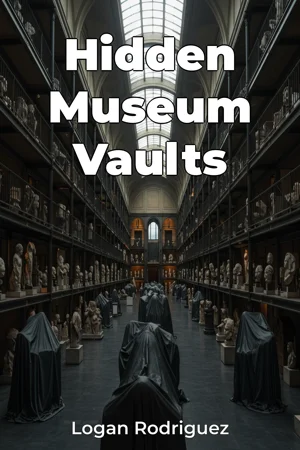
Ever wondered what happens to artifacts after they leave the public eye or where museums store the overwhelming majority of their collections? "Hidden Museum Vaults" unveils the secrets behind the closed doors of museum storage facilities, offering an unprecedented glimpse into the unseen world of art and historical preservation. This book explores the vast, often labyrinthine spaces where artifacts await their turn for display, undergo conservation, or remain in perpetual storage. It examines the critical role these vaults play in preserving cultural heritage and providing a rich resource for future generations of researchers and curators. This book delves into three main areas: first, the immense scale and logistical complexity of museum storage; second, the sophisticated methods employed for preserving a wide range of materials; and third, the ethical considerations surrounding the deaccessioning and long-term stewardship of collections. These topics are significant because they shed light on the inner workings of institutions entrusted with safeguarding humanity's collective memory. Understanding these processes is crucial for fostering transparency, accountability, and informed public discourse about the management of cultural heritage. The historical context for this exploration lies in the evolution of museums from private collections to public institutions. This transition necessitated the development of systematic storage and preservation practices to manage ever-expanding collections. The book assumes a basic understanding of museum operations and art history principles but provides ample context to be accessible to a broad audience. The central argument of "Hidden Museum Vaults" is that these often-overlooked storage facilities are not merely repositories of objects but are active sites of knowledge production, conservation, and decision-making that profoundly shape our understanding of history and art. Recognizing the importance of these spaces is essential for advocating for their support and ensuring the responsible management of cultural heritage. The book's structure unfolds as follows: it begins by introducing the reader to the concept of museum storage and its historical development, contrasting early disorganized methods with contemporary scientific approaches. The second section examines specific storage techniques for diverse materials, from fragile textiles to monumental sculptures, highlighting innovative preservation methods and environmental controls. A third segment addresses the complex dilemmas surrounding deaccessioning policies, repatriation claims, and the ethical responsibilities of museums in allocating resources for long-term storage. Finally, the book culminates by exploring the future of museum storage, considering the impact of digital technologies and the increasing demand for public access to collections. The evidence presented in "Hidden Museum Vaults" draws upon a range of sources, including interviews with museum professionals, detailed case studies of storage facilities around the world, analysis of museum policies and archival records, and scientific studies on the deterioration of materials. The book also incorporates data from environmental monitoring systems within storage environments to illustrate the challenges of maintaining optimal preservation conditions. Interdisciplinary connections enhance the book's argument. First, archival science is crucial for understanding cataloging and record-keeping practices. Second, environmental science informs the discussions on climate control and material degradation. Last, ethics and law provide frameworks for addressing issues of ownership, repatriation, and deaccessioning. "Hidden Museum Vaults" adopts a fact-based and informative tone, presenting information in a clear, accessible manner while maintaining scholarly rigor. It is aimed toward museum enthusiasts, art historians, students of cultural heritage management, and anyone curious about the hidden world behind the museum walls. The book's scope is limited to the physical storage of museum collections, intentionally excluding detailed discussions of exhibition design or educational programming. While it touches upon digital preservation, the primary focus remains on the preservation of physical artifacts. The information presented in this book has real-world applications for museum professionals seeking to improve their storage practices, policymakers developing cultural heritage preservation strategies, and the general public interested in advocating for responsible museum stewardship.
Ever wondered what happens to artifacts after they leave the public eye or where museums store the overwhelming majority of their collections? "Hidden Museum Vaults" unveils the secrets behind the closed doors of museum storage facilities, offering an unprecedented glimpse into the unseen world of art and historical preservation. This book explores the vast, often labyrinthine spaces where artifacts await their turn for display, undergo conservation, or remain in perpetual storage. It examines the critical role these vaults play in preserving cultural heritage and providing a rich resource for future generations of researchers and curators. This book delves into three main areas: first, the immense scale and logistical complexity of museum storage; second, the sophisticated methods employed for preserving a wide range of materials; and third, the ethical considerations surrounding the deaccessioning and long-term stewardship of collections. These topics are significant because they shed light on the inner workings of institutions entrusted with safeguarding humanity's collective memory. Understanding these processes is crucial for fostering transparency, accountability, and informed public discourse about the management of cultural heritage. The historical context for this exploration lies in the evolution of museums from private collections to public institutions. This transition necessitated the development of systematic storage and preservation practices to manage ever-expanding collections. The book assumes a basic understanding of museum operations and art history principles but provides ample context to be accessible to a broad audience. The central argument of "Hidden Museum Vaults" is that these often-overlooked storage facilities are not merely repositories of objects but are active sites of knowledge production, conservation, and decision-making that profoundly shape our understanding of history and art. Recognizing the importance of these spaces is essential for advocating for their support and ensuring the responsible management of cultural heritage. The book's structure unfolds as follows: it begins by introducing the reader to the concept of museum storage and its historical development, contrasting early disorganized methods with contemporary scientific approaches. The second section examines specific storage techniques for diverse materials, from fragile textiles to monumental sculptures, highlighting innovative preservation methods and environmental controls. A third segment addresses the complex dilemmas surrounding deaccessioning policies, repatriation claims, and the ethical responsibilities of museums in allocating resources for long-term storage. Finally, the book culminates by exploring the future of museum storage, considering the impact of digital technologies and the increasing demand for public access to collections. The evidence presented in "Hidden Museum Vaults" draws upon a range of sources, including interviews with museum professionals, detailed case studies of storage facilities around the world, analysis of museum policies and archival records, and scientific studies on the deterioration of materials. The book also incorporates data from environmental monitoring systems within storage environments to illustrate the challenges of maintaining optimal preservation conditions. Interdisciplinary connections enhance the book's argument. First, archival science is crucial for understanding cataloging and record-keeping practices. Second, environmental science informs the discussions on climate control and material degradation. Last, ethics and law provide frameworks for addressing issues of ownership, repatriation, and deaccessioning. "Hidden Museum Vaults" adopts a fact-based and informative tone, presenting information in a clear, accessible manner while maintaining scholarly rigor. It is aimed toward museum enthusiasts, art historians, students of cultural heritage management, and anyone curious about the hidden world behind the museum walls. The book's scope is limited to the physical storage of museum collections, intentionally excluding detailed discussions of exhibition design or educational programming. While it touches upon digital preservation, the primary focus remains on the preservation of physical artifacts. The information presented in this book has real-world applications for museum professionals seeking to improve their storage practices, policymakers developing cultural heritage preservation strategies, and the general public interested in advocating for responsible museum stewardship.
"Hidden Museum Vaults" reveals the unseen world of museum storage, where the vast majority of art and historical artifacts reside, awaiting display or undergoing preservation. These vaults, often labyrinthine, are critical for safeguarding our cultural heritage. The book explores the immense scale and logistical complexity of these hidden spaces, highlighting sophisticated preservation methods and the ethical considerations surrounding deaccessioning. The book examines how museums have evolved from private collections to public institutions, necessitating systematic storage practices. For example, the book delves into how environmental monitoring systems are used to maintain optimal preservation conditions, showcasing science's role in preserving artifacts. It also tackles complex issues like repatriation claims, emphasizing museums' ethical responsibilities. The book begins by introducing the concept of museum storage and its historical development, contrasting early disorganized methods with contemporary scientific approaches. It then examines specific storage techniques for diverse materials and addresses dilemmas surrounding deaccessioning policies. Finally, the book culminates by exploring the future of museum storage, considering the impact of digital technologies.
Book Details
ISBN
9788233998226
Publisher
Publifye AS
Your Licenses
You don't own any licenses for this book
Purchase a license below to unlock this book and download the EPUB.
Purchase License
Select a tier to unlock this book
Need bulk licensing?
Contact us for enterprise agreements.