
About This Book
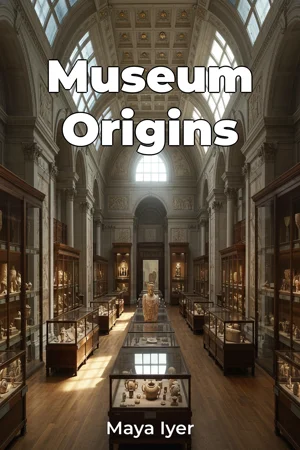
How did the modern museum, an institution revered as a guardian of culture and knowledge, truly come into being? “Museum Origins” delves into the fascinating and multifaceted history of museums, tracing their evolution from private collections of the elite to the globally accessible public institutions we know today. This book explores how museums have not only shaped our understanding of art and history but also influenced the very construction of global heritage. The book focuses on three main topics: the early history of collecting and display, the rise of public museums in the 18th and 19th centuries, and the museum's role in shaping national and global identities. These topics are significant because they illuminate how cultural institutions are not neutral spaces but active participants in constructing narratives about the past and present. Understanding this history is crucial for anyone seeking to engage critically with museums and the stories they tell. Historically, the concept of collecting objects for display dates back to antiquity, with rulers and wealthy individuals amassing curiosities and treasures as symbols of power and status. However, the transformation of these private collections into public museums during the Enlightenment marked a pivotal shift. This period saw the rise of scientific inquiry, the democratization of knowledge, and the belief in the power of education to improve society. The book provides a historical context for the social and intellectual forces that enabled the emergence of museums as public entities. The central argument of "Museum Origins" is that the development of museums is inextricably linked to broader social, political, and cultural transformations. Museums have served as instruments of nation-building, vehicles for colonial expansion, and platforms for shaping public opinion. This argument challenges the notion of museums as objective repositories of knowledge, revealing the complex power dynamics at play in their creation and operation. The book is structured to provide a comprehensive overview of museum history. It begins by examining the pre-museum era, focusing on the cabinets of curiosities and private collections of Renaissance Europe. It then explores the establishment of the first public museums, analyzing their objectives, audiences, and collections and their impact in society. The book then addresses the development of different types of museums, including art, history, and natural history, and their role in constructing national narratives and shaping public identity. Finally, the book discusses the challenges and opportunities facing museums in the 21st century, including issues of repatriation, accessibility, and digital engagement. The analysis presented in "Museum Origins" is supported by a wide range of evidence, including archival documents, museum records, exhibition catalogs, and scholarly publications. It also draws on interdisciplinary research from art history, history, anthropology, and museum studies. This book connects to other fields of study such as art history, cultural studies, and political science. By situating the history of museums within broader social and intellectual contexts, the book offers a unique perspective on the relationship between culture, power, and knowledge. The overall approach to presenting information is academic yet accessible. The book aims to provide a thorough and nuanced analysis of museum history while remaining engaging and readable for a general audience. "Museum Origins" is intended for museum professionals, students, academics, and anyone interested in the history of culture and ideas. It provides valuable insights into the role of museums in shaping our understanding of the world and encourages readers to think critically about the institutions they visit. As a work of non-fiction in the fields of art and history, “Museum Origins” adheres to the standards of rigorous scholarship and intellectual integrity. This includes providing clear and accurate information, citing sources properly, and acknowledging diverse perspectives. The scope of the book is broad, covering the history of museums from antiquity to the present day. However, it focuses primarily on the development of museums in Europe and North America, with some recognition given to their global impact, but with the acknowledgement that a truly global history demands consideration beyond the scope of this single volume. The information in "Museum Origins" can be applied practically by readers in a number of ways. It can inform museum professionals’ efforts to engage with their audiences, promote diversity and inclusion, and address issues of repatriation and cultural ownership. It can also equip museum visitors with a deeper understanding of the institution and its role in society. One ongoing debate in the field of museum studies concerns the issue of repatriation – the return of cultural objects to their countries of origin. This book addresses this debate by examining the historical context of collecting and display and exploring the ethical implications of keeping or returning cultural artifacts.
How did the modern museum, an institution revered as a guardian of culture and knowledge, truly come into being? “Museum Origins” delves into the fascinating and multifaceted history of museums, tracing their evolution from private collections of the elite to the globally accessible public institutions we know today. This book explores how museums have not only shaped our understanding of art and history but also influenced the very construction of global heritage. The book focuses on three main topics: the early history of collecting and display, the rise of public museums in the 18th and 19th centuries, and the museum's role in shaping national and global identities. These topics are significant because they illuminate how cultural institutions are not neutral spaces but active participants in constructing narratives about the past and present. Understanding this history is crucial for anyone seeking to engage critically with museums and the stories they tell. Historically, the concept of collecting objects for display dates back to antiquity, with rulers and wealthy individuals amassing curiosities and treasures as symbols of power and status. However, the transformation of these private collections into public museums during the Enlightenment marked a pivotal shift. This period saw the rise of scientific inquiry, the democratization of knowledge, and the belief in the power of education to improve society. The book provides a historical context for the social and intellectual forces that enabled the emergence of museums as public entities. The central argument of "Museum Origins" is that the development of museums is inextricably linked to broader social, political, and cultural transformations. Museums have served as instruments of nation-building, vehicles for colonial expansion, and platforms for shaping public opinion. This argument challenges the notion of museums as objective repositories of knowledge, revealing the complex power dynamics at play in their creation and operation. The book is structured to provide a comprehensive overview of museum history. It begins by examining the pre-museum era, focusing on the cabinets of curiosities and private collections of Renaissance Europe. It then explores the establishment of the first public museums, analyzing their objectives, audiences, and collections and their impact in society. The book then addresses the development of different types of museums, including art, history, and natural history, and their role in constructing national narratives and shaping public identity. Finally, the book discusses the challenges and opportunities facing museums in the 21st century, including issues of repatriation, accessibility, and digital engagement. The analysis presented in "Museum Origins" is supported by a wide range of evidence, including archival documents, museum records, exhibition catalogs, and scholarly publications. It also draws on interdisciplinary research from art history, history, anthropology, and museum studies. This book connects to other fields of study such as art history, cultural studies, and political science. By situating the history of museums within broader social and intellectual contexts, the book offers a unique perspective on the relationship between culture, power, and knowledge. The overall approach to presenting information is academic yet accessible. The book aims to provide a thorough and nuanced analysis of museum history while remaining engaging and readable for a general audience. "Museum Origins" is intended for museum professionals, students, academics, and anyone interested in the history of culture and ideas. It provides valuable insights into the role of museums in shaping our understanding of the world and encourages readers to think critically about the institutions they visit. As a work of non-fiction in the fields of art and history, “Museum Origins” adheres to the standards of rigorous scholarship and intellectual integrity. This includes providing clear and accurate information, citing sources properly, and acknowledging diverse perspectives. The scope of the book is broad, covering the history of museums from antiquity to the present day. However, it focuses primarily on the development of museums in Europe and North America, with some recognition given to their global impact, but with the acknowledgement that a truly global history demands consideration beyond the scope of this single volume. The information in "Museum Origins" can be applied practically by readers in a number of ways. It can inform museum professionals’ efforts to engage with their audiences, promote diversity and inclusion, and address issues of repatriation and cultural ownership. It can also equip museum visitors with a deeper understanding of the institution and its role in society. One ongoing debate in the field of museum studies concerns the issue of repatriation – the return of cultural objects to their countries of origin. This book addresses this debate by examining the historical context of collecting and display and exploring the ethical implications of keeping or returning cultural artifacts.
"Museum Origins" explores the captivating history of museums, charting their transformation from exclusive private collections to the public cultural institutions we know today. This evolution reveals how museums actively shape our understanding of art, history, and global heritage, influencing the construction of national narratives. Intriguingly, the rise of public museums coincided with the Enlightenment, reflecting a belief in democratizing knowledge and improving society through education. The book examines the development of museums across chapters, beginning with early collecting practices, progressing through the establishment of public museums, and culminating in an assessment of modern challenges like cultural ownership and repatriation. By contextualizing museum history within broader social and political shifts, "Museum Origins" challenges the notion of museums as objective repositories, instead highlighting the complex power dynamics inherent in their creation and operation. This approach provides valuable insights for museum professionals and anyone interested in the intersection of culture, knowledge, and power.
Book Details
ISBN
9788233998172
Publisher
Publifye AS
Your Licenses
You don't own any licenses for this book
Purchase a license below to unlock this book and download the EPUB.
Purchase License
Select a tier to unlock this book
Need bulk licensing?
Contact us for enterprise agreements.