
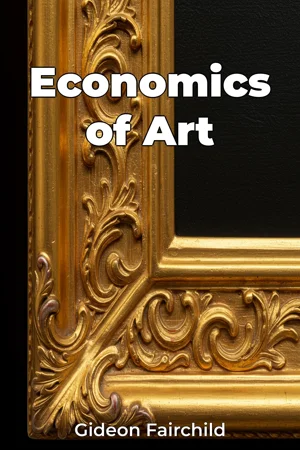
About This Book
Why does one painting sell for millions while another, seemingly similar work, languishes unsold? "Economics of Art" delves into the intricate world of art valuation, market dynamics, and the profound influence of collectors, offering a comprehensive analysis of the art market's economic underpinnings. This book is important because understanding these forces is essential for artists, collectors, investors, and anyone seeking to navigate the complexities of the art world, and it demonstrates how economic principles shape artistic creation, investment strategies, and cultural heritage. This exploration requires acknowledging the historical context of art markets, tracing their evolution from patronage-based systems to the globalized, investment-driven landscape of today. Readers should have a basic understanding of economic principles such as supply and demand, market equilibrium, and investment theory to fully appreciate the nuances explored. The central argument of "Economics of Art" is that art prices are not simply a reflection of aesthetic value but are also determined by a complex interplay of economic factors including scarcity, signaling, and speculative investment. This understanding is crucial because it challenges traditional notions of artistic worth and raises questions about the role of art in society. The book is structured to provide a clear and comprehensive understanding. It begins by introducing fundamental economic concepts relevant to the art market, such as information asymmetry and network effects. It then moves on to examine the roles of various market participants, including artists, dealers, auction houses, and collectors, detailing their motivations and strategies. A key section is dedicated to analyzing market fluctuations, exploring factors that contribute to booms and busts in art prices, such as macroeconomic trends, media coverage, and the emergence of new art movements. The book culminates by examining the ethical and social implications of art as an investment, addressing issues such as market manipulation, cultural heritage preservation, and the democratization of art access. The book provides practical guidance on valuing art, identifying investment opportunities, and mitigating risks in the art market. The analysis incorporates auction data, sales records, and economic models to provide empirical evidence supporting its arguments. It also draws on case studies of specific artists and artworks to illustrate key concepts. Data from art market indices and econometric analysis are used to demonstrate the correlation between economic indicators and art prices. "Economics of Art" bridges art history, finance, and sociology, offering a multidisciplinary perspective. It examines how social status and cultural capital influence art valuation, connects financial theories of asset pricing to the art market, and analyzes the sociological aspects of art consumption and collecting. This book adopts an analytical approach, presenting economic theories and empirical evidence in a clear and accessible manner. The writing style balances academic rigor with practical relevance, making it suitable for both scholars and practitioners. It is aimed towards art collectors, investors, art students, art professionals, and economists who are interested in understanding the art market. Knowledge of art history is helpful, but not required. The book focuses primarily on the secondary art market, particularly fine art, with some discussions of other art forms. While it acknowledges the cultural significance of art, its primary focus is on the economic dimensions. The information within this book can be applied across many spectrums: for collectors seeking to make informed investment decisions, for artists aiming to strategically position their work in the market, and for policymakers grappling with issues of cultural heritage and art funding. The book addresses controversies surrounding art valuation and market speculation. It examines the ethical implications of art as an investment and explores the role of regulation in promoting transparency and fairness in the art market.
Why does one painting sell for millions while another, seemingly similar work, languishes unsold? "Economics of Art" delves into the intricate world of art valuation, market dynamics, and the profound influence of collectors, offering a comprehensive analysis of the art market's economic underpinnings. This book is important because understanding these forces is essential for artists, collectors, investors, and anyone seeking to navigate the complexities of the art world, and it demonstrates how economic principles shape artistic creation, investment strategies, and cultural heritage. This exploration requires acknowledging the historical context of art markets, tracing their evolution from patronage-based systems to the globalized, investment-driven landscape of today. Readers should have a basic understanding of economic principles such as supply and demand, market equilibrium, and investment theory to fully appreciate the nuances explored. The central argument of "Economics of Art" is that art prices are not simply a reflection of aesthetic value but are also determined by a complex interplay of economic factors including scarcity, signaling, and speculative investment. This understanding is crucial because it challenges traditional notions of artistic worth and raises questions about the role of art in society. The book is structured to provide a clear and comprehensive understanding. It begins by introducing fundamental economic concepts relevant to the art market, such as information asymmetry and network effects. It then moves on to examine the roles of various market participants, including artists, dealers, auction houses, and collectors, detailing their motivations and strategies. A key section is dedicated to analyzing market fluctuations, exploring factors that contribute to booms and busts in art prices, such as macroeconomic trends, media coverage, and the emergence of new art movements. The book culminates by examining the ethical and social implications of art as an investment, addressing issues such as market manipulation, cultural heritage preservation, and the democratization of art access. The book provides practical guidance on valuing art, identifying investment opportunities, and mitigating risks in the art market. The analysis incorporates auction data, sales records, and economic models to provide empirical evidence supporting its arguments. It also draws on case studies of specific artists and artworks to illustrate key concepts. Data from art market indices and econometric analysis are used to demonstrate the correlation between economic indicators and art prices. "Economics of Art" bridges art history, finance, and sociology, offering a multidisciplinary perspective. It examines how social status and cultural capital influence art valuation, connects financial theories of asset pricing to the art market, and analyzes the sociological aspects of art consumption and collecting. This book adopts an analytical approach, presenting economic theories and empirical evidence in a clear and accessible manner. The writing style balances academic rigor with practical relevance, making it suitable for both scholars and practitioners. It is aimed towards art collectors, investors, art students, art professionals, and economists who are interested in understanding the art market. Knowledge of art history is helpful, but not required. The book focuses primarily on the secondary art market, particularly fine art, with some discussions of other art forms. While it acknowledges the cultural significance of art, its primary focus is on the economic dimensions. The information within this book can be applied across many spectrums: for collectors seeking to make informed investment decisions, for artists aiming to strategically position their work in the market, and for policymakers grappling with issues of cultural heritage and art funding. The book addresses controversies surrounding art valuation and market speculation. It examines the ethical implications of art as an investment and explores the role of regulation in promoting transparency and fairness in the art market.
"Economics of Art" explores the fascinating intersection of art and economics, revealing the underlying financial forces that drive the art market. The book examines how factors like scarcity, signaling, and speculative investment influence art valuation, challenging the notion that artistic worth is solely based on aesthetics. For instance, the book investigates why some artworks command exorbitant prices while others, seemingly similar, remain unsold, highlighting the impact of market dynamics and collector behavior. This book provides a comprehensive understanding of the art market, from its historical roots in patronage to today's globalized, investment-driven landscape. It delves into the roles of artists, dealers, and auction houses, analyzing their strategies and motivations. "Economics of Art" uses auction data, sales records, and economic models to support its arguments, offering practical guidance on art valuation and investment. The book's structure progresses logically, starting with fundamental economic concepts and moving towards the ethical and social implications of art as an investment. By bridging art history, finance, and sociology, this book offers a multidisciplinary perspective, making it a valuable resource for collectors, investors, artists, and anyone interested in the art market's complexities.
Book Details
ISBN
9788233998097
Publisher
Publifye AS
Your Licenses
You don't own any licenses for this book
Purchase a license below to unlock this book and download the EPUB.
Purchase License
Select a tier to unlock this book
Need bulk licensing?
Contact us for enterprise agreements.