
About This Book
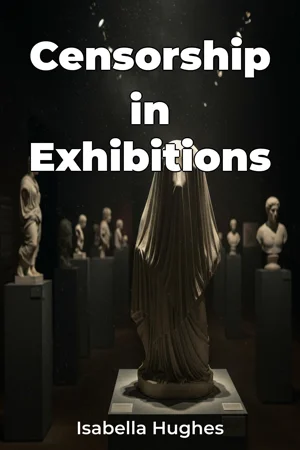
What happens when art, meant to provoke thought and stimulate dialogue, is silenced? "Censorship in Exhibitions" delves into the multifaceted history of artistic expression suppressed, altered, or outright banned within the context of art exhibitions. This book examines censorship not as isolated incidents but as a recurring phenomenon shaped by the intricate interplay of political ideologies, social norms, and power dynamics. Understanding these forces is crucial because they continue to shape contemporary art and its reception. This book explores three principal themes. First, it analyzes specific instances of censorship across geographical locations and historical periods, ranging from the suppression of avant-garde movements in the early 20th century to contemporary controversies surrounding politically charged artworks. Second, it investigates the motivations behind censorship, identifying the key actors – government bodies, religious institutions, private donors, and even museum administrators – and their respective agendas. Third, it explores the consequences of censorship on artists, institutions, and the broader public discourse, considering both the immediate impact and the long-term effects on artistic freedom and cultural expression. To fully appreciate the complexities of censorship in art, a basic understanding of art history, political science, and sociology is helpful. While not demanding expert knowledge, familiarity with key artistic movements and socio-political contexts will enhance the reader's comprehension of the issues presented. The central argument of "Censorship in Exhibitions" is that censorship in art is never a neutral act; it is a deliberate intervention that reflects and reinforces existing power structures within society. By examining the historical patterns and underlying motivations behind censorship, this book seeks to uncover the mechanisms through which artistic expression is controlled and to advocate for greater vigilance in protecting artistic freedom. The book is structured to provide a comprehensive overview of the topic. Following an introduction that defines censorship and outlines the book's scope, the initial chapters present case studies of notable instances of censorship in exhibitions. These case studies are categorized thematically (e.g., political censorship, religious censorship, moral censorship) to facilitate comparative analysis. Subsequent chapters delve into the motivations of censors, exploring the ideological, economic, and social factors that drive their actions. The book culminates with a discussion of the implications of censorship for artists, institutions, and society as a whole, offering strategies for resisting censorship and promoting artistic freedom. Practical guidelines and considerations are provided to aid curators and arts administrators in navigating potential censorship challenges. The arguments presented in this book are supported by a combination of primary and secondary sources, including archival documents, exhibition catalogues, artists' statements, critical reviews, and scholarly publications. Unique data sources include previously unexamined correspondence between artists, curators, and government officials, shedding new light on the decision-making processes behind censorship incidents. "Censorship in Exhibitions" draws connections to several other fields of study, including law, sociology, and political science. Legal frameworks surrounding freedom of expression are examined, sociological theories of power and social control are applied, and political ideologies that inform censorship policies are analyzed. These interdisciplinary connections enrich the book's argument by providing a broader context for understanding the phenomenon of censorship in art. This book offers a perspective that challenges conventional narratives surrounding censorship. It moves beyond a simple dichotomy of "freedom" versus "repression" to explore the nuanced ways in which censorship operates within specific social and political contexts, using comparative analysis between different incidents and locations. The book adopts a professional tone while remaining accessible to non-specialist readers. It avoids jargon and technical language, prioritizing clarity and conciseness in its presentation of information. The writing style is analytical and evidence-based, encouraging critical engagement with the subject matter. The target audience includes art students, art historians, museum professionals, cultural critics, and anyone interested in the intersection of art, politics, and society. The book is valuable to them as it provides a comprehensive overview of a complex and timely issue, offering historical context, theoretical frameworks, and practical guidance. This book aligns with the conventions of academic non-fiction, adhering to standards of scholarly rigor and intellectual honesty. It presents its arguments in a clear, logical, and well-supported manner, providing ample evidence to support its claims. While the book strives to provide a broad overview of censorship in exhibitions, it is necessarily limited in its scope. It focuses primarily on Western art and art institutions, with only brief forays into other cultural contexts. The information in this book can be applied in various practical ways. Artists can use it to understand their rights and to develop strategies for resisting censorship. Curators and museum administrators can use it to navigate potential censorship challenges and to promote artistic freedom within their institutions. Educators can use it to teach students about the importance of freedom of expression and the dangers of censorship. The book addresses ongoing debates surrounding artistic freedom and the role of art in society. It engages with controversies over the appropriateness of certain artworks for public display and the limits of freedom of expression. By providing a historical and theoretical context for these debates, the book aims to foster a more informed and nuanced discussion of these important issues.
What happens when art, meant to provoke thought and stimulate dialogue, is silenced? "Censorship in Exhibitions" delves into the multifaceted history of artistic expression suppressed, altered, or outright banned within the context of art exhibitions. This book examines censorship not as isolated incidents but as a recurring phenomenon shaped by the intricate interplay of political ideologies, social norms, and power dynamics. Understanding these forces is crucial because they continue to shape contemporary art and its reception. This book explores three principal themes. First, it analyzes specific instances of censorship across geographical locations and historical periods, ranging from the suppression of avant-garde movements in the early 20th century to contemporary controversies surrounding politically charged artworks. Second, it investigates the motivations behind censorship, identifying the key actors – government bodies, religious institutions, private donors, and even museum administrators – and their respective agendas. Third, it explores the consequences of censorship on artists, institutions, and the broader public discourse, considering both the immediate impact and the long-term effects on artistic freedom and cultural expression. To fully appreciate the complexities of censorship in art, a basic understanding of art history, political science, and sociology is helpful. While not demanding expert knowledge, familiarity with key artistic movements and socio-political contexts will enhance the reader's comprehension of the issues presented. The central argument of "Censorship in Exhibitions" is that censorship in art is never a neutral act; it is a deliberate intervention that reflects and reinforces existing power structures within society. By examining the historical patterns and underlying motivations behind censorship, this book seeks to uncover the mechanisms through which artistic expression is controlled and to advocate for greater vigilance in protecting artistic freedom. The book is structured to provide a comprehensive overview of the topic. Following an introduction that defines censorship and outlines the book's scope, the initial chapters present case studies of notable instances of censorship in exhibitions. These case studies are categorized thematically (e.g., political censorship, religious censorship, moral censorship) to facilitate comparative analysis. Subsequent chapters delve into the motivations of censors, exploring the ideological, economic, and social factors that drive their actions. The book culminates with a discussion of the implications of censorship for artists, institutions, and society as a whole, offering strategies for resisting censorship and promoting artistic freedom. Practical guidelines and considerations are provided to aid curators and arts administrators in navigating potential censorship challenges. The arguments presented in this book are supported by a combination of primary and secondary sources, including archival documents, exhibition catalogues, artists' statements, critical reviews, and scholarly publications. Unique data sources include previously unexamined correspondence between artists, curators, and government officials, shedding new light on the decision-making processes behind censorship incidents. "Censorship in Exhibitions" draws connections to several other fields of study, including law, sociology, and political science. Legal frameworks surrounding freedom of expression are examined, sociological theories of power and social control are applied, and political ideologies that inform censorship policies are analyzed. These interdisciplinary connections enrich the book's argument by providing a broader context for understanding the phenomenon of censorship in art. This book offers a perspective that challenges conventional narratives surrounding censorship. It moves beyond a simple dichotomy of "freedom" versus "repression" to explore the nuanced ways in which censorship operates within specific social and political contexts, using comparative analysis between different incidents and locations. The book adopts a professional tone while remaining accessible to non-specialist readers. It avoids jargon and technical language, prioritizing clarity and conciseness in its presentation of information. The writing style is analytical and evidence-based, encouraging critical engagement with the subject matter. The target audience includes art students, art historians, museum professionals, cultural critics, and anyone interested in the intersection of art, politics, and society. The book is valuable to them as it provides a comprehensive overview of a complex and timely issue, offering historical context, theoretical frameworks, and practical guidance. This book aligns with the conventions of academic non-fiction, adhering to standards of scholarly rigor and intellectual honesty. It presents its arguments in a clear, logical, and well-supported manner, providing ample evidence to support its claims. While the book strives to provide a broad overview of censorship in exhibitions, it is necessarily limited in its scope. It focuses primarily on Western art and art institutions, with only brief forays into other cultural contexts. The information in this book can be applied in various practical ways. Artists can use it to understand their rights and to develop strategies for resisting censorship. Curators and museum administrators can use it to navigate potential censorship challenges and to promote artistic freedom within their institutions. Educators can use it to teach students about the importance of freedom of expression and the dangers of censorship. The book addresses ongoing debates surrounding artistic freedom and the role of art in society. It engages with controversies over the appropriateness of certain artworks for public display and the limits of freedom of expression. By providing a historical and theoretical context for these debates, the book aims to foster a more informed and nuanced discussion of these important issues.
"Censorship in Exhibitions" examines the suppression of artistic expression within art exhibitions, revealing how political ideologies, social norms, and power dynamics shape what art the public sees. The book doesn't treat censorship as isolated events, but rather as a recurring phenomenon with deep historical roots. For instance, the book explores how avant-garde art movements faced suppression in the early 20th century, contrasting this with contemporary controversies surrounding politically charged artworks. This exploration offers insights into how censorship operates and its effects on freedom of expression. The book progresses thematically, beginning with case studies categorized by type of censorship, such as political or religious motivations. It then investigates the actors involved, like government bodies and museum administrators, and their agendas. Finally, it considers the consequences of censorship on artists and society, offering strategies to resist such actions. By examining historical patterns and motivations, the book reveals how censorship reinforces existing power structures. This approach challenges conventional narratives and provides a comprehensive overview valuable to art students, historians, and museum professionals.
Book Details
ISBN
9788233998059
Publisher
Publifye AS
Your Licenses
You don't own any licenses for this book
Purchase a license below to unlock this book and download the EPUB.
Purchase License
Select a tier to unlock this book
Need bulk licensing?
Contact us for enterprise agreements.