
About This Book
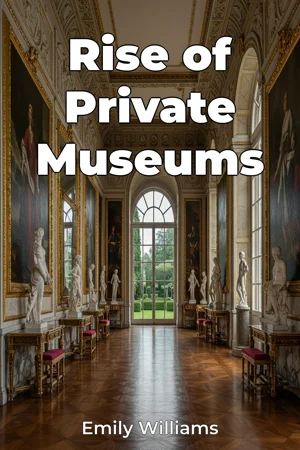
What happens when vast private wealth intersects with the public's access to art? "Rise of Private Museums" delves into the increasingly significant role of private collectors in shaping the art world through the establishment of their own museums. The book critically examines how these institutions, funded and curated by individuals, are shifting the landscape of art history, exhibition practices, and cultural preservation. The key topics explored within this work are the motivations behind private museum creation, the impact of these museums on established public institutions, and the ethical considerations surrounding private control of cultural heritage. These topics are crucial because they address fundamental questions about the democratization of art, the influence of wealth on cultural narratives, and the long-term sustainability of art institutions. Historically, art collections were primarily accessible through state-funded museums or aristocratic holdings. This book provides a necessary context by tracing the evolution of art patronage from royal and religious institutions to private individuals. The rise of globalization, increased wealth concentration, and a growing interest in art as an investment have fueled the proliferation of private museums in the 21st century. The central argument of "Rise of Private Museums" is that while private museums offer valuable opportunities for displaying art and engaging audiences, their existence raises critical questions about accountability, accessibility, and the potential for biased historical narratives. This argument matters because it challenges the uncritical acceptance of private philanthropy in the arts and encourages a more nuanced understanding of its implications. The book unfolds in several stages. First, it introduces the phenomenon of private museums, examining their global distribution and diverse forms. Second, it delves into the motivations of collectors, utilizing case studies of prominent private museums to understand the personal, financial, and social factors driving their creation. Third, it analyzes the impact of these museums on the art world, assessing their influence on art market values, curatorial practices, and audience engagement. Finally, it culminates in a discussion of ethical considerations, addressing issues such as deaccessioning policies, transparency, and public access. The evidence presented in “Rise of Private Museums” relies on a variety of sources, including museum archives, interviews with collectors and curators, art market data, and critical analyses of exhibition catalogues and museum publications. Statistical analysis of museum attendance and geographic distribution will also be utilized to demonstrate impact. This book connects to broader fields such as economics, sociology, and cultural studies. The economic aspects address the art market and wealth inequality, the sociological dimensions examine social status and philanthropy, and the cultural studies perspective investigates the construction of cultural narratives. "Rise of Private Museums" offers a unique perspective by combining art historical analysis with socio-economic critique. It moves beyond celebratory accounts of private patronage to critically assess its consequences. Written in an accessible yet scholarly style, the book aims to engage a broad audience, including art enthusiasts, museum professionals, academics, and anyone interested in the intersection of art, wealth, and power. This book would be valuable to those seeking a deeper understanding of the contemporary art world and the forces shaping its future. As a work of art history and cultural analysis, "Rise of Private Museums" adheres to the genre's conventions of rigorous research, contextual analysis, and critical interpretation. The scope of this book encompasses a global perspective on private museums, but it focuses primarily on institutions established within the last three decades. The book acknowledges the limitations of generalizing from specific case studies. The information presented has real-world applications for museum administrators seeking to understand the evolving landscape of art institutions, for collectors considering establishing their own museums, and for policymakers grappling with issues of cultural funding and regulation. The topic is ripe with controversies, including debates over the ethics of deaccessioning, the influence of private interests on public narratives, and the potential for tax avoidance through art philanthropy. "Rise of Private Museums" engages with these debates, presenting diverse perspectives and encouraging critical reflection.
What happens when vast private wealth intersects with the public's access to art? "Rise of Private Museums" delves into the increasingly significant role of private collectors in shaping the art world through the establishment of their own museums. The book critically examines how these institutions, funded and curated by individuals, are shifting the landscape of art history, exhibition practices, and cultural preservation. The key topics explored within this work are the motivations behind private museum creation, the impact of these museums on established public institutions, and the ethical considerations surrounding private control of cultural heritage. These topics are crucial because they address fundamental questions about the democratization of art, the influence of wealth on cultural narratives, and the long-term sustainability of art institutions. Historically, art collections were primarily accessible through state-funded museums or aristocratic holdings. This book provides a necessary context by tracing the evolution of art patronage from royal and religious institutions to private individuals. The rise of globalization, increased wealth concentration, and a growing interest in art as an investment have fueled the proliferation of private museums in the 21st century. The central argument of "Rise of Private Museums" is that while private museums offer valuable opportunities for displaying art and engaging audiences, their existence raises critical questions about accountability, accessibility, and the potential for biased historical narratives. This argument matters because it challenges the uncritical acceptance of private philanthropy in the arts and encourages a more nuanced understanding of its implications. The book unfolds in several stages. First, it introduces the phenomenon of private museums, examining their global distribution and diverse forms. Second, it delves into the motivations of collectors, utilizing case studies of prominent private museums to understand the personal, financial, and social factors driving their creation. Third, it analyzes the impact of these museums on the art world, assessing their influence on art market values, curatorial practices, and audience engagement. Finally, it culminates in a discussion of ethical considerations, addressing issues such as deaccessioning policies, transparency, and public access. The evidence presented in “Rise of Private Museums” relies on a variety of sources, including museum archives, interviews with collectors and curators, art market data, and critical analyses of exhibition catalogues and museum publications. Statistical analysis of museum attendance and geographic distribution will also be utilized to demonstrate impact. This book connects to broader fields such as economics, sociology, and cultural studies. The economic aspects address the art market and wealth inequality, the sociological dimensions examine social status and philanthropy, and the cultural studies perspective investigates the construction of cultural narratives. "Rise of Private Museums" offers a unique perspective by combining art historical analysis with socio-economic critique. It moves beyond celebratory accounts of private patronage to critically assess its consequences. Written in an accessible yet scholarly style, the book aims to engage a broad audience, including art enthusiasts, museum professionals, academics, and anyone interested in the intersection of art, wealth, and power. This book would be valuable to those seeking a deeper understanding of the contemporary art world and the forces shaping its future. As a work of art history and cultural analysis, "Rise of Private Museums" adheres to the genre's conventions of rigorous research, contextual analysis, and critical interpretation. The scope of this book encompasses a global perspective on private museums, but it focuses primarily on institutions established within the last three decades. The book acknowledges the limitations of generalizing from specific case studies. The information presented has real-world applications for museum administrators seeking to understand the evolving landscape of art institutions, for collectors considering establishing their own museums, and for policymakers grappling with issues of cultural funding and regulation. The topic is ripe with controversies, including debates over the ethics of deaccessioning, the influence of private interests on public narratives, and the potential for tax avoidance through art philanthropy. "Rise of Private Museums" engages with these debates, presenting diverse perspectives and encouraging critical reflection.
"Rise of Private Museums" explores the growing influence of privately owned art museums on the global art world. These institutions, funded by wealthy individuals, are reshaping cultural heritage, exhibition practices, and art history itself. The book highlights how the surge in private museums reflects both increased wealth concentration and a desire to shape cultural narratives. Intriguingly, these museums can offer valuable public access to art, but also raise questions about accountability and potential biases in historical representation. The book examines the motivations behind the establishment of these museums, delving into the personal, financial, and social factors driving collectors. It analyzes the impact on established public institutions and the art market, considering how private museums influence art market values and curatorial approaches. The approach unfolds by first introducing the phenomenon, then exploring collector motivations, analyzing the impact on the wider art world, and finally discussing the ethical considerations. Ultimately, "Rise of Private Museums" offers a critical perspective on the intersection of art, wealth, and power. It avoids a simple celebration of art patronage, instead prompting a deeper understanding of the consequences and controversies surrounding private control of cultural assets. The book engages with debates on deaccessioning, the influence of private interests, and the potential for tax avoidance.
Book Details
ISBN
9788233998042
Publisher
Publifye AS
Your Licenses
You don't own any licenses for this book
Purchase a license below to unlock this book and download the EPUB.
Purchase License
Select a tier to unlock this book
Need bulk licensing?
Contact us for enterprise agreements.