
About This Book
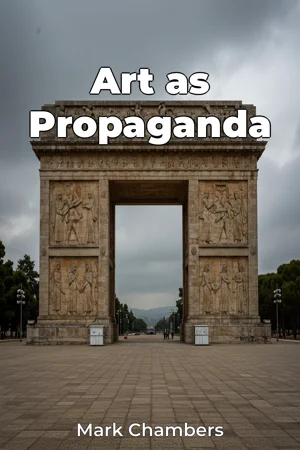
Can art truly be a weapon? "Art as Propaganda" explores the multifaceted ways in which art has served as a potent tool for political messaging, influence, and ideological control throughout history. This book delves into the deliberate creation, dissemination, and manipulation of artistic expression to shape public opinion and advance specific political agendas. Understanding this dynamic is crucial for navigating the complex landscape of contemporary media and recognizing the subtle yet powerful forces shaping our perceptions. This book focuses on three key areas: the deliberate use of art by governments and political movements to promote their ideologies, the ways in which art can be used to sway public opinion and mobilize support, and the employment of art for ideological control, including censorship and the suppression of dissenting voices. These topics are significant because art possesses a unique capacity to bypass rational thought, appealing directly to emotions and deeply ingrained cultural values. To fully grasp the nature of art as propaganda, the book will examine historical contexts ranging from ancient empires and revolutionary periods to totalitarian regimes and modern democracies. This exploration requires an understanding of basic art history, political science, and media theory. The reader will need to appreciate how artistic styles, symbols, and narratives can be strategically deployed to convey specific messages and reinforce particular worldviews. The central argument of "Art as Propaganda" is that art is not merely a reflection of society but an active agent in shaping it. By analyzing specific case studies and theoretical frameworks, this book demonstrates how art has been consistently utilized to legitimize power, demonize enemies, and propagate ideologies. The importance of this argument lies in its relevance to our understanding of contemporary political discourse, where visual culture plays an increasingly dominant role. The book will proceed in a structured manner. It will begin by defining propaganda and outlining the historical relationship between art and politics. Subsequently, it will explore specific examples of art used as propaganda in various historical and cultural contexts, examining the techniques employed and their effects on target audiences. Major sections will address the propagandistic use of visual arts, architecture, and performing arts. The book culminates with an analysis of the ethical implications of art as propaganda and its continuing relevance in the digital age. Evidence will be drawn from a variety of sources, including historical documents, art criticism, political speeches, and firsthand accounts. The book will also analyze specific artworks, architectural designs, and performances, using visual analysis and semiotic interpretation to uncover their underlying messages. "Art as Propaganda" connects to several other fields of study, including history, sociology, and communication studies. By drawing on insights from these disciplines, the book provides a holistic understanding of the complex interplay between art, politics, and society. The book offers a unique perspective by examining art not only as a form of aesthetic expression but also as a strategic tool for political manipulation. This perspective challenges traditional approaches to art history, which often overlook the political dimensions of artistic production. The writing style will be academic yet accessible, aiming to engage a broad audience of students, scholars, and general readers interested in art, politics, and media. "Art as Propaganda" is intended for anyone seeking to understand the power of visual culture in shaping our world. It will be valuable to students of art history, political science, media studies, and anyone interested in the intersection of art and power. As a work of non-fiction, this book adheres to principles of accuracy, objectivity, and evidence-based analysis. While exploring controversial topics, it will strive to present multiple perspectives and avoid biased interpretations. The scope of the book is broad, encompassing a wide range of historical periods and cultural contexts. However, it is intentionally limited to the analysis of art explicitly used for propagandistic purposes, rather than exploring all forms of political art. The information presented in "Art as Propaganda" has practical applications for media literacy, critical thinking, and political awareness. By understanding the techniques of propaganda, readers can become more discerning consumers of information and resist manipulation. The book will address ongoing debates about the ethics of propaganda and the responsibility of artists in a politically charged environment. It will also explore the challenges of distinguishing between legitimate political expression and manipulative propaganda.
Can art truly be a weapon? "Art as Propaganda" explores the multifaceted ways in which art has served as a potent tool for political messaging, influence, and ideological control throughout history. This book delves into the deliberate creation, dissemination, and manipulation of artistic expression to shape public opinion and advance specific political agendas. Understanding this dynamic is crucial for navigating the complex landscape of contemporary media and recognizing the subtle yet powerful forces shaping our perceptions. This book focuses on three key areas: the deliberate use of art by governments and political movements to promote their ideologies, the ways in which art can be used to sway public opinion and mobilize support, and the employment of art for ideological control, including censorship and the suppression of dissenting voices. These topics are significant because art possesses a unique capacity to bypass rational thought, appealing directly to emotions and deeply ingrained cultural values. To fully grasp the nature of art as propaganda, the book will examine historical contexts ranging from ancient empires and revolutionary periods to totalitarian regimes and modern democracies. This exploration requires an understanding of basic art history, political science, and media theory. The reader will need to appreciate how artistic styles, symbols, and narratives can be strategically deployed to convey specific messages and reinforce particular worldviews. The central argument of "Art as Propaganda" is that art is not merely a reflection of society but an active agent in shaping it. By analyzing specific case studies and theoretical frameworks, this book demonstrates how art has been consistently utilized to legitimize power, demonize enemies, and propagate ideologies. The importance of this argument lies in its relevance to our understanding of contemporary political discourse, where visual culture plays an increasingly dominant role. The book will proceed in a structured manner. It will begin by defining propaganda and outlining the historical relationship between art and politics. Subsequently, it will explore specific examples of art used as propaganda in various historical and cultural contexts, examining the techniques employed and their effects on target audiences. Major sections will address the propagandistic use of visual arts, architecture, and performing arts. The book culminates with an analysis of the ethical implications of art as propaganda and its continuing relevance in the digital age. Evidence will be drawn from a variety of sources, including historical documents, art criticism, political speeches, and firsthand accounts. The book will also analyze specific artworks, architectural designs, and performances, using visual analysis and semiotic interpretation to uncover their underlying messages. "Art as Propaganda" connects to several other fields of study, including history, sociology, and communication studies. By drawing on insights from these disciplines, the book provides a holistic understanding of the complex interplay between art, politics, and society. The book offers a unique perspective by examining art not only as a form of aesthetic expression but also as a strategic tool for political manipulation. This perspective challenges traditional approaches to art history, which often overlook the political dimensions of artistic production. The writing style will be academic yet accessible, aiming to engage a broad audience of students, scholars, and general readers interested in art, politics, and media. "Art as Propaganda" is intended for anyone seeking to understand the power of visual culture in shaping our world. It will be valuable to students of art history, political science, media studies, and anyone interested in the intersection of art and power. As a work of non-fiction, this book adheres to principles of accuracy, objectivity, and evidence-based analysis. While exploring controversial topics, it will strive to present multiple perspectives and avoid biased interpretations. The scope of the book is broad, encompassing a wide range of historical periods and cultural contexts. However, it is intentionally limited to the analysis of art explicitly used for propagandistic purposes, rather than exploring all forms of political art. The information presented in "Art as Propaganda" has practical applications for media literacy, critical thinking, and political awareness. By understanding the techniques of propaganda, readers can become more discerning consumers of information and resist manipulation. The book will address ongoing debates about the ethics of propaganda and the responsibility of artists in a politically charged environment. It will also explore the challenges of distinguishing between legitimate political expression and manipulative propaganda.
"Art as Propaganda" explores the potent role of artistic expression in shaping political landscapes throughout history. It examines how art has been deliberately employed for political messaging, ideological control, and influencing public opinion. The book uncovers how styles, symbols, and narratives are strategically used to convey specific messages and reinforce particular worldviews. One intriguing insight is that art bypasses rational thought, appealing directly to emotions and cultural values. Another is understanding the use of censorship and suppression of dissenting voices in conjunction with art. The book argues that art is not merely a reflection of society but an active agent in shaping it. Examining historical contexts from ancient empires to modern democracies, it analyzes case studies and frameworks to demonstrate how art legitimizes power, demonizes enemies, and propagates ideologies. This comprehensive investigation progresses from defining propaganda and the historical relationship between art and politics, to exploring specific examples across various historical and cultural contexts. The book culminates with an analysis of the ethical implications of art as propaganda and its continuing relevance in the digital age.
Book Details
ISBN
9788233998035
Publisher
Publifye AS
Your Licenses
You don't own any licenses for this book
Purchase a license below to unlock this book and download the EPUB.
Purchase License
Select a tier to unlock this book
Need bulk licensing?
Contact us for enterprise agreements.