
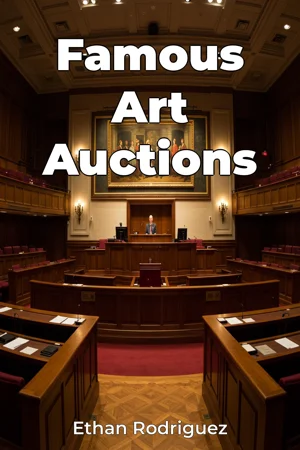
About This Book
Have you ever wondered what drives the high-stakes world of art auctions, where masterpieces command millions and fortunes are made and lost in a matter of minutes? This book, *Famous Art Auctions*, delves into the captivating history, economic forces, and influential figures that shape this exclusive realm. It is essential to understand these auctions because they act as barometers for the art market, reflecting broader economic trends and influencing cultural perceptions of value. Furthermore, they provide a stage where art transitions from private collections to public appreciation, shaping our collective cultural heritage. This book explores three key areas: the historical evolution of art auctions, the economic drivers behind record-breaking sales, and the influential players who orchestrate these events. By examining these topics, it becomes clear that art auctions are more than mere transactions; they are complex performances where art, finance, and social status converge. Crucial to understanding art auctions is recognizing their historical roots in estate sales and aristocratic collections, tracing their transformation into globally networked marketplaces. The central argument of *Famous Art Auctions* is that the auction market serves as a dynamic intersection of artistic merit, financial speculation, and social prestige. It's not simply about who can pay the most; it's about how art becomes a commodity, a status symbol, and an investment vehicle, all at once. This argument is important because it challenges conventional views of art as purely aesthetic or cultural objects, revealing its multifaceted role in the global economy. The book unfolds by first introducing the foundational concepts of art valuation, auction mechanics, and the key players involved, from auction houses to art collectors and dealers. It then moves into a detailed examination of significant auctions throughout history, analyzing the economic conditions, social contexts, and marketing strategies that contributed to their success or failure. Major case studies will include sales that set new benchmarks in the art market, such as the auctions of works by Impressionist and Modern masters, as well as contemporary art phenomena. The book also explores the role of celebrity provenance and its effect on auction prices. Finally, the book analyzes recent trends, such as the rise of online auctions and the increasing influence of emerging markets, and culminates in a discussion of the future of art auctions and their implications for the art world as a whole. The arguments presented are supported by a comprehensive analysis of auction records, financial data, industry reports, and interviews with art market professionals. The book draws on unique datasets, including historical auction catalogs and price indices, providing a robust empirical foundation for its claims. *Famous Art Auctions* connects to other fields by examining the intersection of art history, financial economics, and sociology. It explores how economic theories of supply and demand, behavioral finance, and social network analysis can illuminate the dynamics of the art market. The book's approach stands out due to its integrated analysis of historical trends, economic factors, and social influences. The tone will be informative and accessible, blending rigorous research with engaging storytelling. It will appeal to art collectors, investors, art history enthusiasts, and anyone interested in the intersection of art and finance. The book operates within the conventions of financial non-fiction, providing a balanced and objective analysis of the art market. The scope of the book is limited to publicly held art auctions, focusing primarily on established auction houses and excluding private sales. This focus allows for a more in-depth analysis of the market dynamics that are transparent and readily observable. The book will also discuss the ethics of art auctions and address controversies such as price manipulation and the impact of auctions on art valuation. *Famous Art Auctions* offers practical insights for navigating the art market, making it valuable for both seasoned collectors and newcomers. By understanding the historical context, economic drivers, and social dynamics of art auctions, readers can make more informed decisions about buying and selling art.
Have you ever wondered what drives the high-stakes world of art auctions, where masterpieces command millions and fortunes are made and lost in a matter of minutes? This book, *Famous Art Auctions*, delves into the captivating history, economic forces, and influential figures that shape this exclusive realm. It is essential to understand these auctions because they act as barometers for the art market, reflecting broader economic trends and influencing cultural perceptions of value. Furthermore, they provide a stage where art transitions from private collections to public appreciation, shaping our collective cultural heritage. This book explores three key areas: the historical evolution of art auctions, the economic drivers behind record-breaking sales, and the influential players who orchestrate these events. By examining these topics, it becomes clear that art auctions are more than mere transactions; they are complex performances where art, finance, and social status converge. Crucial to understanding art auctions is recognizing their historical roots in estate sales and aristocratic collections, tracing their transformation into globally networked marketplaces. The central argument of *Famous Art Auctions* is that the auction market serves as a dynamic intersection of artistic merit, financial speculation, and social prestige. It's not simply about who can pay the most; it's about how art becomes a commodity, a status symbol, and an investment vehicle, all at once. This argument is important because it challenges conventional views of art as purely aesthetic or cultural objects, revealing its multifaceted role in the global economy. The book unfolds by first introducing the foundational concepts of art valuation, auction mechanics, and the key players involved, from auction houses to art collectors and dealers. It then moves into a detailed examination of significant auctions throughout history, analyzing the economic conditions, social contexts, and marketing strategies that contributed to their success or failure. Major case studies will include sales that set new benchmarks in the art market, such as the auctions of works by Impressionist and Modern masters, as well as contemporary art phenomena. The book also explores the role of celebrity provenance and its effect on auction prices. Finally, the book analyzes recent trends, such as the rise of online auctions and the increasing influence of emerging markets, and culminates in a discussion of the future of art auctions and their implications for the art world as a whole. The arguments presented are supported by a comprehensive analysis of auction records, financial data, industry reports, and interviews with art market professionals. The book draws on unique datasets, including historical auction catalogs and price indices, providing a robust empirical foundation for its claims. *Famous Art Auctions* connects to other fields by examining the intersection of art history, financial economics, and sociology. It explores how economic theories of supply and demand, behavioral finance, and social network analysis can illuminate the dynamics of the art market. The book's approach stands out due to its integrated analysis of historical trends, economic factors, and social influences. The tone will be informative and accessible, blending rigorous research with engaging storytelling. It will appeal to art collectors, investors, art history enthusiasts, and anyone interested in the intersection of art and finance. The book operates within the conventions of financial non-fiction, providing a balanced and objective analysis of the art market. The scope of the book is limited to publicly held art auctions, focusing primarily on established auction houses and excluding private sales. This focus allows for a more in-depth analysis of the market dynamics that are transparent and readily observable. The book will also discuss the ethics of art auctions and address controversies such as price manipulation and the impact of auctions on art valuation. *Famous Art Auctions* offers practical insights for navigating the art market, making it valuable for both seasoned collectors and newcomers. By understanding the historical context, economic drivers, and social dynamics of art auctions, readers can make more informed decisions about buying and selling art.
*Famous Art Auctions* explores the high-stakes world where art, finance, and prestige collide. It unveils the historical evolution of art auctions, from estate sales to today's global marketplaces, highlighting how these events serve as barometers for the entire art market, reflecting economic trends and influencing cultural value. The book argues that auctions are not mere transactions but complex performances involving artistic merit, financial speculation, and social status. Did you know that celebrity provenance can significantly impact auction prices, or that online art auctions are reshaping how art is bought and sold? The book progresses from foundational concepts like art valuation and key players to detailed analyses of significant auctions throughout history, examining the economic conditions and marketing strategies behind their successes and failures. Major case studies include Impressionist, Modern, and contemporary art sales that set new market benchmarks. By blending rigorous research with accessible storytelling, *Famous Art Auctions* offers insights into navigating the art market, making it valuable for both seasoned collectors and newcomers interested in art investment.
Book Details
ISBN
9788233997960
Publisher
Publifye AS
Your Licenses
You don't own any licenses for this book
Purchase a license below to unlock this book and download the EPUB.
Purchase License
Select a tier to unlock this book
Need bulk licensing?
Contact us for enterprise agreements.