
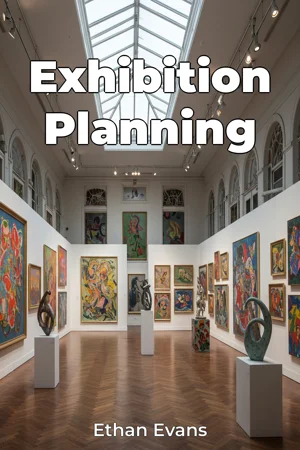
About This Book
What truly separates a successful art exhibition from a forgettable one? "Exhibition Planning" provides a comprehensive guide to organizing, managing, and promoting art exhibitions on a global scale, bridging the gap between artistic vision and logistical execution. It delves into the critical intersections of business management, artistic curation, and strategic communication, offering a roadmap for navigating the complexities inherent in the contemporary art world. The book addresses two fundamental pillars of exhibition success: meticulous planning and effective management. Planning encompasses everything from initial concept development and artist selection to securing funding and choosing the right venue. Management focuses on the practical aspects of installation, staffing, security, insurance, and risk mitigation. Both are equally vital; a brilliant curatorial idea can fail without solid execution, and flawless management cannot compensate for a poorly conceived exhibition. These topics are crucial because the contemporary art market is increasingly competitive, demanding higher standards of professionalism and innovation from exhibition organizers. "Exhibition Planning" argues that a holistic approach, integrating business acumen with artistic sensibility, is essential for creating impactful and financially sustainable exhibitions. This argument is significant because it challenges the traditional view of art exhibitions as purely artistic endeavors, instead framing them as complex projects requiring careful planning, resource allocation, and strategic marketing. The book begins by introducing core concepts in exhibition theory and practice, examining different exhibition models and their historical evolution. It then moves into a detailed exploration of the planning phase, including developing a curatorial statement, conducting market research, creating a budget, and securing necessary permits and licenses. Subsequent sections address the management phase, covering topics such as art handling, installation techniques, visitor management, and emergency preparedness. The book culminates in a discussion of promotion and marketing strategies, emphasizing the importance of audience engagement, social media, and public relations. Case studies of successful and unsuccessful exhibitions are integrated throughout to illustrate key principles and provide practical examples. The book draws upon a range of evidence, including industry best practices, academic research in museum studies and arts management, and interviews with experienced curators, gallery owners, and exhibition designers. Unique data sources, such as exhibition attendance figures, sales data, and audience surveys, are analyzed to provide empirical support for the book's arguments. "Exhibition Planning" connects to other fields, including marketing, finance, and project management. Marketing principles are applied to audience development and exhibition promotion. Financial management techniques are used to create realistic budgets and track expenses. Project management methodologies are employed to ensure that exhibitions are completed on time and within budget. These interdisciplinary connections enrich the book's analysis and provide readers with a broader understanding of the exhibition planning process. This book takes a unique approach by emphasizing data-driven decision-making in exhibition planning. It provides readers with tools and techniques for analyzing market trends, evaluating exhibition performance, and measuring the return on investment. Written in a professional yet accessible style, "Exhibition Planning" is targeted towards students of arts management, museum studies, and curatorial practice, as well as emerging and established art professionals, gallery owners, and independent curators. It provides valuable insights and practical guidance for anyone involved in the planning, management, or promotion of art exhibitions. The scope of the book encompasses a wide range of exhibition types, from small-scale gallery shows to large-scale museum exhibitions and international biennials. However, it focuses primarily on contemporary art exhibitions and does not delve deeply into the specific challenges of exhibiting historical or archaeological artifacts. The information in "Exhibition Planning" can be applied directly by readers to their own exhibition projects. The book provides templates, checklists, and other practical resources to help readers plan and execute successful exhibitions. The book addresses ongoing debates in the field, such as the role of technology in exhibitions, the ethics of collecting and displaying art, and the challenges of promoting diversity and inclusion in the art world. It encourages readers to critically examine these issues and develop their own informed perspectives.
What truly separates a successful art exhibition from a forgettable one? "Exhibition Planning" provides a comprehensive guide to organizing, managing, and promoting art exhibitions on a global scale, bridging the gap between artistic vision and logistical execution. It delves into the critical intersections of business management, artistic curation, and strategic communication, offering a roadmap for navigating the complexities inherent in the contemporary art world. The book addresses two fundamental pillars of exhibition success: meticulous planning and effective management. Planning encompasses everything from initial concept development and artist selection to securing funding and choosing the right venue. Management focuses on the practical aspects of installation, staffing, security, insurance, and risk mitigation. Both are equally vital; a brilliant curatorial idea can fail without solid execution, and flawless management cannot compensate for a poorly conceived exhibition. These topics are crucial because the contemporary art market is increasingly competitive, demanding higher standards of professionalism and innovation from exhibition organizers. "Exhibition Planning" argues that a holistic approach, integrating business acumen with artistic sensibility, is essential for creating impactful and financially sustainable exhibitions. This argument is significant because it challenges the traditional view of art exhibitions as purely artistic endeavors, instead framing them as complex projects requiring careful planning, resource allocation, and strategic marketing. The book begins by introducing core concepts in exhibition theory and practice, examining different exhibition models and their historical evolution. It then moves into a detailed exploration of the planning phase, including developing a curatorial statement, conducting market research, creating a budget, and securing necessary permits and licenses. Subsequent sections address the management phase, covering topics such as art handling, installation techniques, visitor management, and emergency preparedness. The book culminates in a discussion of promotion and marketing strategies, emphasizing the importance of audience engagement, social media, and public relations. Case studies of successful and unsuccessful exhibitions are integrated throughout to illustrate key principles and provide practical examples. The book draws upon a range of evidence, including industry best practices, academic research in museum studies and arts management, and interviews with experienced curators, gallery owners, and exhibition designers. Unique data sources, such as exhibition attendance figures, sales data, and audience surveys, are analyzed to provide empirical support for the book's arguments. "Exhibition Planning" connects to other fields, including marketing, finance, and project management. Marketing principles are applied to audience development and exhibition promotion. Financial management techniques are used to create realistic budgets and track expenses. Project management methodologies are employed to ensure that exhibitions are completed on time and within budget. These interdisciplinary connections enrich the book's analysis and provide readers with a broader understanding of the exhibition planning process. This book takes a unique approach by emphasizing data-driven decision-making in exhibition planning. It provides readers with tools and techniques for analyzing market trends, evaluating exhibition performance, and measuring the return on investment. Written in a professional yet accessible style, "Exhibition Planning" is targeted towards students of arts management, museum studies, and curatorial practice, as well as emerging and established art professionals, gallery owners, and independent curators. It provides valuable insights and practical guidance for anyone involved in the planning, management, or promotion of art exhibitions. The scope of the book encompasses a wide range of exhibition types, from small-scale gallery shows to large-scale museum exhibitions and international biennials. However, it focuses primarily on contemporary art exhibitions and does not delve deeply into the specific challenges of exhibiting historical or archaeological artifacts. The information in "Exhibition Planning" can be applied directly by readers to their own exhibition projects. The book provides templates, checklists, and other practical resources to help readers plan and execute successful exhibitions. The book addresses ongoing debates in the field, such as the role of technology in exhibitions, the ethics of collecting and displaying art, and the challenges of promoting diversity and inclusion in the art world. It encourages readers to critically examine these issues and develop their own informed perspectives.
"Exhibition Planning" offers a comprehensive guide to the multifaceted world of art exhibitions, bridging artistic vision with essential business management. It emphasizes that successful exhibitions require both meticulous planning and effective management, highlighting how a well-conceived curatorial statement can falter without solid execution, and flawless management can't compensate for a poorly conceived exhibition. The book underscores the necessity of integrating business acumen with artistic sensibility for impactful and financially sustainable art exhibitions. The book uniquely emphasizes data-driven decision-making, providing professionals with tools to analyze market trends and evaluate exhibition performance. It progresses from core concepts in exhibition theory and practice to detailed explorations of planning, management, and promotion, incorporating case studies to illustrate key principles. Marketing, finance, and project management principles are applied to audience development, budget creation, and project timelines, enriching the analysis and providing a broader understanding of the exhibition planning process. Targeted towards art professionals, gallery owners, and students of arts management, this book provides practical guidance applicable to various exhibition types, focusing primarily on contemporary art. By addressing ongoing debates, such as the role of technology and ethics in art, the book encourages critical examination and informed perspectives within the dynamic field of arts management.
Book Details
ISBN
9788233997939
Publisher
Publifye AS
Your Licenses
You don't own any licenses for this book
Purchase a license below to unlock this book and download the EPUB.
Purchase License
Select a tier to unlock this book
Need bulk licensing?
Contact us for enterprise agreements.