
About This Book
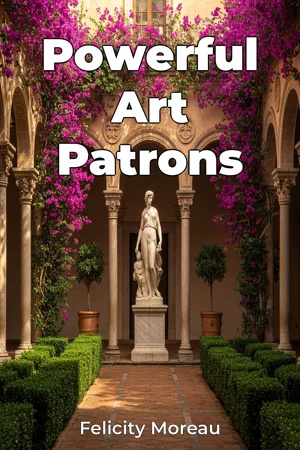
How have personal fortunes shaped the art we admire today? "Powerful Art Patrons" delves into the dynamic relationship between artists and their benefactors, revealing how the patronage system has profoundly influenced the trajectory of art history. This book examines the multifaceted role of wealthy individuals and institutions in fostering creativity, determining artistic trends, and ultimately, shaping our cultural heritage. The core of this exploration revolves around three significant themes: the economics of art, the power dynamics inherent in the patron-artist relationship, and the long-term impact of patronage on artistic movements. Understanding these topics is crucial, as patronage not only provided financial stability for artists but also dictated subject matter, stylistic choices, and the very accessibility of art to the public. Often, these choices were aligned with the patron's particular values, agenda, and social standing. To provide context, the book traces the evolution of art patronage from the Renaissance, where families like the Medici commissioned groundbreaking works, through the rise of industrial magnates in the 19th century, to the contemporary landscape of corporate sponsorship and philanthropic foundations. No specific prior knowledge is required, but a general familiarity with major art historical periods will enhance the reader's understanding. The central argument of "Powerful Art Patrons" asserts that art patronage is not merely a financial transaction but a complex interplay of power, aesthetics, and social influence that has fundamentally determined the course of art history. By examining specific case studies and historical periods, the book demonstrates how patronage has acted as both a catalyst for innovation and a constraint on artistic expression. The book unfolds in three parts. First, it introduces the fundamental concepts of art patronage, establishing a theoretical framework for understanding its various forms and motivations. Second, it examines key historical periods and individual patrons, such as the aforementioned Medici and later figures like Peggy Guggenheim, analyzing their impact on the artists they supported and the broader art world. This section examines the effects of patronage on the careers of artists, including Michelangelo, Diego Rivera, and others whose work was directly influenced by the desires and demands of their benefactors. Third, it investigates contemporary models of art patronage, including government funding, corporate sponsorships, and private philanthropy. This section explores the challenges and opportunities facing artists today, as well as the ethical considerations surrounding patronage in the 21st century. The arguments presented in "Powerful Art Patrons" are supported by extensive research, drawing on primary sources such as letters, contracts, and financial records, as well as secondary scholarship in art history, economics, and social history. It also includes analyses of artworks themselves, interpreting them in the context of their patronage. The book also connects to the fields of economics, sociology, and political science, providing insights into the economic structures of the art market, sociological dynamics of power and influence, and political implications of art funding. This interdisciplinary approach enriches the book's analysis and broadens its appeal to readers interested in the intersection of art and society. "Powerful Art Patrons" offers a comprehensive yet accessible analysis of art patronage, avoiding jargon and theoretical abstraction in favor of clear, engaging prose. It is aimed at art enthusiasts, history buffs, students, and anyone interested in understanding the forces that have shaped our cultural landscape. For art students and emerging artists, this book provides valuable insights into the practical aspects of navigating the art world and securing funding for their work. In terms of scope, the book focuses primarily on Western art patronage, with occasional references to non-Western examples. While acknowledging the global nature of art, the book's scope is deliberately limited to allow for a more in-depth exploration of specific historical periods and cultural contexts. The information presented in "Powerful Art Patrons" has practical applications for artists, art collectors, and policymakers alike. Artists can learn strategies for attracting patronage and managing relationships with benefactors. Collectors can gain a deeper understanding of the provenance and value of artworks. Policymakers can use the book's insights to develop more effective strategies for supporting the arts. The book addresses ongoing debates about the role of patronage in shaping artistic expression, including questions about censorship, artistic freedom, and the influence of wealth on cultural production. By presenting a balanced and nuanced perspective, "Powerful Art Patrons" contributes to a more informed understanding of these complex issues.
How have personal fortunes shaped the art we admire today? "Powerful Art Patrons" delves into the dynamic relationship between artists and their benefactors, revealing how the patronage system has profoundly influenced the trajectory of art history. This book examines the multifaceted role of wealthy individuals and institutions in fostering creativity, determining artistic trends, and ultimately, shaping our cultural heritage. The core of this exploration revolves around three significant themes: the economics of art, the power dynamics inherent in the patron-artist relationship, and the long-term impact of patronage on artistic movements. Understanding these topics is crucial, as patronage not only provided financial stability for artists but also dictated subject matter, stylistic choices, and the very accessibility of art to the public. Often, these choices were aligned with the patron's particular values, agenda, and social standing. To provide context, the book traces the evolution of art patronage from the Renaissance, where families like the Medici commissioned groundbreaking works, through the rise of industrial magnates in the 19th century, to the contemporary landscape of corporate sponsorship and philanthropic foundations. No specific prior knowledge is required, but a general familiarity with major art historical periods will enhance the reader's understanding. The central argument of "Powerful Art Patrons" asserts that art patronage is not merely a financial transaction but a complex interplay of power, aesthetics, and social influence that has fundamentally determined the course of art history. By examining specific case studies and historical periods, the book demonstrates how patronage has acted as both a catalyst for innovation and a constraint on artistic expression. The book unfolds in three parts. First, it introduces the fundamental concepts of art patronage, establishing a theoretical framework for understanding its various forms and motivations. Second, it examines key historical periods and individual patrons, such as the aforementioned Medici and later figures like Peggy Guggenheim, analyzing their impact on the artists they supported and the broader art world. This section examines the effects of patronage on the careers of artists, including Michelangelo, Diego Rivera, and others whose work was directly influenced by the desires and demands of their benefactors. Third, it investigates contemporary models of art patronage, including government funding, corporate sponsorships, and private philanthropy. This section explores the challenges and opportunities facing artists today, as well as the ethical considerations surrounding patronage in the 21st century. The arguments presented in "Powerful Art Patrons" are supported by extensive research, drawing on primary sources such as letters, contracts, and financial records, as well as secondary scholarship in art history, economics, and social history. It also includes analyses of artworks themselves, interpreting them in the context of their patronage. The book also connects to the fields of economics, sociology, and political science, providing insights into the economic structures of the art market, sociological dynamics of power and influence, and political implications of art funding. This interdisciplinary approach enriches the book's analysis and broadens its appeal to readers interested in the intersection of art and society. "Powerful Art Patrons" offers a comprehensive yet accessible analysis of art patronage, avoiding jargon and theoretical abstraction in favor of clear, engaging prose. It is aimed at art enthusiasts, history buffs, students, and anyone interested in understanding the forces that have shaped our cultural landscape. For art students and emerging artists, this book provides valuable insights into the practical aspects of navigating the art world and securing funding for their work. In terms of scope, the book focuses primarily on Western art patronage, with occasional references to non-Western examples. While acknowledging the global nature of art, the book's scope is deliberately limited to allow for a more in-depth exploration of specific historical periods and cultural contexts. The information presented in "Powerful Art Patrons" has practical applications for artists, art collectors, and policymakers alike. Artists can learn strategies for attracting patronage and managing relationships with benefactors. Collectors can gain a deeper understanding of the provenance and value of artworks. Policymakers can use the book's insights to develop more effective strategies for supporting the arts. The book addresses ongoing debates about the role of patronage in shaping artistic expression, including questions about censorship, artistic freedom, and the influence of wealth on cultural production. By presenting a balanced and nuanced perspective, "Powerful Art Patrons" contributes to a more informed understanding of these complex issues.
"Powerful Art Patrons" explores the significant influence of wealth and power on the creation and evolution of art throughout history. It examines how art patronage, from the Renaissance to today, has shaped not only what art is made but also who gets to see it. The book highlights the complex relationship between artists and their benefactors, demonstrating how patronage involves more than just financial support; it also involves power dynamics that can dictate artistic choices and trends. Consider the Medici family, who commissioned groundbreaking works that defined the Renaissance, illustrating how personal fortunes can shape entire artistic movements. The book approaches this topic by tracing the evolution of art patronage across different eras. Beginning with foundational concepts, it then delves into specific historical periods and patrons, such as Peggy Guggenheim, analyzing their impact on artists and the art world. Finally, it examines contemporary models of art funding, including corporate sponsorships and private philanthropy, and the ethical considerations involved. This approach provides a comprehensive understanding of how art patronage acts as both a catalyst for innovation and a potential constraint on artistic expression, offering valuable insights for art enthusiasts and those interested in the intersection of art, history, and economics.
Book Details
ISBN
9788233997793
Publisher
Publifye AS
Your Licenses
You don't own any licenses for this book
Purchase a license below to unlock this book and download the EPUB.
Purchase License
Select a tier to unlock this book
Need bulk licensing?
Contact us for enterprise agreements.