
About This Book
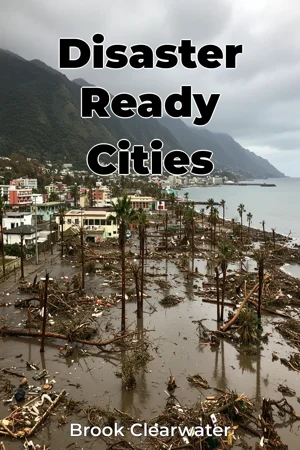
Can cities withstand the increasing onslaught of natural disasters? *Disaster Ready Cities* examines the critical role of urban planning in mitigating the devastating impacts of earthquakes, hurricanes, and extreme weather events. It explores how proactive strategies, informed by earth sciences, geography, and environmental considerations, can transform vulnerable urban centers into resilient communities. The book focuses on two main topics: firstly, the scientific understanding of disaster risks in urban environments, and secondly, the practical application of urban planning principles to reduce vulnerability and enhance resilience. These topics are crucial because urban populations are growing rapidly, concentrating more people and infrastructure in areas increasingly exposed to natural hazards. Understanding the historical context of urban development and disaster management is essential. The book provides a background on how cities have historically responded to disasters, highlighting both successes and failures. It also establishes a baseline understanding of relevant earth science concepts, such as plate tectonics and atmospheric dynamics, and geographic factors influencing disaster risk, such as coastal proximity and topography. The central argument is that effective urban planning, grounded in scientific understanding and informed by past experiences, is the most potent tool for building disaster-ready cities. This argument is vital because reactive disaster response, while necessary, is insufficient. Proactive planning saves lives, reduces property damage and minimizes economic disruption. The book’s structure begins by introducing the key concepts of hazard, vulnerability, and resilience, establishing a framework for understanding disaster risk. It then develops these ideas through several major sections. One section analyzes the specific risks posed by earthquakes, hurricanes, and extreme weather events, detailing their physical characteristics and potential impacts on urban areas. A second section examines urban planning strategies for mitigation and adaptation, including land-use planning, building codes, infrastructure design, and community engagement. A third section explores case studies of cities that have successfully implemented disaster risk reduction measures, as well as cities that have struggled and learned from their failures. The book culminates by presenting a comprehensive framework for building disaster-ready cities, emphasizing the need for integrated, multi-sectoral approaches. The evidence presented throughout the book includes scientific data on disaster frequency and intensity, statistical analyses of vulnerability and risk, and detailed case studies of urban planning interventions. These data sources are complemented by policy documents, planning reports, and interviews with urban planners and disaster management professionals. *Disaster Ready Cities* connects to other fields of study, including civil engineering, public health, and social sciences. Civil engineering provides the technical expertise for designing resilient infrastructure. Public health addresses the health impacts of disasters and the importance of community preparedness. Social sciences offer insights into human behavior, social vulnerability, and effective communication strategies. The book adopts a practical and solutions-oriented writing style, making complex information accessible to a broad audience. It avoids jargon and uses real-world examples to illustrate key concepts. The intended readership includes urban planners, policymakers, disaster management professionals, students, and anyone interested in creating safer and more resilient communities. This book is valuable to them because it provides a comprehensive and practical guide to building disaster-ready cities, drawing on the latest research and best practices. The scope of the book is intentionally broad, covering a range of disasters and urban contexts, but it primarily focuses on cities in developed and developing countries. The information in this book can be applied practically by readers through its guidelines for assessing disaster risk, developing mitigation strategies, and implementing resilience-building measures. It also provides tools and resources for community engagement and public education. The book addresses ongoing debates in the field, such as the trade-offs between economic development and disaster risk reduction, and the challenges of incorporating climate change projections into urban planning.
Can cities withstand the increasing onslaught of natural disasters? *Disaster Ready Cities* examines the critical role of urban planning in mitigating the devastating impacts of earthquakes, hurricanes, and extreme weather events. It explores how proactive strategies, informed by earth sciences, geography, and environmental considerations, can transform vulnerable urban centers into resilient communities. The book focuses on two main topics: firstly, the scientific understanding of disaster risks in urban environments, and secondly, the practical application of urban planning principles to reduce vulnerability and enhance resilience. These topics are crucial because urban populations are growing rapidly, concentrating more people and infrastructure in areas increasingly exposed to natural hazards. Understanding the historical context of urban development and disaster management is essential. The book provides a background on how cities have historically responded to disasters, highlighting both successes and failures. It also establishes a baseline understanding of relevant earth science concepts, such as plate tectonics and atmospheric dynamics, and geographic factors influencing disaster risk, such as coastal proximity and topography. The central argument is that effective urban planning, grounded in scientific understanding and informed by past experiences, is the most potent tool for building disaster-ready cities. This argument is vital because reactive disaster response, while necessary, is insufficient. Proactive planning saves lives, reduces property damage and minimizes economic disruption. The book’s structure begins by introducing the key concepts of hazard, vulnerability, and resilience, establishing a framework for understanding disaster risk. It then develops these ideas through several major sections. One section analyzes the specific risks posed by earthquakes, hurricanes, and extreme weather events, detailing their physical characteristics and potential impacts on urban areas. A second section examines urban planning strategies for mitigation and adaptation, including land-use planning, building codes, infrastructure design, and community engagement. A third section explores case studies of cities that have successfully implemented disaster risk reduction measures, as well as cities that have struggled and learned from their failures. The book culminates by presenting a comprehensive framework for building disaster-ready cities, emphasizing the need for integrated, multi-sectoral approaches. The evidence presented throughout the book includes scientific data on disaster frequency and intensity, statistical analyses of vulnerability and risk, and detailed case studies of urban planning interventions. These data sources are complemented by policy documents, planning reports, and interviews with urban planners and disaster management professionals. *Disaster Ready Cities* connects to other fields of study, including civil engineering, public health, and social sciences. Civil engineering provides the technical expertise for designing resilient infrastructure. Public health addresses the health impacts of disasters and the importance of community preparedness. Social sciences offer insights into human behavior, social vulnerability, and effective communication strategies. The book adopts a practical and solutions-oriented writing style, making complex information accessible to a broad audience. It avoids jargon and uses real-world examples to illustrate key concepts. The intended readership includes urban planners, policymakers, disaster management professionals, students, and anyone interested in creating safer and more resilient communities. This book is valuable to them because it provides a comprehensive and practical guide to building disaster-ready cities, drawing on the latest research and best practices. The scope of the book is intentionally broad, covering a range of disasters and urban contexts, but it primarily focuses on cities in developed and developing countries. The information in this book can be applied practically by readers through its guidelines for assessing disaster risk, developing mitigation strategies, and implementing resilience-building measures. It also provides tools and resources for community engagement and public education. The book addresses ongoing debates in the field, such as the trade-offs between economic development and disaster risk reduction, and the challenges of incorporating climate change projections into urban planning.
"Disaster Ready Cities" highlights the critical role of urban planning in preparing for natural disasters. With growing urban populations concentrated in vulnerable areas, understanding and mitigating risks from earthquakes, hurricanes, and extreme weather events is more crucial than ever. The book emphasizes proactive strategies, informed by earth sciences and geographic factors, to transform cities into resilient communities. Interestingly, reactive disaster response alone is insufficient; proactive planning saves lives, reduces property damage, and minimizes economic disruption. The book progresses by first introducing key concepts like hazard, vulnerability, and resilience. It then analyzes specific risks and examines urban planning strategies for mitigation, such as land-use planning and resilient infrastructure design. Case studies of successful and unsuccessful city implementations are presented, culminating in a comprehensive framework for building disaster-ready cities. The book's value lies in its practical, solutions-oriented approach, making complex information accessible to urban planners, policymakers, and anyone interested in creating safer communities.
Book Details
ISBN
9788233997588
Publisher
Publifye AS
Your Licenses
You don't own any licenses for this book
Purchase a license below to unlock this book and download the EPUB.
Purchase License
Select a tier to unlock this book
Need bulk licensing?
Contact us for enterprise agreements.