
About This Book
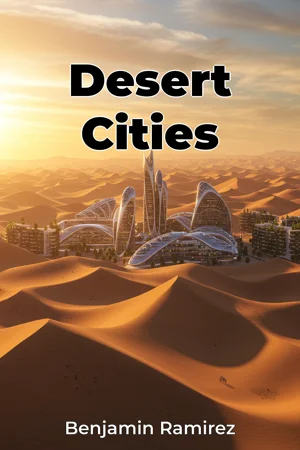
How can thriving cities be built and sustained in the world's most extreme desert environments? "Desert Cities" explores the intricate relationship between urban development, environmental sustainability, and human ingenuity within arid landscapes. This book examines the architectural, geographical, and earth science principles that underpin successful desert urban centers, offering a comprehensive analysis of their design, resource management, and resilience. The core of this work revolves around three key topics: adaptive architecture, sustainable resource management, and the impact of climate change on desert urbanization. Adaptive architecture refers to building designs and urban layouts that minimize heat gain, maximize natural ventilation, and utilize locally sourced materials to create comfortable and energy-efficient living spaces. Sustainable resource management focuses on innovative strategies for water conservation, renewable energy production, and waste reduction, essential for long-term viability in water-scarce regions. The book also addresses the challenges posed by climate change, including increased temperatures, water scarcity, and extreme weather events, and how these challenges are being met through forward-thinking urban planning and technological advancements. Historically, desert civilizations have developed ingenious strategies to thrive in harsh conditions, from ancient irrigation systems to wind-catcher architecture. Understanding these historical precedents provides valuable context for contemporary challenges and informs the development of sustainable solutions. The book builds upon this foundation by examining contemporary examples of desert cities that have successfully integrated traditional knowledge with modern technology to create livable and resilient urban environments. The central argument of "Desert Cities" is that sustainable urban development in desert environments requires a holistic approach that integrates architectural design, resource management, and climate change adaptation strategies. It asserts that by understanding the unique challenges and opportunities presented by arid landscapes, and by leveraging both traditional wisdom and technological innovation, it is possible to create thriving urban centers that are both environmentally sustainable and economically prosperous. The book begins by introducing fundamental concepts in desert climatology, hydrology, and ecology, providing a necessary scientific foundation. It then delves into the history of desert urbanization, exploring the successes and failures of past civilizations. The subsequent chapters focus on specific case studies of contemporary desert cities around the world, examining their architectural innovations, resource management strategies, and climate change adaptation plans. These case studies are analyzed through the lens of earth sciences, geography, and architectural principles, providing a multi-faceted understanding of the challenges and opportunities of desert urbanization. The book culminates by proposing a framework for sustainable desert urban development, outlining key principles and strategies that can be applied in diverse contexts. The evidence presented draws from diverse sources, including climate data, hydrological surveys, architectural plans, urban planning documents, interviews with city officials and residents, and on-site observations. Original data from environmental monitoring studies and energy consumption analyses are also included to provide empirical support for the arguments presented. "Desert Cities" connects to other fields such as environmental science, civil engineering, and public policy. It provides valuable insights for policymakers seeking to promote sustainable urban development, for engineers designing infrastructure for arid environments, and for environmental scientists studying the impacts of urbanization on desert ecosystems. This book offers a unique perspective by integrating architectural design with environmental science and geographical analysis. It goes beyond simply describing existing practices to proposing a comprehensive framework for sustainable desert urban development, grounded in both scientific evidence and practical experience. The tone is informative and analytical, presenting complex information in a clear and accessible manner. The writing style is professional yet engaging, aiming to capture the reader's interest while maintaining scientific rigor. The target audience includes students and researchers in architecture, urban planning, environmental science, and geography, as well as policymakers, urban planners, and anyone interested in sustainable development and the challenges of living in arid environments. The book offers valuable insights and practical guidance for professionals working in these fields. As a work of non-fiction, "Desert Cities" adheres to the conventions of academic rigor, providing clear and concise explanations of key concepts, supporting arguments with evidence, and citing sources appropriately. It avoids unsubstantiated claims and presents a balanced perspective on the challenges and opportunities of desert urbanization. The scope of the book is limited to the built environment and its interaction with the natural environment in desert regions. It does not delve into social or cultural aspects of desert life, focusing primarily on the physical infrastructure and environmental challenges of desert urbanization. The information in "Desert Cities" can be applied practically by urban planners seeking to design sustainable cities, by architects developing energy-efficient buildings, and by policymakers implementing environmental regulations. It provides a roadmap for creating thriving urban centers that are both environmentally sustainable and economically prosperous. The book addresses ongoing debates in the field, such as the role of technology in addressing water scarcity, the effectiveness of different architectural designs in reducing energy consumption, and the trade-offs between economic development and environmental protection. By presenting a nuanced perspective on these debates, the book aims to inform decision-making and promote sustainable urban development in desert environments.
How can thriving cities be built and sustained in the world's most extreme desert environments? "Desert Cities" explores the intricate relationship between urban development, environmental sustainability, and human ingenuity within arid landscapes. This book examines the architectural, geographical, and earth science principles that underpin successful desert urban centers, offering a comprehensive analysis of their design, resource management, and resilience. The core of this work revolves around three key topics: adaptive architecture, sustainable resource management, and the impact of climate change on desert urbanization. Adaptive architecture refers to building designs and urban layouts that minimize heat gain, maximize natural ventilation, and utilize locally sourced materials to create comfortable and energy-efficient living spaces. Sustainable resource management focuses on innovative strategies for water conservation, renewable energy production, and waste reduction, essential for long-term viability in water-scarce regions. The book also addresses the challenges posed by climate change, including increased temperatures, water scarcity, and extreme weather events, and how these challenges are being met through forward-thinking urban planning and technological advancements. Historically, desert civilizations have developed ingenious strategies to thrive in harsh conditions, from ancient irrigation systems to wind-catcher architecture. Understanding these historical precedents provides valuable context for contemporary challenges and informs the development of sustainable solutions. The book builds upon this foundation by examining contemporary examples of desert cities that have successfully integrated traditional knowledge with modern technology to create livable and resilient urban environments. The central argument of "Desert Cities" is that sustainable urban development in desert environments requires a holistic approach that integrates architectural design, resource management, and climate change adaptation strategies. It asserts that by understanding the unique challenges and opportunities presented by arid landscapes, and by leveraging both traditional wisdom and technological innovation, it is possible to create thriving urban centers that are both environmentally sustainable and economically prosperous. The book begins by introducing fundamental concepts in desert climatology, hydrology, and ecology, providing a necessary scientific foundation. It then delves into the history of desert urbanization, exploring the successes and failures of past civilizations. The subsequent chapters focus on specific case studies of contemporary desert cities around the world, examining their architectural innovations, resource management strategies, and climate change adaptation plans. These case studies are analyzed through the lens of earth sciences, geography, and architectural principles, providing a multi-faceted understanding of the challenges and opportunities of desert urbanization. The book culminates by proposing a framework for sustainable desert urban development, outlining key principles and strategies that can be applied in diverse contexts. The evidence presented draws from diverse sources, including climate data, hydrological surveys, architectural plans, urban planning documents, interviews with city officials and residents, and on-site observations. Original data from environmental monitoring studies and energy consumption analyses are also included to provide empirical support for the arguments presented. "Desert Cities" connects to other fields such as environmental science, civil engineering, and public policy. It provides valuable insights for policymakers seeking to promote sustainable urban development, for engineers designing infrastructure for arid environments, and for environmental scientists studying the impacts of urbanization on desert ecosystems. This book offers a unique perspective by integrating architectural design with environmental science and geographical analysis. It goes beyond simply describing existing practices to proposing a comprehensive framework for sustainable desert urban development, grounded in both scientific evidence and practical experience. The tone is informative and analytical, presenting complex information in a clear and accessible manner. The writing style is professional yet engaging, aiming to capture the reader's interest while maintaining scientific rigor. The target audience includes students and researchers in architecture, urban planning, environmental science, and geography, as well as policymakers, urban planners, and anyone interested in sustainable development and the challenges of living in arid environments. The book offers valuable insights and practical guidance for professionals working in these fields. As a work of non-fiction, "Desert Cities" adheres to the conventions of academic rigor, providing clear and concise explanations of key concepts, supporting arguments with evidence, and citing sources appropriately. It avoids unsubstantiated claims and presents a balanced perspective on the challenges and opportunities of desert urbanization. The scope of the book is limited to the built environment and its interaction with the natural environment in desert regions. It does not delve into social or cultural aspects of desert life, focusing primarily on the physical infrastructure and environmental challenges of desert urbanization. The information in "Desert Cities" can be applied practically by urban planners seeking to design sustainable cities, by architects developing energy-efficient buildings, and by policymakers implementing environmental regulations. It provides a roadmap for creating thriving urban centers that are both environmentally sustainable and economically prosperous. The book addresses ongoing debates in the field, such as the role of technology in addressing water scarcity, the effectiveness of different architectural designs in reducing energy consumption, and the trade-offs between economic development and environmental protection. By presenting a nuanced perspective on these debates, the book aims to inform decision-making and promote sustainable urban development in desert environments.
"Desert Cities" explores how to create thriving, sustainable urban centers in arid environments. It examines the crucial interplay between urban development, environmental sustainability, and human innovation. The book highlights adaptive architecture designed to minimize heat and maximize natural ventilation, alongside strategies for sustainable resource management like water conservation and renewable energy use. Did you know ancient desert civilizations used ingenious irrigation systems? And that today's cities blend traditional knowledge with modern tech? The book emphasizes a holistic approach integrating architectural design, resource management, and climate change adaptation. It progresses from foundational concepts in desert climatology and the history of desert urbanization to case studies of contemporary desert cities. These cities are analyzed through earth sciences, geography, and architectural principles. By understanding the unique challenges of arid landscapes and leveraging both time-tested wisdom and technological innovation, the book argues, it is possible to build urban centers that are both environmentally sound and economically vibrant.
Book Details
ISBN
9788233997564
Publisher
Publifye AS
Your Licenses
You don't own any licenses for this book
Purchase a license below to unlock this book and download the EPUB.
Purchase License
Select a tier to unlock this book
Need bulk licensing?
Contact us for enterprise agreements.