
About This Book
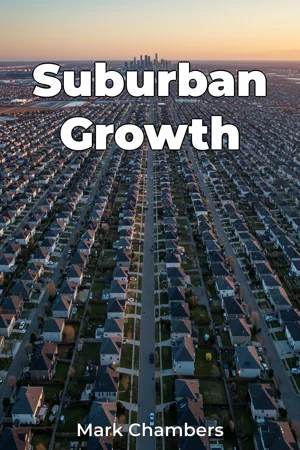
How has the relentless outward march of suburbia reshaped the very fabric of our cities and societies? "Suburban Growth" delves into the multifaceted impact of suburban expansion, exploring its intricate connections to city centers, overburdened infrastructure, and evolving land use policies. These issues stand as critical challenges for policymakers, urban planners, and communities alike, demanding a comprehensive understanding of the dynamics driving suburbanization. This book argues that suburban growth, while often perceived as a natural progression of societal development, is a complex phenomenon with far-reaching consequences that require careful management and policy intervention. We contend that a failure to understand and address these consequences will exacerbate existing inequalities, strain vital resources, and compromise the long-term sustainability of both urban and suburban areas. To provide a solid foundation, we begin by outlining the historical context of suburbanization in the 20th and 21st centuries, examining the social, economic, and political forces that fueled its rise. This includes an analysis of post-World War II housing policies, the rise of automobile culture, and the decentralization of employment opportunities. Familiarity with basic urban planning concepts and economic principles of land use is beneficial, but not essential. The book is structured to systematically analyze the key dimensions of suburban growth, focusing on three major themes. First, we investigate the effects of suburbanization on city centers, analyzing issues such as population decline in urban cores, the erosion of the tax base, and the challenges of maintaining essential services in increasingly hollowed-out downtown areas. Second, we evaluate the strain suburban expansion places on existing infrastructure, examining the costs of extending transportation networks, water and sewer systems, and other public utilities to serve sprawling developments. Third, we scrutinize the land use policies that have enabled and, in some cases, encouraged suburban growth, paying particular attention to zoning regulations, development incentives, and the fragmented governance structures that often characterize metropolitan regions. Each of these sections build upon data, case studies, and policy analysis. The arguments presented in "Suburban Growth" are supported by a diverse range of evidence, including quantitative data on population trends, housing markets, and infrastructure investment, as well as qualitative case studies of specific metropolitan areas. Furthermore, the book draws upon original research, like geographic information system (GIS) analysis of land use patterns and econometric modeling of the relationship between suburban growth and fiscal outcomes in city centers. This book connects to several other disciplines. Firstly, economics, particularly in understanding the economic drivers and consequences of suburbanization, like housing affordability. Secondly, environmental science, especially concerning the environmental impact of sprawling land use patterns and increased automobile dependence. Thirdly, sociology, mainly concerning spatial inequality and community development. "Suburban Growth" adopts an interdisciplinary and policy-oriented approach, offering a balanced assessment of the benefits and drawbacks of suburbanization. The tone is academic yet accessible, designed to engage a broad audience interested in urban affairs and public policy. The intended audience includes students and scholars in urban planning, public policy, sociology, and environmental studies, as well as policymakers, urban planners, and community leaders grappling with the challenges of managing suburban growth. This book would be valuable as a resource for understanding the complex dynamics driving suburbanization and the policy interventions needed to promote more sustainable and equitable patterns of development. As a work in the genre of social science and politics, "Suburban Growth" adheres to standards of empirical rigor, theoretical grounding, and policy relevance. We acknowledge the inherent limitations in scope, focusing primarily on the North American experience of suburbanization, while recognizing that the dynamics of suburban growth may vary significantly in other parts of the world. The insights from "Suburban Growth" have practical applications for policymakers seeking to reform zoning regulations, invest in public transportation, and promote more compact and mixed-use development patterns. Similarly, urban planners can use the book's analysis to inform their long-range planning efforts and to engage communities in discussions about the future of their metropolitan regions. Finally, the book addresses ongoing debates about the role of government in shaping urban development patterns, the merits of different land use policies, and the appropriate balance between individual property rights and the collective good.
How has the relentless outward march of suburbia reshaped the very fabric of our cities and societies? "Suburban Growth" delves into the multifaceted impact of suburban expansion, exploring its intricate connections to city centers, overburdened infrastructure, and evolving land use policies. These issues stand as critical challenges for policymakers, urban planners, and communities alike, demanding a comprehensive understanding of the dynamics driving suburbanization. This book argues that suburban growth, while often perceived as a natural progression of societal development, is a complex phenomenon with far-reaching consequences that require careful management and policy intervention. We contend that a failure to understand and address these consequences will exacerbate existing inequalities, strain vital resources, and compromise the long-term sustainability of both urban and suburban areas. To provide a solid foundation, we begin by outlining the historical context of suburbanization in the 20th and 21st centuries, examining the social, economic, and political forces that fueled its rise. This includes an analysis of post-World War II housing policies, the rise of automobile culture, and the decentralization of employment opportunities. Familiarity with basic urban planning concepts and economic principles of land use is beneficial, but not essential. The book is structured to systematically analyze the key dimensions of suburban growth, focusing on three major themes. First, we investigate the effects of suburbanization on city centers, analyzing issues such as population decline in urban cores, the erosion of the tax base, and the challenges of maintaining essential services in increasingly hollowed-out downtown areas. Second, we evaluate the strain suburban expansion places on existing infrastructure, examining the costs of extending transportation networks, water and sewer systems, and other public utilities to serve sprawling developments. Third, we scrutinize the land use policies that have enabled and, in some cases, encouraged suburban growth, paying particular attention to zoning regulations, development incentives, and the fragmented governance structures that often characterize metropolitan regions. Each of these sections build upon data, case studies, and policy analysis. The arguments presented in "Suburban Growth" are supported by a diverse range of evidence, including quantitative data on population trends, housing markets, and infrastructure investment, as well as qualitative case studies of specific metropolitan areas. Furthermore, the book draws upon original research, like geographic information system (GIS) analysis of land use patterns and econometric modeling of the relationship between suburban growth and fiscal outcomes in city centers. This book connects to several other disciplines. Firstly, economics, particularly in understanding the economic drivers and consequences of suburbanization, like housing affordability. Secondly, environmental science, especially concerning the environmental impact of sprawling land use patterns and increased automobile dependence. Thirdly, sociology, mainly concerning spatial inequality and community development. "Suburban Growth" adopts an interdisciplinary and policy-oriented approach, offering a balanced assessment of the benefits and drawbacks of suburbanization. The tone is academic yet accessible, designed to engage a broad audience interested in urban affairs and public policy. The intended audience includes students and scholars in urban planning, public policy, sociology, and environmental studies, as well as policymakers, urban planners, and community leaders grappling with the challenges of managing suburban growth. This book would be valuable as a resource for understanding the complex dynamics driving suburbanization and the policy interventions needed to promote more sustainable and equitable patterns of development. As a work in the genre of social science and politics, "Suburban Growth" adheres to standards of empirical rigor, theoretical grounding, and policy relevance. We acknowledge the inherent limitations in scope, focusing primarily on the North American experience of suburbanization, while recognizing that the dynamics of suburban growth may vary significantly in other parts of the world. The insights from "Suburban Growth" have practical applications for policymakers seeking to reform zoning regulations, invest in public transportation, and promote more compact and mixed-use development patterns. Similarly, urban planners can use the book's analysis to inform their long-range planning efforts and to engage communities in discussions about the future of their metropolitan regions. Finally, the book addresses ongoing debates about the role of government in shaping urban development patterns, the merits of different land use policies, and the appropriate balance between individual property rights and the collective good.
"Suburban Growth" examines the profound impact of suburban expansion on our cities and societies. It argues that suburban growth, often viewed as a natural occurrence, is a complex phenomenon with significant consequences if left unmanaged. The book highlights challenges such as population decline in city centers and the strain on infrastructure caused by sprawling developments. For example, extending transportation networks to serve new suburbs can be incredibly costly. The book analyzes these issues through a historical lens, examining the social, economic, and political forces that drove suburbanization. It systematically explores the effects of suburban growth on city centers, the burden on infrastructure, and the land use policies that enable this expansion. Using quantitative data, case studies, and original research, the book emphasizes the need for policy intervention to address inequalities and promote sustainable development. With an interdisciplinary approach, it connects to economics, environmental science, and sociology to offer a balanced assessment of suburbanization. The book progresses by first establishing the historical context, then delving into the effects on city centers, infrastructure, and land use policies. Ultimately, it aims to inform policymakers, urban planners, and community leaders about the dynamics of suburban growth and how to create more equitable and sustainable metropolitan regions.
Book Details
ISBN
9788233997540
Publisher
Publifye AS
Your Licenses
You don't own any licenses for this book
Purchase a license below to unlock this book and download the EPUB.
Purchase License
Select a tier to unlock this book
Need bulk licensing?
Contact us for enterprise agreements.