
About This Book
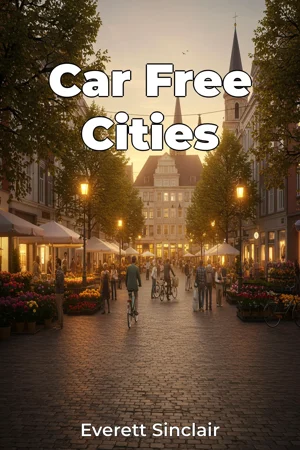
Imagine a cityscape where the dominant sounds are conversations, the laughter of children, and the gentle whir of bicycles, rather than the constant drone of engines. *Car Free Cities* explores this compelling vision, examining the possibilities and practicalities of urban environments designed primarily for people, not automobiles. This book delves into the core question of how we can reshape our cities to prioritize walking, cycling, and public transport, creating more sustainable, livable, and equitable urban spaces. The book addresses transport, urban planning, and environmental sustainability. These topics are intertwined: our dependence on cars has profoundly shaped urban landscapes, contributing to pollution, traffic congestion, and social inequalities. Reimagining our cities without prioritizing cars is crucial for addressing climate change, improving public health, and fostering stronger communities Understanding the historical context of urban development is essential. The book traces the evolution of cities from pedestrian-oriented spaces to car-dominated environments in the 20th century. It examines the policies, planning decisions, and cultural shifts that led to this dependence, providing a foundation for understanding the challenges and opportunities of car-free urban design. No prior technical knowledge is required; concepts are explained clearly so readers from diverse backgrounds can grasp the implications of urban design choices. *Car Free Cities* argues that a shift away from car dependency is not just desirable but essential for a sustainable future. The book aims to demonstrate that well-planned, car-free urban environments can enhance quality of life, promote economic vitality, and reduce our environmental footprint. The core message centers on attainable goals for urban areas. The book begins by introducing the concept of car-free urbanism and presenting evidence of its potential benefits. It explores successful examples from around the world, showcasing cities that have already made significant progress in reducing car use. Subsequent chapters delve into key aspects of car-free urban design, including: Infrastructure development to support active transportation and public transport; policy interventions to discourage car use and incentivize alternative modes of transport; strategies for managing traffic flow and parking; and the social and economic implications of car-free initiatives. The arguments culminate in a vision for future cities that are more sustainable, equitable, and livable. Practical applications and implications are highlighted throughout, offering actionable strategies for urban planners, policymakers, and community advocates. The evidence presented in *Car Free Cities* draws from a range of sources, including academic research, case studies, and real-world data. It includes examples from diverse geographic locations, showcasing the adaptability of car-free urban design principles. The book also analyzes the effectiveness of different policy interventions, using quantitative data to assess their impact on traffic volume, air quality, and public health. This book connects to several other fields, including: Public Health, by examining the impact of car-dependent urban environments on respiratory illnesses, obesity, and traffic-related injuries; Economics, by exploring the economic benefits of car-free initiatives, such as increased property values, reduced healthcare costs, and enhanced tourism; and Sociology, by analyzing the social dynamics of car-free communities and their impact on social interaction. The unique approach of *Car Free Cities* lies in its comprehensive and practical focus. It goes beyond theoretical arguments to provide concrete strategies and actionable insights for creating car-free urban environments. The book adopts a conversational and accessible style, making complex concepts easy to understand for broad readership. The target audience includes urban planners, policymakers, architects, environmental advocates, and anyone interested in creating more sustainable and livable cities. The book will appeal to readers who are concerned about climate change, traffic congestion, and the social impact of urban development. As a work of Architecture and Environmentalism, this provides practical solutions and innovative approaches to modern development. The book focuses on strategies for reducing car use in urban environments, with less emphasis on rural or suburban contexts. While addressing the challenges of transitioning to car-free cities, it acknowledges the complexities of addressing transportation needs in areas with limited public transport options. The information presented in *Car Free Cities* can be directly applied by urban planners and policymakers to inform transportation planning decisions, develop sustainable transportation policies, and design car-free zones. Community advocates can use the book to raise awareness about the benefits of car-free urbanism and advocate for policy changes at the local level. The book addresses the ongoing debates surrounding car-free initiatives, such as concerns about their impact on businesses, accessibility, and personal freedom. It presents a balanced perspective, acknowledging these concerns while emphasizing the potential benefits of car-free urban environments.
Imagine a cityscape where the dominant sounds are conversations, the laughter of children, and the gentle whir of bicycles, rather than the constant drone of engines. *Car Free Cities* explores this compelling vision, examining the possibilities and practicalities of urban environments designed primarily for people, not automobiles. This book delves into the core question of how we can reshape our cities to prioritize walking, cycling, and public transport, creating more sustainable, livable, and equitable urban spaces. The book addresses transport, urban planning, and environmental sustainability. These topics are intertwined: our dependence on cars has profoundly shaped urban landscapes, contributing to pollution, traffic congestion, and social inequalities. Reimagining our cities without prioritizing cars is crucial for addressing climate change, improving public health, and fostering stronger communities Understanding the historical context of urban development is essential. The book traces the evolution of cities from pedestrian-oriented spaces to car-dominated environments in the 20th century. It examines the policies, planning decisions, and cultural shifts that led to this dependence, providing a foundation for understanding the challenges and opportunities of car-free urban design. No prior technical knowledge is required; concepts are explained clearly so readers from diverse backgrounds can grasp the implications of urban design choices. *Car Free Cities* argues that a shift away from car dependency is not just desirable but essential for a sustainable future. The book aims to demonstrate that well-planned, car-free urban environments can enhance quality of life, promote economic vitality, and reduce our environmental footprint. The core message centers on attainable goals for urban areas. The book begins by introducing the concept of car-free urbanism and presenting evidence of its potential benefits. It explores successful examples from around the world, showcasing cities that have already made significant progress in reducing car use. Subsequent chapters delve into key aspects of car-free urban design, including: Infrastructure development to support active transportation and public transport; policy interventions to discourage car use and incentivize alternative modes of transport; strategies for managing traffic flow and parking; and the social and economic implications of car-free initiatives. The arguments culminate in a vision for future cities that are more sustainable, equitable, and livable. Practical applications and implications are highlighted throughout, offering actionable strategies for urban planners, policymakers, and community advocates. The evidence presented in *Car Free Cities* draws from a range of sources, including academic research, case studies, and real-world data. It includes examples from diverse geographic locations, showcasing the adaptability of car-free urban design principles. The book also analyzes the effectiveness of different policy interventions, using quantitative data to assess their impact on traffic volume, air quality, and public health. This book connects to several other fields, including: Public Health, by examining the impact of car-dependent urban environments on respiratory illnesses, obesity, and traffic-related injuries; Economics, by exploring the economic benefits of car-free initiatives, such as increased property values, reduced healthcare costs, and enhanced tourism; and Sociology, by analyzing the social dynamics of car-free communities and their impact on social interaction. The unique approach of *Car Free Cities* lies in its comprehensive and practical focus. It goes beyond theoretical arguments to provide concrete strategies and actionable insights for creating car-free urban environments. The book adopts a conversational and accessible style, making complex concepts easy to understand for broad readership. The target audience includes urban planners, policymakers, architects, environmental advocates, and anyone interested in creating more sustainable and livable cities. The book will appeal to readers who are concerned about climate change, traffic congestion, and the social impact of urban development. As a work of Architecture and Environmentalism, this provides practical solutions and innovative approaches to modern development. The book focuses on strategies for reducing car use in urban environments, with less emphasis on rural or suburban contexts. While addressing the challenges of transitioning to car-free cities, it acknowledges the complexities of addressing transportation needs in areas with limited public transport options. The information presented in *Car Free Cities* can be directly applied by urban planners and policymakers to inform transportation planning decisions, develop sustainable transportation policies, and design car-free zones. Community advocates can use the book to raise awareness about the benefits of car-free urbanism and advocate for policy changes at the local level. The book addresses the ongoing debates surrounding car-free initiatives, such as concerns about their impact on businesses, accessibility, and personal freedom. It presents a balanced perspective, acknowledging these concerns while emphasizing the potential benefits of car-free urban environments.
*Car Free Cities* envisions urban spaces designed for people, prioritizing walking, cycling, and public transport over cars. It explores how reshaping cities can lead to more sustainable, livable, and equitable urban environments. The book highlights the profound impact of car dependency on urban landscapes, contributing to pollution and social inequalities. For instance, car-centric planning often leads to increased respiratory illnesses and reduced social interaction. The book traces the evolution of cities from pedestrian-oriented spaces to car-dominated environments, examining the policies and cultural shifts that led to this dependence. It introduces the concept of car-free urbanism and presents evidence of its potential benefits, showcasing successful examples from around the world. Subsequent chapters delve into infrastructure development, policy interventions, and strategies for managing traffic and parking. The book uniquely offers practical strategies and actionable insights, adopting a conversational style to make complex concepts understandable.
Book Details
ISBN
9788233997502
Publisher
Publifye AS
Your Licenses
You don't own any licenses for this book
Purchase a license below to unlock this book and download the EPUB.
Purchase License
Select a tier to unlock this book
Need bulk licensing?
Contact us for enterprise agreements.