
About This Book
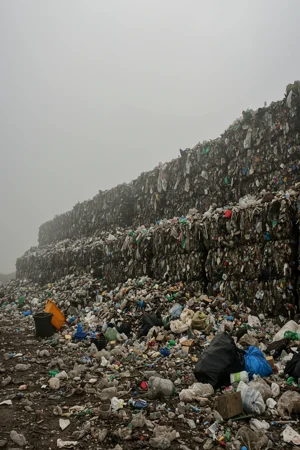
Are our cities destined to be buried under mountains of waste? "Urban Waste Crisis" confronts this unsettling question head-on, offering a comprehensive examination of the challenges and potential solutions surrounding urban waste management. This book delves into waste disposal practices, recycling initiatives, and the urgent need to reduce our reliance on landfills, issues critically important as urban populations surge and environmental concerns intensify. This book addresses three key areas: first, the current state of urban waste management systems worldwide, exposing their inefficiencies and environmental impact. Second, it critically analyzes existing recycling programs, highlighting both successes and failures, while exploring innovative approaches to material recovery. Third, it investigates strategies for minimizing waste generation at its source, emphasizing waste reduction and reuse initiatives. Understanding these topics is essential for policymakers, urban planners, environmental advocates, and concerned citizens striving for sustainable urban development. The escalating waste crisis is rooted in a complex interplay of factors, including historical consumption patterns, economic systems that prioritize production over waste reduction, and social norms that often normalize wasteful behaviors. A basic understanding of ecological principles, urban planning strategies, and economic drivers affecting waste generation is beneficial for fully grasping the discussions within this book. "Urban Waste Crisis" argues that a fundamental shift in our approach to waste is necessary, moving from a linear "take-make-dispose" model to a circular economy that prioritizes waste reduction, reuse, and recycling. This book contends that only through integrated strategies, technological innovation, and policy changes can we mitigate the environmental and social consequences of unchecked waste accumulation. The book begins by outlining the global landscape of urban waste, detailing waste generation rates, composition, and current disposal methods. It then proceeds to dissect the complexities of recycling systems, investigating collection methods, sorting technologies, and the economics of recycling markets. Following this, the book explores waste reduction strategies, including policies that promote sustainable consumption, support for reuse initiatives, and advancements in product design for recyclability and durability. The final section culminates in an analysis of integrated waste management systems, demonstrating how various strategies can be combined to create more sustainable and resilient urban environments. This includes real-world case studies of cities that have successfully implemented innovative waste management programs. The arguments presented are supported by a wide range of evidence, including statistical data on waste generation and recycling rates, case studies of urban waste management systems, and scientific research on the environmental impacts of landfills and incineration. Data from governmental agencies, academic studies, and industry reports are integrated to provide a well-rounded and fact-based approach. This book draws connections to several other fields, including economics (analyzing the costs and benefits of different waste management strategies), sociology (examining consumer behavior and waste-related social inequalities), and political science (investigating the role of policy and governance in shaping waste management practices). These interdisciplinary connections enrich the analysis and demonstrate the multifaceted nature of the urban waste crisis. "Urban Waste Crisis" provides a systems-thinking approach, examining the interconnectedness of waste generation, collection, processing, and disposal. It offers a perspective, emphasizing the need for a holistic approach that integrates technological innovation, policy interventions, and behavioral changes. It avoids simplistic solutions and instead highlights the complexities of the urban waste challenge. The book adopts a professional yet accessible tone, aiming to inform and engage a broad audience. Complex concepts are explained clearly and concisely, avoiding jargon and technical language where possible. The writing style balances factual accuracy with readability, ensuring that the book is informative without being overwhelming. The primary audience includes students and researchers in environmental studies, urban planning, and public policy, as well as policymakers, urban planners, environmental advocates, and anyone interested in understanding and addressing the urban waste crisis. This book provides valuable insights and practical guidance for those seeking to promote sustainable waste management practices in their communities. As a work within Earth Sciences, Geography, and Environment, this book adheres to the conventions of presenting factual information, citing sources meticulously, and maintaining a balanced and objective perspective on controversial issues. The book's scope is limited to urban waste management, focusing primarily on municipal solid waste. While it acknowledges the importance of industrial and hazardous waste, these topics are not covered in detail. This focus allows for a more in-depth exploration of the challenges and opportunities specific to urban environments. The information presented can be applied in various practical ways, including informing policy decisions, guiding the development of sustainable waste management plans, and promoting individual actions to reduce waste generation. It offers tangible strategies for creating more sustainable and resilient urban environments. The book addresses ongoing debates surrounding waste-to-energy technologies, the role of incineration in waste management, and the effectiveness of different recycling programs. It presents a balanced perspective on these controversies, acknowledging the arguments on both sides and offering evidence-based analysis to inform decision-making.
Are our cities destined to be buried under mountains of waste? "Urban Waste Crisis" confronts this unsettling question head-on, offering a comprehensive examination of the challenges and potential solutions surrounding urban waste management. This book delves into waste disposal practices, recycling initiatives, and the urgent need to reduce our reliance on landfills, issues critically important as urban populations surge and environmental concerns intensify. This book addresses three key areas: first, the current state of urban waste management systems worldwide, exposing their inefficiencies and environmental impact. Second, it critically analyzes existing recycling programs, highlighting both successes and failures, while exploring innovative approaches to material recovery. Third, it investigates strategies for minimizing waste generation at its source, emphasizing waste reduction and reuse initiatives. Understanding these topics is essential for policymakers, urban planners, environmental advocates, and concerned citizens striving for sustainable urban development. The escalating waste crisis is rooted in a complex interplay of factors, including historical consumption patterns, economic systems that prioritize production over waste reduction, and social norms that often normalize wasteful behaviors. A basic understanding of ecological principles, urban planning strategies, and economic drivers affecting waste generation is beneficial for fully grasping the discussions within this book. "Urban Waste Crisis" argues that a fundamental shift in our approach to waste is necessary, moving from a linear "take-make-dispose" model to a circular economy that prioritizes waste reduction, reuse, and recycling. This book contends that only through integrated strategies, technological innovation, and policy changes can we mitigate the environmental and social consequences of unchecked waste accumulation. The book begins by outlining the global landscape of urban waste, detailing waste generation rates, composition, and current disposal methods. It then proceeds to dissect the complexities of recycling systems, investigating collection methods, sorting technologies, and the economics of recycling markets. Following this, the book explores waste reduction strategies, including policies that promote sustainable consumption, support for reuse initiatives, and advancements in product design for recyclability and durability. The final section culminates in an analysis of integrated waste management systems, demonstrating how various strategies can be combined to create more sustainable and resilient urban environments. This includes real-world case studies of cities that have successfully implemented innovative waste management programs. The arguments presented are supported by a wide range of evidence, including statistical data on waste generation and recycling rates, case studies of urban waste management systems, and scientific research on the environmental impacts of landfills and incineration. Data from governmental agencies, academic studies, and industry reports are integrated to provide a well-rounded and fact-based approach. This book draws connections to several other fields, including economics (analyzing the costs and benefits of different waste management strategies), sociology (examining consumer behavior and waste-related social inequalities), and political science (investigating the role of policy and governance in shaping waste management practices). These interdisciplinary connections enrich the analysis and demonstrate the multifaceted nature of the urban waste crisis. "Urban Waste Crisis" provides a systems-thinking approach, examining the interconnectedness of waste generation, collection, processing, and disposal. It offers a perspective, emphasizing the need for a holistic approach that integrates technological innovation, policy interventions, and behavioral changes. It avoids simplistic solutions and instead highlights the complexities of the urban waste challenge. The book adopts a professional yet accessible tone, aiming to inform and engage a broad audience. Complex concepts are explained clearly and concisely, avoiding jargon and technical language where possible. The writing style balances factual accuracy with readability, ensuring that the book is informative without being overwhelming. The primary audience includes students and researchers in environmental studies, urban planning, and public policy, as well as policymakers, urban planners, environmental advocates, and anyone interested in understanding and addressing the urban waste crisis. This book provides valuable insights and practical guidance for those seeking to promote sustainable waste management practices in their communities. As a work within Earth Sciences, Geography, and Environment, this book adheres to the conventions of presenting factual information, citing sources meticulously, and maintaining a balanced and objective perspective on controversial issues. The book's scope is limited to urban waste management, focusing primarily on municipal solid waste. While it acknowledges the importance of industrial and hazardous waste, these topics are not covered in detail. This focus allows for a more in-depth exploration of the challenges and opportunities specific to urban environments. The information presented can be applied in various practical ways, including informing policy decisions, guiding the development of sustainable waste management plans, and promoting individual actions to reduce waste generation. It offers tangible strategies for creating more sustainable and resilient urban environments. The book addresses ongoing debates surrounding waste-to-energy technologies, the role of incineration in waste management, and the effectiveness of different recycling programs. It presents a balanced perspective on these controversies, acknowledging the arguments on both sides and offering evidence-based analysis to inform decision-making.
Our cities face a growing "Urban Waste Crisis," threatening to drown under increasing volumes of refuse. This book offers a comprehensive look at the challenges and potential solutions for urban waste management, emphasizing the urgent need to move away from landfills. Did you know that current consumption patterns and economic systems often prioritize production over waste reduction, exacerbating the problem? The book analyzes recycling programs to determine successes and failures, while also exploring waste reduction and reuse initiatives. The book argues for a shift towards a circular economy, prioritizing waste reduction, reuse, and recycling. This approach requires integrating strategies, technological innovation, and policy changes to mitigate environmental and social consequences. The book begins by outlining the global landscape of urban waste, then it dissects the complexities of recycling systems. Later chapters explore waste reduction strategies and conclude with an analysis of integrated waste management systems, using real-world case studies.
Book Details
ISBN
9788233997472
Publisher
Publifye AS
Your Licenses
You don't own any licenses for this book
Purchase a license below to unlock this book and download the EPUB.
Purchase License
Select a tier to unlock this book
Need bulk licensing?
Contact us for enterprise agreements.