
About This Book
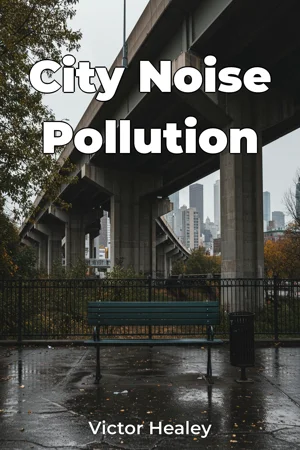
Are you aware that the relentless cacophony of city life is silently eroding your health? "City Noise Pollution" delves into the pervasive and often underestimated impact of urban noise on public health and explores viable strategies for mitigation. This book addresses two key areas: first, the multifaceted ways excessive noise exposure harms human health, and second, the diverse range of interventions available to reduce urban noise pollution. These topics are crucial because unchecked urban noise contributes to a spectrum of health problems, from cardiovascular disease and sleep disorders to cognitive impairment and mental health issues, affecting the well-being of millions. This investigation into urban noise pollution builds upon decades of acoustic research, epidemiological studies, and public health initiatives. It acknowledges the historical context of industrialization and urbanization, which have steadily increased noise levels in cities worldwide. No specialized scientific background is needed to understand the core arguments; clear explanations of acoustic principles and biological mechanisms are provided. The central argument of "City Noise Pollution" is that urban noise is a significant, preventable public health hazard demanding urgent attention and comprehensive mitigation strategies. This argument is vital because noise pollution is often overlooked compared to other forms of pollution, despite its widespread and detrimental effects. The book advocates for a paradigm shift in urban planning and public policy, integrating noise reduction as a core objective. The book begins by establishing a foundational understanding of sound and acoustics, explaining how noise is measured and perceived. It then systematically explores the physiological and psychological effects of noise exposure, dedicating chapters to specific health outcomes such as cardiovascular health, sleep disturbance, cognitive function, and mental well-being. Each chapter analyzes research findings, highlighting the strength of evidence and potential confounding factors. The book also presents case studies of cities that have successfully implemented noise reduction programs, analyzing their strategies and outcomes. It culminates in a discussion of policy recommendations, technological innovations, and community-based initiatives that can be implemented to create quieter, healthier urban environments. The evidence presented within these pages is drawn from a wide range of sources, including peer-reviewed scientific articles, government reports, and data from noise monitoring networks. Unique data from longitudinal health studies are analyzed to demonstrate the long-term effects of noise exposure on various health outcomes. The exploration of urban noise pollution naturally intersects with several other fields, including urban planning, public policy, and environmental engineering. Urban planning strategies, such as green infrastructure and noise-sensitive zoning, are examined as ways to mitigate noise at its source. Public policy measures, such as noise regulations and enforcement mechanisms, are also assessed for their effectiveness. Environmental engineering solutions, such as noise barriers and soundproofing materials, are considered as technical approaches to reducing noise levels. These interdisciplinary connections enrich the book's analysis and broaden its appeal. "City Noise Pollution" offers a unique perspective by integrating scientific findings with practical solutions. It moves beyond simply describing the problem of urban noise and provides actionable recommendations for policymakers, urban planners, and concerned citizens. The book adopts a fact-based, non-fiction approach, presenting information in a clear and accessible manner while maintaining scientific rigor. The target audience includes public health professionals, urban planners, policymakers, environmental advocates, and concerned citizens who seek to understand the health impacts of urban noise and identify effective mitigation strategies. This book will be valuable to anyone interested in creating healthier and more livable cities. As a work in the public health and environment genres, this book adheres to the conventions of providing evidence-based information, presenting balanced perspectives, and advocating for practical solutions. While the book covers a broad range of topics related to urban noise pollution, it focuses primarily on the health impacts of noise and strategies for noise reduction. It does not delve into highly technical aspects of acoustic engineering but provides sufficient technical information for readers to understand the underlying principles. The information in this book can be applied practically by readers in various ways. Public health professionals can use the information to educate the public about the health risks of noise pollution and advocate for noise reduction policies. Urban planners can incorporate noise reduction measures into their designs and development plans. Policymakers can use the book to inform the development of noise regulations and enforcement mechanisms. Concerned citizens can use the information to advocate for quieter communities and support noise reduction initiatives. While the detrimental effects of noise are well-documented, debates persist regarding the stringency of noise regulations and the prioritization of noise reduction measures compared to other urban development goals. The book addresses these debates by presenting different perspectives and analyzing the trade-offs involved in balancing economic development with public health concerns.
Are you aware that the relentless cacophony of city life is silently eroding your health? "City Noise Pollution" delves into the pervasive and often underestimated impact of urban noise on public health and explores viable strategies for mitigation. This book addresses two key areas: first, the multifaceted ways excessive noise exposure harms human health, and second, the diverse range of interventions available to reduce urban noise pollution. These topics are crucial because unchecked urban noise contributes to a spectrum of health problems, from cardiovascular disease and sleep disorders to cognitive impairment and mental health issues, affecting the well-being of millions. This investigation into urban noise pollution builds upon decades of acoustic research, epidemiological studies, and public health initiatives. It acknowledges the historical context of industrialization and urbanization, which have steadily increased noise levels in cities worldwide. No specialized scientific background is needed to understand the core arguments; clear explanations of acoustic principles and biological mechanisms are provided. The central argument of "City Noise Pollution" is that urban noise is a significant, preventable public health hazard demanding urgent attention and comprehensive mitigation strategies. This argument is vital because noise pollution is often overlooked compared to other forms of pollution, despite its widespread and detrimental effects. The book advocates for a paradigm shift in urban planning and public policy, integrating noise reduction as a core objective. The book begins by establishing a foundational understanding of sound and acoustics, explaining how noise is measured and perceived. It then systematically explores the physiological and psychological effects of noise exposure, dedicating chapters to specific health outcomes such as cardiovascular health, sleep disturbance, cognitive function, and mental well-being. Each chapter analyzes research findings, highlighting the strength of evidence and potential confounding factors. The book also presents case studies of cities that have successfully implemented noise reduction programs, analyzing their strategies and outcomes. It culminates in a discussion of policy recommendations, technological innovations, and community-based initiatives that can be implemented to create quieter, healthier urban environments. The evidence presented within these pages is drawn from a wide range of sources, including peer-reviewed scientific articles, government reports, and data from noise monitoring networks. Unique data from longitudinal health studies are analyzed to demonstrate the long-term effects of noise exposure on various health outcomes. The exploration of urban noise pollution naturally intersects with several other fields, including urban planning, public policy, and environmental engineering. Urban planning strategies, such as green infrastructure and noise-sensitive zoning, are examined as ways to mitigate noise at its source. Public policy measures, such as noise regulations and enforcement mechanisms, are also assessed for their effectiveness. Environmental engineering solutions, such as noise barriers and soundproofing materials, are considered as technical approaches to reducing noise levels. These interdisciplinary connections enrich the book's analysis and broaden its appeal. "City Noise Pollution" offers a unique perspective by integrating scientific findings with practical solutions. It moves beyond simply describing the problem of urban noise and provides actionable recommendations for policymakers, urban planners, and concerned citizens. The book adopts a fact-based, non-fiction approach, presenting information in a clear and accessible manner while maintaining scientific rigor. The target audience includes public health professionals, urban planners, policymakers, environmental advocates, and concerned citizens who seek to understand the health impacts of urban noise and identify effective mitigation strategies. This book will be valuable to anyone interested in creating healthier and more livable cities. As a work in the public health and environment genres, this book adheres to the conventions of providing evidence-based information, presenting balanced perspectives, and advocating for practical solutions. While the book covers a broad range of topics related to urban noise pollution, it focuses primarily on the health impacts of noise and strategies for noise reduction. It does not delve into highly technical aspects of acoustic engineering but provides sufficient technical information for readers to understand the underlying principles. The information in this book can be applied practically by readers in various ways. Public health professionals can use the information to educate the public about the health risks of noise pollution and advocate for noise reduction policies. Urban planners can incorporate noise reduction measures into their designs and development plans. Policymakers can use the book to inform the development of noise regulations and enforcement mechanisms. Concerned citizens can use the information to advocate for quieter communities and support noise reduction initiatives. While the detrimental effects of noise are well-documented, debates persist regarding the stringency of noise regulations and the prioritization of noise reduction measures compared to other urban development goals. The book addresses these debates by presenting different perspectives and analyzing the trade-offs involved in balancing economic development with public health concerns.
"City Noise Pollution" explores the often-overlooked impact of urban noise on public health, revealing how the constant sounds of city life can silently harm our well-being. The book highlights that exposure to excessive noise contributes to various health issues, including cardiovascular disease and sleep disorders. It argues that urban noise is a preventable public health hazard requiring immediate and comprehensive mitigation. This investigation builds upon decades of research, presenting clear explanations of acoustics and biological mechanisms accessible to all readers. The book systematically explores the physiological and psychological effects of noise, dedicating chapters to specific health outcomes. Case studies of cities that have successfully implemented noise reduction programs are also analyzed. The book uniquely integrates scientific findings with practical solutions for policymakers, urban planners, and concerned citizens. It advocates for integrating noise reduction into urban planning and public policy. The book progresses from foundational concepts of sound to analyses of health impacts, concluding with actionable policy recommendations and technological innovations for creating quieter, healthier urban environments.
Book Details
ISBN
9788233997465
Publisher
Publifye AS
Your Licenses
You don't own any licenses for this book
Purchase a license below to unlock this book and download the EPUB.
Purchase License
Select a tier to unlock this book
Need bulk licensing?
Contact us for enterprise agreements.