
About This Book
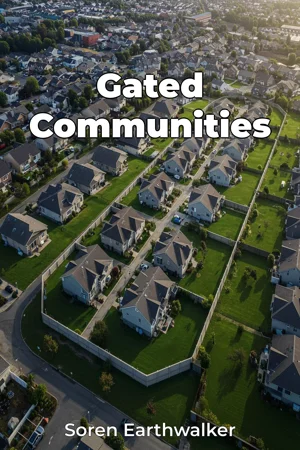
Are our cities fracturing along lines of privilege and protection? "Gated Communities" delves into the burgeoning phenomenon of private, security-controlled neighborhoods and their profound consequences for urban development, social equity, and the very fabric of community. This book examines the surge in popularity of these enclaves, analyzing their political and social ramifications and challenging us to consider the long-term impacts on our shared urban spaces. The central argument of "Gated Communities" is that the proliferation of these segregated spaces, driven by a desire for security and exclusivity, is actively reshaping urban landscapes, intensifying social inequalities, and undermining the principles of inclusive urban planning. This trend impacts not only those living within these walls but also the surrounding communities and the city as a whole, affecting access to resources, public services, and opportunities for social interaction. The book provides arguments, evidence, and case studies that the rise of gated communities is a trend whose consequences must be understood and addressed by policymakers, urban planners, and concerned citizens. This book unfolds in three major parts. First, it establishes the historical and social context, tracing the roots of residential segregation and exploring the anxieties about crime and social disorder that fuel the demand for gated communities. This section will provide data on the growth of these developments across different regions and demographics. Second, the book analyzes the physical and socioeconomic impact of these communities, examining how they affect property values, infrastructure development, and access to public goods. It will present research on the ways these communities isolate themselves. Third, the book addresses the political dimensions, exploring how local governance and policies contribute to the creation and perpetuation of gated communities and discussing the challenges they pose to democratic ideals of inclusivity and equal opportunity. The arguments presented are supported by a diverse range of evidence including quantitative data on housing trends, crime rates, and socioeconomic indicators, as well as qualitative research such as interviews with residents, developers, and urban planners. Case studies of specific gated communities in different urban settings offer in-depth insights into their unique characteristics and impacts. A unique aspect of the research involves analyzing municipal planning documents and zoning regulations to uncover the ways in which local policies facilitate or hinder the development of these enclaves. "Gated Communities" connects to several related fields, including urban planning, sociology, and political science. From an urban planning perspective, the book examines how gated communities challenge traditional notions of public space and integrated urban development. From a sociological standpoint, it explores the impact of spatial segregation on social cohesion and intergroup relations. Politically, it analyzes how these developments influence local governance and the distribution of resources. The book offers a balanced and nuanced perspective, acknowledging the complex motivations behind the desire for secure and private living while also critically analyzing the broader social and political implications. The writing style is academically rigorous yet accessible, making it suitable for both scholars and general readers interested in urban issues. The target audience includes students and scholars in urban studies, sociology, political science, and public policy. The book will also appeal to urban planners, policymakers, community activists, and anyone interested in understanding the forces shaping our cities. Addressing a topic rife with controversy, "Gated Communities" engages with ongoing debates about the balance between individual rights and the common good, the role of government in regulating private development, and the responsibility of affluent communities to contribute to the well-being of the broader society. While the book focuses primarily on the United States, it also draws comparisons to similar trends in other countries, providing a global perspective on the phenomenon of gated communities. The scope is limited to residential gated communities, excluding commercial or industrial developments, allowing for a focused and in-depth analysis. The real-world applications of the book’s findings include informing urban planning policies, promoting more inclusive urban development, and encouraging dialogue about the social and economic consequences of residential segregation.
Are our cities fracturing along lines of privilege and protection? "Gated Communities" delves into the burgeoning phenomenon of private, security-controlled neighborhoods and their profound consequences for urban development, social equity, and the very fabric of community. This book examines the surge in popularity of these enclaves, analyzing their political and social ramifications and challenging us to consider the long-term impacts on our shared urban spaces. The central argument of "Gated Communities" is that the proliferation of these segregated spaces, driven by a desire for security and exclusivity, is actively reshaping urban landscapes, intensifying social inequalities, and undermining the principles of inclusive urban planning. This trend impacts not only those living within these walls but also the surrounding communities and the city as a whole, affecting access to resources, public services, and opportunities for social interaction. The book provides arguments, evidence, and case studies that the rise of gated communities is a trend whose consequences must be understood and addressed by policymakers, urban planners, and concerned citizens. This book unfolds in three major parts. First, it establishes the historical and social context, tracing the roots of residential segregation and exploring the anxieties about crime and social disorder that fuel the demand for gated communities. This section will provide data on the growth of these developments across different regions and demographics. Second, the book analyzes the physical and socioeconomic impact of these communities, examining how they affect property values, infrastructure development, and access to public goods. It will present research on the ways these communities isolate themselves. Third, the book addresses the political dimensions, exploring how local governance and policies contribute to the creation and perpetuation of gated communities and discussing the challenges they pose to democratic ideals of inclusivity and equal opportunity. The arguments presented are supported by a diverse range of evidence including quantitative data on housing trends, crime rates, and socioeconomic indicators, as well as qualitative research such as interviews with residents, developers, and urban planners. Case studies of specific gated communities in different urban settings offer in-depth insights into their unique characteristics and impacts. A unique aspect of the research involves analyzing municipal planning documents and zoning regulations to uncover the ways in which local policies facilitate or hinder the development of these enclaves. "Gated Communities" connects to several related fields, including urban planning, sociology, and political science. From an urban planning perspective, the book examines how gated communities challenge traditional notions of public space and integrated urban development. From a sociological standpoint, it explores the impact of spatial segregation on social cohesion and intergroup relations. Politically, it analyzes how these developments influence local governance and the distribution of resources. The book offers a balanced and nuanced perspective, acknowledging the complex motivations behind the desire for secure and private living while also critically analyzing the broader social and political implications. The writing style is academically rigorous yet accessible, making it suitable for both scholars and general readers interested in urban issues. The target audience includes students and scholars in urban studies, sociology, political science, and public policy. The book will also appeal to urban planners, policymakers, community activists, and anyone interested in understanding the forces shaping our cities. Addressing a topic rife with controversy, "Gated Communities" engages with ongoing debates about the balance between individual rights and the common good, the role of government in regulating private development, and the responsibility of affluent communities to contribute to the well-being of the broader society. While the book focuses primarily on the United States, it also draws comparisons to similar trends in other countries, providing a global perspective on the phenomenon of gated communities. The scope is limited to residential gated communities, excluding commercial or industrial developments, allowing for a focused and in-depth analysis. The real-world applications of the book’s findings include informing urban planning policies, promoting more inclusive urban development, and encouraging dialogue about the social and economic consequences of residential segregation.
"Gated Communities" explores the growing trend of security-controlled neighborhoods and their impact on urban areas, social equity, and community. Driven by a desire for security and exclusivity, these enclaves are reshaping cities, potentially intensifying social inequalities. Did you know that the rise of gated communities is not just a housing trend, but also reflects anxieties about crime and social disorder? The book argues that this segregation affects access to resources and opportunities, both within and outside these walls. The book examines the historical context of residential segregation, analyzing the physical and socioeconomic impacts of gated communities, such as their effects on property values and infrastructure. It also delves into the political dimensions, revealing how local governance contributes to their creation and the challenges they pose to democratic ideals. Using quantitative data, interviews, and case studies, the book offers a balanced perspective on the motivations behind gated living and their broader social and political implications, making it valuable for understanding inclusive urban planning and social cohesion.
Book Details
ISBN
9788233997458
Publisher
Publifye AS
Your Licenses
You don't own any licenses for this book
Purchase a license below to unlock this book and download the EPUB.
Purchase License
Select a tier to unlock this book
Need bulk licensing?
Contact us for enterprise agreements.