
About This Book
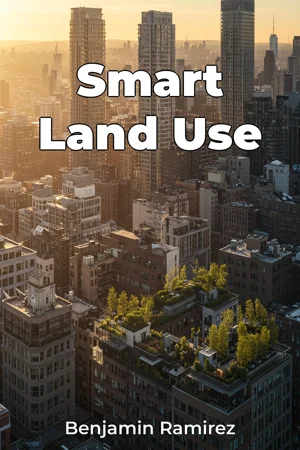
How can cities around the globe house more people, foster vibrant economies, and maintain environmental sustainability without sprawling outwards and consuming valuable land? "Smart Land Use" explores this critical question, diving into the principles and practical applications of mixed-use zoning and intelligent urban planning to maximize land efficiency. This book is essential reading for anyone interested in the future of our cities, from policymakers and urban planners to architects and concerned citizens. We begin by establishing a foundation in the concepts driving contemporary land-use strategies. We examine the historical context of urban development, tracing the evolution from segregated zoning practices that prioritized single-use districts, leading to urban sprawl and increased reliance on automobiles, to modern approaches that emphasize density, walkability, and diverse land use. Understanding this trajectory is crucial for appreciating the significance of mixed-use zoning, a core concept that allows for the integration of residential, commercial, and even industrial activities within the same area. Furthermore, "Smart Land Use" delves into the principles of intelligent urban planning, encompassing strategies to optimize transportation networks, conserve green spaces, and promote equitable access to resources. The central argument of this book is that strategically implemented mixed-use zoning, underpinned by thoughtful urban planning, is not merely a theoretical ideal but a pragmatic solution to the challenges of urban growth. By increasing density and diversity within urban cores and suburban areas, cities can reduce their environmental footprint, improve quality of life for residents, and foster more resilient economies. This argument is substantiated by real-world examples sourced from diverse global contexts, including case studies of cities that have successfully implemented innovative land-use policies. The book systematically addresses the nuances of smart land utilization. First, we introduce the fundamental concepts of mixed-use zoning, transit-oriented development, and complete streets, illustrating each with best-practice examples. Following this, we move into the practical aspects of implementation. We explore how developers can integrate mixed-use principles into new construction projects, and how existing neighborhoods can be retrofitted to accommodate greater density and diversity. We examine strategies for managing potential conflicts between different land uses, such as noise and traffic, and explore the role of public engagement in shaping successful smart land-use initiatives. The book culminates with a discussion of the long-term implications of smart land use, examining its potential to promote social equity, environmental sustainability, and economic prosperity. The arguments presented in "Smart Land Use" are supported by a combination of quantitative data and qualitative analysis. We analyze statistical trends in population growth, housing affordability, and transportation patterns to demonstrate the impact of different land-use policies. We draw on sociological research to understand the social and economic consequences of urban sprawl and the benefits of walkable, mixed-use communities. We also incorporate case studies and interviews with urban planners, developers, and residents to provide firsthand accounts of the challenges and opportunities associated with smart land use. The book draws connections to diverse fields, including environmental science, political science, and economics. The environmental implications of land use are significant, affecting everything from carbon emissions to biodiversity. The political dynamics of land-use planning are complex, involving competing interests and regulatory hurdles. The economic consequences of land-use policies are far-reaching, influencing property values, job creation, and economic inequality. By considering these interdisciplinary connections, "Smart Land Use" offers a holistic perspective on the challenges and opportunities of urban development. What sets "Smart Land Use" apart is its balanced approach. It acknowledges the complexities of land-use planning, recognizing that there is no one-size-fits-all solution. It emphasizes the importance of tailoring land-use strategies to the specific context of each city or region, taking into account local demographics, economic conditions, and environmental constraints. It also highlights the importance of community involvement in shaping land-use decisions, ensuring that new developments reflect the needs and aspirations of existing residents. Written in a clear, accessible style, "Smart Land Use" is designed for a broad audience. It will appeal to urban planners, architects, and policymakers seeking to implement more sustainable and equitable land-use policies. It will also be valuable to students of urban studies, environmental science, and public policy. Ultimately, it will provide concerned citizens with the knowledge and tools they need to advocate for smarter land use in their own communities. The scope of this book is intentionally broad, examining smart land-use strategies across different urban contexts. While it does not delve into the specific technical details of zoning codes or building regulations in any one particular jurisdiction, it provides a comprehensive overview of the principles and practices that can be adapted to a wide range of situations. The information presented in "Smart Land Use" can be applied practically by readers in numerous ways. Planners can use it to inform the development of comprehensive plans and zoning ordinances. Architects can use it to design buildings that are both functional and sustainable. Policymakers can use it to craft legislation that promotes smart land use. And citizens can use it to advocate for changes in their communities that create more livable, equitable, and sustainable places. "Smart Land Use" directly addresses the core debates surrounding urban density and growth, considering the role of upzoning, affordable housing mandates, and transit investments in creating more inclusive and vibrant cities.
How can cities around the globe house more people, foster vibrant economies, and maintain environmental sustainability without sprawling outwards and consuming valuable land? "Smart Land Use" explores this critical question, diving into the principles and practical applications of mixed-use zoning and intelligent urban planning to maximize land efficiency. This book is essential reading for anyone interested in the future of our cities, from policymakers and urban planners to architects and concerned citizens. We begin by establishing a foundation in the concepts driving contemporary land-use strategies. We examine the historical context of urban development, tracing the evolution from segregated zoning practices that prioritized single-use districts, leading to urban sprawl and increased reliance on automobiles, to modern approaches that emphasize density, walkability, and diverse land use. Understanding this trajectory is crucial for appreciating the significance of mixed-use zoning, a core concept that allows for the integration of residential, commercial, and even industrial activities within the same area. Furthermore, "Smart Land Use" delves into the principles of intelligent urban planning, encompassing strategies to optimize transportation networks, conserve green spaces, and promote equitable access to resources. The central argument of this book is that strategically implemented mixed-use zoning, underpinned by thoughtful urban planning, is not merely a theoretical ideal but a pragmatic solution to the challenges of urban growth. By increasing density and diversity within urban cores and suburban areas, cities can reduce their environmental footprint, improve quality of life for residents, and foster more resilient economies. This argument is substantiated by real-world examples sourced from diverse global contexts, including case studies of cities that have successfully implemented innovative land-use policies. The book systematically addresses the nuances of smart land utilization. First, we introduce the fundamental concepts of mixed-use zoning, transit-oriented development, and complete streets, illustrating each with best-practice examples. Following this, we move into the practical aspects of implementation. We explore how developers can integrate mixed-use principles into new construction projects, and how existing neighborhoods can be retrofitted to accommodate greater density and diversity. We examine strategies for managing potential conflicts between different land uses, such as noise and traffic, and explore the role of public engagement in shaping successful smart land-use initiatives. The book culminates with a discussion of the long-term implications of smart land use, examining its potential to promote social equity, environmental sustainability, and economic prosperity. The arguments presented in "Smart Land Use" are supported by a combination of quantitative data and qualitative analysis. We analyze statistical trends in population growth, housing affordability, and transportation patterns to demonstrate the impact of different land-use policies. We draw on sociological research to understand the social and economic consequences of urban sprawl and the benefits of walkable, mixed-use communities. We also incorporate case studies and interviews with urban planners, developers, and residents to provide firsthand accounts of the challenges and opportunities associated with smart land use. The book draws connections to diverse fields, including environmental science, political science, and economics. The environmental implications of land use are significant, affecting everything from carbon emissions to biodiversity. The political dynamics of land-use planning are complex, involving competing interests and regulatory hurdles. The economic consequences of land-use policies are far-reaching, influencing property values, job creation, and economic inequality. By considering these interdisciplinary connections, "Smart Land Use" offers a holistic perspective on the challenges and opportunities of urban development. What sets "Smart Land Use" apart is its balanced approach. It acknowledges the complexities of land-use planning, recognizing that there is no one-size-fits-all solution. It emphasizes the importance of tailoring land-use strategies to the specific context of each city or region, taking into account local demographics, economic conditions, and environmental constraints. It also highlights the importance of community involvement in shaping land-use decisions, ensuring that new developments reflect the needs and aspirations of existing residents. Written in a clear, accessible style, "Smart Land Use" is designed for a broad audience. It will appeal to urban planners, architects, and policymakers seeking to implement more sustainable and equitable land-use policies. It will also be valuable to students of urban studies, environmental science, and public policy. Ultimately, it will provide concerned citizens with the knowledge and tools they need to advocate for smarter land use in their own communities. The scope of this book is intentionally broad, examining smart land-use strategies across different urban contexts. While it does not delve into the specific technical details of zoning codes or building regulations in any one particular jurisdiction, it provides a comprehensive overview of the principles and practices that can be adapted to a wide range of situations. The information presented in "Smart Land Use" can be applied practically by readers in numerous ways. Planners can use it to inform the development of comprehensive plans and zoning ordinances. Architects can use it to design buildings that are both functional and sustainable. Policymakers can use it to craft legislation that promotes smart land use. And citizens can use it to advocate for changes in their communities that create more livable, equitable, and sustainable places. "Smart Land Use" directly addresses the core debates surrounding urban density and growth, considering the role of upzoning, affordable housing mandates, and transit investments in creating more inclusive and vibrant cities.
"Smart Land Use" explores how cities can house more people, foster vibrant economies, and maintain environmental sustainability through smart land use and urban planning strategies. It examines the shift from segregated zoning practices to modern approaches emphasizing density and mixed-use zoning. This allows for the integration of residential, commercial, and industrial activities, reducing reliance on automobiles and promoting walkability. The book argues that strategically implemented mixed-use zoning, supported by thoughtful urban planning, can reduce environmental impact and improve the quality of life. The book systematically introduces mixed-use zoning, transit-oriented development, and complete streets, illustrating each with best-practice examples. From there, it moves into the practical aspects of implementation, such as integrating mixed-use principles into new construction projects and retrofitting existing neighborhoods. What sets this book apart is its balanced approach, acknowledging the complexities of land-use planning and the importance of community involvement. It also incorporates data and analysis from diverse fields like environmental science, political science, and economics for a holistic perspective.
Book Details
ISBN
9788233997441
Publisher
Publifye AS
Your Licenses
You don't own any licenses for this book
Purchase a license below to unlock this book and download the EPUB.
Purchase License
Select a tier to unlock this book
Need bulk licensing?
Contact us for enterprise agreements.