
About This Book
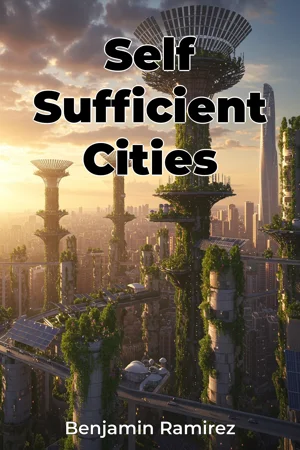
Can our cities become truly self-sufficient, providing for their own energy, food, and water needs, or is this merely an idealistic vision? This book, 'Self-Sufficient Cities', delves into the multifaceted challenges and promising solutions involved in transforming urban environments into sustainable ecosystems. It examines the architectural, environmental, and infrastructural innovations necessary to achieve localized resource production and consumption. We address core questions: How can buildings be designed to generate energy, collect rainwater, and even cultivate food? What are the social and economic implications of transitioning to localized resource systems? And what technological advancements are making urban self-sufficiency increasingly feasible? These questions are crucial as cities face growing environmental pressures, resource scarcity, and the impacts of climate change. The concept of urban self-sufficiency builds upon historical precedents like agrarian urbanism and Ebenezer Howard's Garden Cities, but it re-envisions them through the lens of modern technology and ecological awareness. Readers should have a basic understanding of urban planning principles, environmental science, and architectural design to fully appreciate the book’s content. The central argument of 'Self-Sufficient Cities' is that achieving significant levels of urban self-sufficiency is not only possible but also essential for creating resilient and sustainable urban futures. This book proposes a framework for rethinking urban design and infrastructure, emphasizing closed-loop systems, renewable energy integration, and community-based resource management. The book is structured in three parts. The first section introduces the core concepts of urban self-sufficiency, exploring its historical roots, environmental imperatives, and potential benefits. The second section delves into specific strategies and technologies, examining renewable energy systems (solar, wind, geothermal), urban agriculture techniques (vertical farming, rooftop gardens), and water management solutions (rainwater harvesting, wastewater treatment). This section showcases case studies of existing self-sufficient buildings and communities, analyzing their successes and limitations. The third section addresses the implementation challenges and policy considerations, exploring the economic, social, and regulatory frameworks needed to support widespread adoption of self-sufficient urban models. It culminates in a vision for the future of self-sufficient cities and practical steps towards realizing this vision. The arguments presented are supported by evidence from diverse sources, including academic research in urban planning, engineering, and environmental science; case studies of innovative projects around the world; and data on energy consumption, food production, and water usage in urban areas. The book also draws upon original analyses of policy frameworks and economic models relevant to urban self-sufficiency. 'Self-Sufficient Cities' connects to fields beyond architecture, such as environmental policy, economics, and sociology. The environmental policy aspects address regulations and incentives for sustainable urban development. The economic considerations analyze the costs and benefits of self-sufficient systems, including job creation and reduced resource dependence. The sociological connections explore the role of community engagement and social equity in creating successful self-sufficient cities. This book offers a unique perspective by integrating architectural design with broader ecological and social considerations. It goes beyond technological solutions to address the human element of urban self-sufficiency, emphasizing the importance of community participation and behavioral change. The book adopts a professional and accessible tone, presenting complex information in a clear and engaging manner. It balances theoretical concepts with practical examples, making it relevant to a wide audience. The target audience includes architects, urban planners, policymakers, environmental professionals, and anyone interested in sustainable urban development. This book is valuable as it provides a comprehensive overview of the challenges and opportunities of creating self-sufficient cities, equipping readers with the knowledge and tools to contribute to a more sustainable urban future. This book adheres to the conventions of the 'Architecture' and 'Environment' genres by providing detailed technical information, visual representations (illustrations, diagrams), and case studies of real-world projects. It also addresses relevant environmental concerns and policy issues. While the book offers a broad overview of urban self-sufficiency, it focuses primarily on technological and design solutions, acknowledging that social and political factors play a significant role that warrants further exploration. While global in scope, the book predominantly uses examples from developed nations. The information presented can be applied practically by readers to design more sustainable buildings, advocate for policy changes, and implement community-based initiatives. Architects can use the design principles to develop self-sufficient building designs. Planners can incorporate the concepts to develop local urban development plans. Policy makers can be informed on making informed decisions. The book addresses debates surrounding the feasibility and scalability of urban agriculture, the environmental impacts of renewable energy technologies, and the social equity implications of self-sufficient systems.
Can our cities become truly self-sufficient, providing for their own energy, food, and water needs, or is this merely an idealistic vision? This book, 'Self-Sufficient Cities', delves into the multifaceted challenges and promising solutions involved in transforming urban environments into sustainable ecosystems. It examines the architectural, environmental, and infrastructural innovations necessary to achieve localized resource production and consumption. We address core questions: How can buildings be designed to generate energy, collect rainwater, and even cultivate food? What are the social and economic implications of transitioning to localized resource systems? And what technological advancements are making urban self-sufficiency increasingly feasible? These questions are crucial as cities face growing environmental pressures, resource scarcity, and the impacts of climate change. The concept of urban self-sufficiency builds upon historical precedents like agrarian urbanism and Ebenezer Howard's Garden Cities, but it re-envisions them through the lens of modern technology and ecological awareness. Readers should have a basic understanding of urban planning principles, environmental science, and architectural design to fully appreciate the book’s content. The central argument of 'Self-Sufficient Cities' is that achieving significant levels of urban self-sufficiency is not only possible but also essential for creating resilient and sustainable urban futures. This book proposes a framework for rethinking urban design and infrastructure, emphasizing closed-loop systems, renewable energy integration, and community-based resource management. The book is structured in three parts. The first section introduces the core concepts of urban self-sufficiency, exploring its historical roots, environmental imperatives, and potential benefits. The second section delves into specific strategies and technologies, examining renewable energy systems (solar, wind, geothermal), urban agriculture techniques (vertical farming, rooftop gardens), and water management solutions (rainwater harvesting, wastewater treatment). This section showcases case studies of existing self-sufficient buildings and communities, analyzing their successes and limitations. The third section addresses the implementation challenges and policy considerations, exploring the economic, social, and regulatory frameworks needed to support widespread adoption of self-sufficient urban models. It culminates in a vision for the future of self-sufficient cities and practical steps towards realizing this vision. The arguments presented are supported by evidence from diverse sources, including academic research in urban planning, engineering, and environmental science; case studies of innovative projects around the world; and data on energy consumption, food production, and water usage in urban areas. The book also draws upon original analyses of policy frameworks and economic models relevant to urban self-sufficiency. 'Self-Sufficient Cities' connects to fields beyond architecture, such as environmental policy, economics, and sociology. The environmental policy aspects address regulations and incentives for sustainable urban development. The economic considerations analyze the costs and benefits of self-sufficient systems, including job creation and reduced resource dependence. The sociological connections explore the role of community engagement and social equity in creating successful self-sufficient cities. This book offers a unique perspective by integrating architectural design with broader ecological and social considerations. It goes beyond technological solutions to address the human element of urban self-sufficiency, emphasizing the importance of community participation and behavioral change. The book adopts a professional and accessible tone, presenting complex information in a clear and engaging manner. It balances theoretical concepts with practical examples, making it relevant to a wide audience. The target audience includes architects, urban planners, policymakers, environmental professionals, and anyone interested in sustainable urban development. This book is valuable as it provides a comprehensive overview of the challenges and opportunities of creating self-sufficient cities, equipping readers with the knowledge and tools to contribute to a more sustainable urban future. This book adheres to the conventions of the 'Architecture' and 'Environment' genres by providing detailed technical information, visual representations (illustrations, diagrams), and case studies of real-world projects. It also addresses relevant environmental concerns and policy issues. While the book offers a broad overview of urban self-sufficiency, it focuses primarily on technological and design solutions, acknowledging that social and political factors play a significant role that warrants further exploration. While global in scope, the book predominantly uses examples from developed nations. The information presented can be applied practically by readers to design more sustainable buildings, advocate for policy changes, and implement community-based initiatives. Architects can use the design principles to develop self-sufficient building designs. Planners can incorporate the concepts to develop local urban development plans. Policy makers can be informed on making informed decisions. The book addresses debates surrounding the feasibility and scalability of urban agriculture, the environmental impacts of renewable energy technologies, and the social equity implications of self-sufficient systems.
"Self-Sufficient Cities" explores the ambitious yet vital concept of transforming urban areas into sustainable ecosystems. It examines the architectural, environmental, and infrastructural changes needed for cities to generate their own resources. For instance, buildings could be designed to harvest rainwater and produce energy, lessening the reliance on external resources. The book also highlights the potential economic and social impacts of transitioning to localized resource systems, recognizing that community engagement is as crucial as technological advancement. The book progresses through three sections, starting with the historical and environmental context of urban self-sufficiency. It then dives into specific strategies like renewable energy systems and urban agriculture, showcasing real-world examples. Finally, it tackles implementation challenges, including economic and policy considerations, providing a vision for future urban development. The book uniquely integrates architectural design with broader ecological and social factors, emphasizing the human element in creating sustainable environments.
Book Details
ISBN
9788233997434
Publisher
Publifye AS
Your Licenses
You don't own any licenses for this book
Purchase a license below to unlock this book and download the EPUB.
Purchase License
Select a tier to unlock this book
Need bulk licensing?
Contact us for enterprise agreements.