
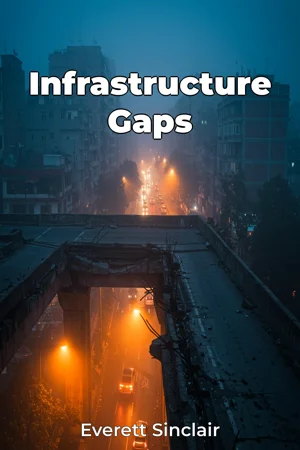
About This Book
Can inadequate infrastructure planning truly cripple a society, hindering its economic progress and diminishing the quality of life for its citizens? "Infrastructure Gaps" delves into the multifaceted consequences of deficient infrastructure planning, revealing how it serves as a chokehold on progress. This book investigates congestion, inadequate utilities, and failing public services--three critical areas where poor planning decisions manifest most acutely. Understanding these is vital for policymakers, urban planners, and concerned citizens alike, as haphazard development not only disrupts daily routines but also poses significant long-term social and economic risks. At its core, "Infrastructure Gaps" argues that effective infrastructure planning is not merely about building roads and laying pipes; it is about strategically anticipating future needs, fostering equitable access, and promoting sustainable development. The book is structured to first provide a contextual understanding of infrastructure planning, examining the historical evolution of planning methodologies and their successes and failures in different geopolitical contexts. This includes an analysis of past infrastructure projects, highlighting both visionary initiatives and cautionary tales of mismanagement. This background sets the stage for understanding current challenges. The book then explores three major detrimental outcomes of poor infrastructure planning in detail. First, it addresses the pervasive issue of urban and rural congestion, analyzing its economic costs, environmental impacts, and social consequences. Drawing on traffic modelling data, case studies of cities struggling with gridlock, and statistical analyses of commute times, the book demonstrates how inadequate road networks, insufficient public transportation options, and a lack of integrated land-use planning contribute to crippling congestion. Second, the book examines the provision of essential utilities such as water, electricity, and internet access. Using data from utility companies, government reports, and academic studies, it reveals how poor planning leads to unreliable service, inequitable distribution, and environmental degradation. The book dissects instances of water scarcity, power outages, and digital divides, illustrating the social disparities exacerbated by inadequate utility infrastructure. Third, the book analyzes the failing public services that arise from poor infrastructure planning. Utilizing data from government agencies and sociological studies, it reveals how inadequate school facilities, under-resourced healthcare systems, and insufficient public safety infrastructure undermine communities and contribute to diminished opportunities. "Infrastructure Gaps" pulls together interdisciplinary insights from the fields of political science, architecture, and urban planning to create a more thorough analysis. It incorporates economic analyses of infrastructure investment, architectural assessments of building design, and political analyses of decision-making processes. This approach provides a more holistic understanding of the complexities involved and illustrates how infrastructure planning is influenced by power structures, economic incentives, and societal priorities. The book will be valuable to urban planners seeking to improve planning practices, policymakers aiming to make informed decisions about infrastructure investments, and citizens demanding greater accountability from their elected officials. By providing a clear framework for understanding the relationship between infrastructure planning and societal well-being, "Infrastructure Gaps" empowers readers to advocate for more strategic, equitable, and sustainable development. The scope of the book focuses primarily on developed and developing nations, acknowledging the unique challenges faced by each. It does stop short of providing detailed engineering specifications for infrastructure projects, instead prioritizing higher-level planning analysis. "Infrastructure Gaps" wades into existing debates about urban sprawl, public transportation funding, and environmental regulations. By presenting evidence-based analyses and diverse perspectives, the book contributes to a more nuanced understanding of these controversies. The book maintains a formal but accessible tone, making complex concepts understandable without simplifying the subject.
Can inadequate infrastructure planning truly cripple a society, hindering its economic progress and diminishing the quality of life for its citizens? "Infrastructure Gaps" delves into the multifaceted consequences of deficient infrastructure planning, revealing how it serves as a chokehold on progress. This book investigates congestion, inadequate utilities, and failing public services--three critical areas where poor planning decisions manifest most acutely. Understanding these is vital for policymakers, urban planners, and concerned citizens alike, as haphazard development not only disrupts daily routines but also poses significant long-term social and economic risks. At its core, "Infrastructure Gaps" argues that effective infrastructure planning is not merely about building roads and laying pipes; it is about strategically anticipating future needs, fostering equitable access, and promoting sustainable development. The book is structured to first provide a contextual understanding of infrastructure planning, examining the historical evolution of planning methodologies and their successes and failures in different geopolitical contexts. This includes an analysis of past infrastructure projects, highlighting both visionary initiatives and cautionary tales of mismanagement. This background sets the stage for understanding current challenges. The book then explores three major detrimental outcomes of poor infrastructure planning in detail. First, it addresses the pervasive issue of urban and rural congestion, analyzing its economic costs, environmental impacts, and social consequences. Drawing on traffic modelling data, case studies of cities struggling with gridlock, and statistical analyses of commute times, the book demonstrates how inadequate road networks, insufficient public transportation options, and a lack of integrated land-use planning contribute to crippling congestion. Second, the book examines the provision of essential utilities such as water, electricity, and internet access. Using data from utility companies, government reports, and academic studies, it reveals how poor planning leads to unreliable service, inequitable distribution, and environmental degradation. The book dissects instances of water scarcity, power outages, and digital divides, illustrating the social disparities exacerbated by inadequate utility infrastructure. Third, the book analyzes the failing public services that arise from poor infrastructure planning. Utilizing data from government agencies and sociological studies, it reveals how inadequate school facilities, under-resourced healthcare systems, and insufficient public safety infrastructure undermine communities and contribute to diminished opportunities. "Infrastructure Gaps" pulls together interdisciplinary insights from the fields of political science, architecture, and urban planning to create a more thorough analysis. It incorporates economic analyses of infrastructure investment, architectural assessments of building design, and political analyses of decision-making processes. This approach provides a more holistic understanding of the complexities involved and illustrates how infrastructure planning is influenced by power structures, economic incentives, and societal priorities. The book will be valuable to urban planners seeking to improve planning practices, policymakers aiming to make informed decisions about infrastructure investments, and citizens demanding greater accountability from their elected officials. By providing a clear framework for understanding the relationship between infrastructure planning and societal well-being, "Infrastructure Gaps" empowers readers to advocate for more strategic, equitable, and sustainable development. The scope of the book focuses primarily on developed and developing nations, acknowledging the unique challenges faced by each. It does stop short of providing detailed engineering specifications for infrastructure projects, instead prioritizing higher-level planning analysis. "Infrastructure Gaps" wades into existing debates about urban sprawl, public transportation funding, and environmental regulations. By presenting evidence-based analyses and diverse perspectives, the book contributes to a more nuanced understanding of these controversies. The book maintains a formal but accessible tone, making complex concepts understandable without simplifying the subject.
"Infrastructure Gaps" explores the profound impact of inadequate infrastructure planning on societies, examining how it can stifle economic development and diminish quality of life. The book argues that effective planning goes beyond simply building infrastructure; it requires strategically anticipating future needs and promoting equitable, sustainable development. One intriguing insight is how urban congestion, resulting from poor road networks and insufficient public transportation, not only incurs economic costs but also has significant environmental and social consequences. Another critical area explored is the provision of essential utilities, such as water and electricity, revealing how deficient planning can lead to unreliable service and exacerbate social disparities. The book adopts an interdisciplinary approach, drawing from political science, architecture, and urban planning to provide a holistic understanding of the complexities involved. It begins by establishing a contextual understanding of infrastructure planning, followed by a detailed exploration into the detrimental outcomes of poor planning, such as urban congestion, inadequate utilities, and failing public services. By presenting evidence-based analyses and diverse perspectives, "Infrastructure Gaps" empowers readers to advocate for more strategic, equitable, and sustainable development, making it an invaluable resource for policymakers, urban planners, and engaged citizens alike.
Book Details
ISBN
9788233997366
Publisher
Publifye AS
Your Licenses
You don't own any licenses for this book
Purchase a license below to unlock this book and download the EPUB.
Purchase License
Select a tier to unlock this book
Need bulk licensing?
Contact us for enterprise agreements.