
About This Book
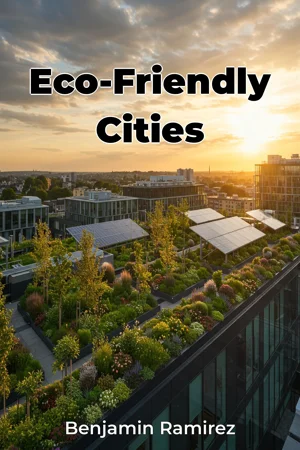
Can well-designed urban spaces truly reverse the environmental damage wrought by decades of unsustainable growth? "Eco-Friendly Cities" delves into the critical role of sustainable city planning in mitigating pollution, expanding urban greenery, and fostering the adoption of renewable energy. This book is not just about advocating for cleaner cities; it’s about demonstrating how integrated architectural and environmental strategies can create urban centers that are environmentally responsible and enhance the quality of life for their inhabitants. We begin by establishing the significant environmental challenges confronting contemporary urban areas, including air and water pollution, urban heat islands, and the overuse of natural resources. Understanding these challenges is crucial because they directly impact public health, biodiversity, and the overall resilience of cities to climate change. We examine the historical trajectory of urban development, highlighting the environmental oversights of past planning paradigms and setting the stage for a discussion of more sustainable approaches. The central argument of "Eco-Friendly Cities" posits that a holistic approach to urban planning, integrating architectural design with environmental science, is essential for creating truly sustainable cities. This argument is supported by data-driven analyses of cities that have successfully implemented such strategies, showcasing measurable improvements in environmental quality and resource efficiency. The information presented underscores the importance of forward-thinking urban policies that prioritize the well-being of both the environment and city residents. The book's structure is designed to guide the reader through a comprehensive understanding of sustainable urban planning. Initially, we introduce the core principles of eco-friendly city design, including green infrastructure, energy-efficient buildings, and waste reduction strategies. Later chapters explore specific case studies of cities around the world that have successfully implemented these principles, providing tangible examples of what works and what doesn’t. Finally, we culminate with a discussion of the policy implications of sustainable urban development, offering recommendations for policymakers and urban planners seeking to create more environmentally responsible cities. The book's arguments are backed by diverse evidence, including scientific studies, data from environmental monitoring programs, and architectural case studies. Methodologies include comparative analyses of different urban planning approaches, statistical modeling of environmental impacts, and qualitative assessments of community engagement and social equity. "Eco-Friendly Cities" draws connections between architecture, environmental science, and urban policy. By understanding the architectural aspects of building design, the environmental consequences of urban sprawl, and the policy levers that can promote sustainable development, readers gain a more comprehensive understanding of the challenges and opportunities in creating eco-friendly cities. Furthermore, the design aspects of urban gardening and eco-conscious landscaping are taken into consideration. A unique aspect of this book is its emphasis on the integration of technological innovation with community-based solutions. We explore how smart technologies, such as sensor networks and data analytics, can be used to optimize resource management and reduce environmental impacts, while also highlighting the importance of engaging local communities in the planning and implementation of sustainable development projects. Written in a clear and accessible style, "Eco-Friendly Cities" is intended for a broad audience including architecture students, urban planners, environmental scientists, policymakers, and anyone interested in learning more about how cities can become more sustainable. It offers a fresh perspective on urban development that bridges the gap between theory and practice. While the book covers a wide range of topics related to sustainable urban planning, its scope is limited to the environmental aspects of city design. Issues of social equity and economic development are touched upon, but not explored in depth. Ultimately, "Eco-Friendly Cities" provides readers with the knowledge and tools they need to become advocates for sustainable urban development in their own communities. By illustrating the practical benefits of eco-friendly city planning and showcasing successful examples from around the and the globe, this book aims to inspire action and contribute to a more sustainable and resilient urban future. The content promotes the idea of thinking globally and acting locally to create urban ecosystems that support both human well-being and environmental health.
Can well-designed urban spaces truly reverse the environmental damage wrought by decades of unsustainable growth? "Eco-Friendly Cities" delves into the critical role of sustainable city planning in mitigating pollution, expanding urban greenery, and fostering the adoption of renewable energy. This book is not just about advocating for cleaner cities; it’s about demonstrating how integrated architectural and environmental strategies can create urban centers that are environmentally responsible and enhance the quality of life for their inhabitants. We begin by establishing the significant environmental challenges confronting contemporary urban areas, including air and water pollution, urban heat islands, and the overuse of natural resources. Understanding these challenges is crucial because they directly impact public health, biodiversity, and the overall resilience of cities to climate change. We examine the historical trajectory of urban development, highlighting the environmental oversights of past planning paradigms and setting the stage for a discussion of more sustainable approaches. The central argument of "Eco-Friendly Cities" posits that a holistic approach to urban planning, integrating architectural design with environmental science, is essential for creating truly sustainable cities. This argument is supported by data-driven analyses of cities that have successfully implemented such strategies, showcasing measurable improvements in environmental quality and resource efficiency. The information presented underscores the importance of forward-thinking urban policies that prioritize the well-being of both the environment and city residents. The book's structure is designed to guide the reader through a comprehensive understanding of sustainable urban planning. Initially, we introduce the core principles of eco-friendly city design, including green infrastructure, energy-efficient buildings, and waste reduction strategies. Later chapters explore specific case studies of cities around the world that have successfully implemented these principles, providing tangible examples of what works and what doesn’t. Finally, we culminate with a discussion of the policy implications of sustainable urban development, offering recommendations for policymakers and urban planners seeking to create more environmentally responsible cities. The book's arguments are backed by diverse evidence, including scientific studies, data from environmental monitoring programs, and architectural case studies. Methodologies include comparative analyses of different urban planning approaches, statistical modeling of environmental impacts, and qualitative assessments of community engagement and social equity. "Eco-Friendly Cities" draws connections between architecture, environmental science, and urban policy. By understanding the architectural aspects of building design, the environmental consequences of urban sprawl, and the policy levers that can promote sustainable development, readers gain a more comprehensive understanding of the challenges and opportunities in creating eco-friendly cities. Furthermore, the design aspects of urban gardening and eco-conscious landscaping are taken into consideration. A unique aspect of this book is its emphasis on the integration of technological innovation with community-based solutions. We explore how smart technologies, such as sensor networks and data analytics, can be used to optimize resource management and reduce environmental impacts, while also highlighting the importance of engaging local communities in the planning and implementation of sustainable development projects. Written in a clear and accessible style, "Eco-Friendly Cities" is intended for a broad audience including architecture students, urban planners, environmental scientists, policymakers, and anyone interested in learning more about how cities can become more sustainable. It offers a fresh perspective on urban development that bridges the gap between theory and practice. While the book covers a wide range of topics related to sustainable urban planning, its scope is limited to the environmental aspects of city design. Issues of social equity and economic development are touched upon, but not explored in depth. Ultimately, "Eco-Friendly Cities" provides readers with the knowledge and tools they need to become advocates for sustainable urban development in their own communities. By illustrating the practical benefits of eco-friendly city planning and showcasing successful examples from around the and the globe, this book aims to inspire action and contribute to a more sustainable and resilient urban future. The content promotes the idea of thinking globally and acting locally to create urban ecosystems that support both human well-being and environmental health.
"Eco-Friendly Cities" explores how sustainable urban planning can reverse environmental damage by integrating architectural and environmental strategies. It emphasizes the importance of mitigating pollution, expanding urban greenery, and adopting renewable energy sources to enhance the quality of life in urban centers. The book highlights the crucial role of holistic approaches, showcasing how forward-thinking urban policies improve environmental quality and resource efficiency. For instance, integrated green infrastructure and energy-efficient buildings are presented as key components of sustainable city design. The book begins by outlining the environmental challenges facing cities, such as air and water pollution and the overuse of natural resources, and then presents the core principles of eco-friendly city design, including waste reduction strategies. Through diverse evidence, including scientific studies and architectural case studies, the book connects architecture, environmental science, and urban policy. It emphasizes integrating technological innovation with community-based solutions, like using smart technologies to optimize resource management. The approach guides readers through a comprehensive understanding, progressing from core principles to case studies of successful implementations worldwide. The book culminates with policy recommendations for creating environmentally responsible cities, offering a fresh perspective that bridges the gap between theory and practice for a broad audience.
Book Details
ISBN
9788233997359
Publisher
Publifye AS
Your Licenses
You don't own any licenses for this book
Purchase a license below to unlock this book and download the EPUB.
Purchase License
Select a tier to unlock this book
Need bulk licensing?
Contact us for enterprise agreements.