
About This Book
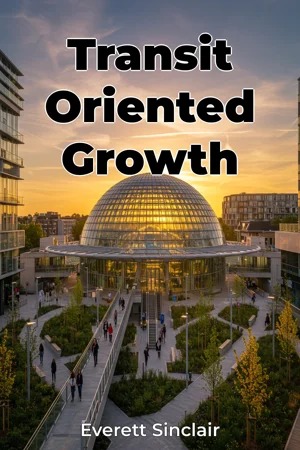
Can well-planned transportation infrastructure serve as the catalyst for sustainable and equitable urban development? "Transit Oriented Growth" explores the profound impact of integrating transportation planning with comprehensive urban design, demonstrating how this synergy can revolutionize communities. This book dissects the principles of transit-oriented development (TOD), focusing on its potential to foster walkability, alleviate traffic congestion, and enhance overall mobility for residents. It further considers architecture and design in the context of these urban transformations, along with the political dimensions of policy implementation. The book's core argument centers on the idea that transportation infrastructure should not merely respond to existing urban forms but proactively shape them. This involves a paradigm shift from auto-centric planning to prioritizing public transit, pedestrian, and bicycle infrastructure. The importance of this argument lies in its potential to address pressing urban challenges such as urban sprawl, social inequity, and environmental degradation. "Transit Oriented Growth" begins by establishing a historical context, tracing the evolution of urban planning from its early focus on industrial efficiency to its current emphasis on sustainability and livability. It examines the social and economic forces that have shaped transportation patterns and their subsequent impact on urban landscapes. The book then introduces the foundational principles of TOD, emphasizing mixed-use development, density near transit hubs, and pedestrian-friendly design. The subsequent chapters delve into specific case studies, illustrating successful and unsuccessful implementations of TOD strategies across diverse urban contexts. Major points of discussion include: * The economic benefits of TOD, such as increased property values, reduced transportation costs for residents, and enhanced business activity. * The social equity implications of TOD, focusing on ensuring affordable housing options near transit and promoting inclusive community development. * The environmental advantages of TOD, including reduced greenhouse gas emissions, improved air quality, and conservation of open space. The culmination of the book's argument lies in presenting a framework for policymakers and planners to effectively implement TOD strategies. This framework encompasses a range of considerations, from zoning regulations and land use policies to community engagement and collaboration with private developers. Throughout the book, evidence is drawn from a variety of sources, including urban planning studies, transportation data, economic impact assessments, and sociological research. Unique data sources, such as longitudinal studies of TOD projects and comparative analyses of different urban planning approaches, are utilized to support the book's claims. "Transit Oriented Growth" connects to several other fields of study, including economics, sociology, and environmental science. The economic dimension is explored through analyses of land value capture and the impact of transportation investments on local economies. The sociological dimension examines the social equity implications of TOD and its effect on community cohesion. The environmental science dimension focuses on the role of TOD in reducing carbon emissions and promoting sustainable urban development. This book offers a practical guide for policymakers, urban planners, architects, and community advocates seeking to create more sustainable, equitable, and livable cities. It provides a comprehensive overview of the principles and practices of TOD, offering real-world examples and actionable strategies. The book acknowledges the complexities and challenges associated with implementing TOD, recognizing that there is no one-size-fits-all solution. It therefore advocates for a context-sensitive approach that considers the unique characteristics of each community. "Transit Oriented Growth" also recognizes ongoing debates surrounding the role of density, the potential for displacement, and the importance of community engagement in TOD projects. The book is written in a professional, yet accessible style, making it suitable for both academic audiences and practitioners in the field. The scope of the book is intentionally broad, covering a wide range of TOD strategies and case studies. However, it does not delve into the technical details of transportation engineering or architectural design, focusing instead on the broader planning and policy implications. The book provides real-world examples of transportation and zoning policies and their relationships to community architectural elements, thus allowing readers to practically apply the information.
Can well-planned transportation infrastructure serve as the catalyst for sustainable and equitable urban development? "Transit Oriented Growth" explores the profound impact of integrating transportation planning with comprehensive urban design, demonstrating how this synergy can revolutionize communities. This book dissects the principles of transit-oriented development (TOD), focusing on its potential to foster walkability, alleviate traffic congestion, and enhance overall mobility for residents. It further considers architecture and design in the context of these urban transformations, along with the political dimensions of policy implementation. The book's core argument centers on the idea that transportation infrastructure should not merely respond to existing urban forms but proactively shape them. This involves a paradigm shift from auto-centric planning to prioritizing public transit, pedestrian, and bicycle infrastructure. The importance of this argument lies in its potential to address pressing urban challenges such as urban sprawl, social inequity, and environmental degradation. "Transit Oriented Growth" begins by establishing a historical context, tracing the evolution of urban planning from its early focus on industrial efficiency to its current emphasis on sustainability and livability. It examines the social and economic forces that have shaped transportation patterns and their subsequent impact on urban landscapes. The book then introduces the foundational principles of TOD, emphasizing mixed-use development, density near transit hubs, and pedestrian-friendly design. The subsequent chapters delve into specific case studies, illustrating successful and unsuccessful implementations of TOD strategies across diverse urban contexts. Major points of discussion include: * The economic benefits of TOD, such as increased property values, reduced transportation costs for residents, and enhanced business activity. * The social equity implications of TOD, focusing on ensuring affordable housing options near transit and promoting inclusive community development. * The environmental advantages of TOD, including reduced greenhouse gas emissions, improved air quality, and conservation of open space. The culmination of the book's argument lies in presenting a framework for policymakers and planners to effectively implement TOD strategies. This framework encompasses a range of considerations, from zoning regulations and land use policies to community engagement and collaboration with private developers. Throughout the book, evidence is drawn from a variety of sources, including urban planning studies, transportation data, economic impact assessments, and sociological research. Unique data sources, such as longitudinal studies of TOD projects and comparative analyses of different urban planning approaches, are utilized to support the book's claims. "Transit Oriented Growth" connects to several other fields of study, including economics, sociology, and environmental science. The economic dimension is explored through analyses of land value capture and the impact of transportation investments on local economies. The sociological dimension examines the social equity implications of TOD and its effect on community cohesion. The environmental science dimension focuses on the role of TOD in reducing carbon emissions and promoting sustainable urban development. This book offers a practical guide for policymakers, urban planners, architects, and community advocates seeking to create more sustainable, equitable, and livable cities. It provides a comprehensive overview of the principles and practices of TOD, offering real-world examples and actionable strategies. The book acknowledges the complexities and challenges associated with implementing TOD, recognizing that there is no one-size-fits-all solution. It therefore advocates for a context-sensitive approach that considers the unique characteristics of each community. "Transit Oriented Growth" also recognizes ongoing debates surrounding the role of density, the potential for displacement, and the importance of community engagement in TOD projects. The book is written in a professional, yet accessible style, making it suitable for both academic audiences and practitioners in the field. The scope of the book is intentionally broad, covering a wide range of TOD strategies and case studies. However, it does not delve into the technical details of transportation engineering or architectural design, focusing instead on the broader planning and policy implications. The book provides real-world examples of transportation and zoning policies and their relationships to community architectural elements, thus allowing readers to practically apply the information.
"Transit Oriented Growth" explores how integrating transportation infrastructure with urban design can create sustainable and equitable communities. It examines transit-oriented development (TOD) principles, emphasizing walkability, reduced congestion, and enhanced mobility. The book argues for a shift from auto-centric planning to prioritizing public transit, pedestrian, and bicycle infrastructure, addressing urban sprawl and social inequity. It also considers the architecture and political dimensions of policy implementation in the context of these urban transformations. The book begins by tracing urban planning's evolution and introduces TOD principles like mixed-use development and density near transit hubs. Case studies illustrate successful and unsuccessful TOD implementations. For example, TOD can increase property values and reduce transportation costs. It further delves into the social equity implications of TOD, focusing on affordable housing and inclusive community development. The framework presented guides policymakers and planners in implementing TOD strategies by navigating zoning regulations and community engagement. The book draws evidence from urban planning studies, transportation data, and economic assessments, offering a practical guide for creating sustainable cities through effective transit-oriented development.
Book Details
ISBN
9788233997335
Publisher
Publifye AS
Your Licenses
You don't own any licenses for this book
Purchase a license below to unlock this book and download the EPUB.
Purchase License
Select a tier to unlock this book
Need bulk licensing?
Contact us for enterprise agreements.