
About This Book
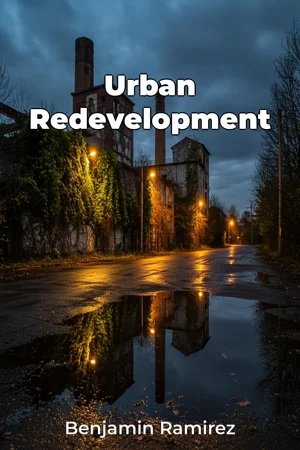
Can decaying urban landscapes be transformed into thriving communities that benefit all residents? "Urban Redevelopment" explores the multifaceted processes involved in revitalizing neglected urban areas, repurposing abandoned buildings, and strategically managing urban renewal projects. This book delves into the complex interplay of politics, architectural design, and urban planning that shapes the future of our cities. Urban redevelopment is critical for addressing issues such as urban blight, economic stagnation, and social inequity. Two key topics explored are the architectural strategies employed in repurposing existing structures and the political mechanisms that drive or hinder redevelopment efforts. Understanding these elements is crucial for creating sustainable and equitable urban environments. The historical context of urban renewal reveals a legacy of both successes and failures, often rooted in shifting social priorities and economic realities. From the ambitious projects of the mid-20th century to contemporary sustainable development initiatives, this book examines the evolution of urban planning philosophies. A basic understanding of urban planning principles and architectural design is helpful for readers to fully appreciate the nuances discussed. The central argument of "Urban Redevelopment" is that effective urban revitalization requires a holistic approach that integrates thoughtful architectural design with informed political decision-making and community engagement. This argument underscores the need to move beyond purely economic considerations and address the social and environmental impacts of redevelopment projects. This book unfolds by first introducing core concepts of urban decay and the rationale behind redevelopment initiatives. It then examines architectural techniques for adaptive reuse and sustainable construction, including case studies of successful and unsuccessful projects. Political strategies are analyzed, exploring the roles of government policies, public-private partnerships, and community activism. The book culminates in a discussion of best practices for managing urban renewal projects to ensure equitable outcomes and long-term community benefits and suggests practical steps for professionals involved in urban planning and design, as well as policy makers and community organizers. Supporting its arguments, "Urban Redevelopment" draws on diverse sources, including architectural plans, government reports, demographic data, and case studies of urban revitalization projects from around the world. Original research, including interviews with urban planners, architects, and community leaders, enriches the analysis and offers unique insights into the challenges and opportunities of urban redevelopment. The book connects to several other fields, including sociology, economics, and environmental studies. The sociological aspects of gentrification and displacement are considered, alongside the economic impacts of redevelopment on property values and job creation. Environmental sustainability is examined with a focus on green building practices and the reduction of urban sprawl. "Urban Redevelopment" distinguishes itself by emphasizing the crucial link between architectural design and political processes. It provides a framework for understanding how these elements interact and influence the success of urban renewal projects. The tone is professional and informative, while remaining accessible to a broad audience which includes urban planners, architects, policy makers, real estate developers, and community activists. It is also suited for students in urban studies, architecture, and political science. The scope of the book is limited to urban areas in developed countries, with case studies primarily drawn from North America and Europe. While the principles discussed are broadly applicable, specific local contexts and regulations may vary. The information presented in "Urban Redevelopment" can be directly applied to real-world situations, offering practical guidance for professionals involved in urban planning, architectural design, and policy-making. By understanding the dynamics of urban revitalization, readers can contribute to creating more sustainable, equitable, and vibrant communities. Ongoing debates surrounding gentrification, affordable housing, and the role of community input in redevelopment projects are directly addressed.
Can decaying urban landscapes be transformed into thriving communities that benefit all residents? "Urban Redevelopment" explores the multifaceted processes involved in revitalizing neglected urban areas, repurposing abandoned buildings, and strategically managing urban renewal projects. This book delves into the complex interplay of politics, architectural design, and urban planning that shapes the future of our cities. Urban redevelopment is critical for addressing issues such as urban blight, economic stagnation, and social inequity. Two key topics explored are the architectural strategies employed in repurposing existing structures and the political mechanisms that drive or hinder redevelopment efforts. Understanding these elements is crucial for creating sustainable and equitable urban environments. The historical context of urban renewal reveals a legacy of both successes and failures, often rooted in shifting social priorities and economic realities. From the ambitious projects of the mid-20th century to contemporary sustainable development initiatives, this book examines the evolution of urban planning philosophies. A basic understanding of urban planning principles and architectural design is helpful for readers to fully appreciate the nuances discussed. The central argument of "Urban Redevelopment" is that effective urban revitalization requires a holistic approach that integrates thoughtful architectural design with informed political decision-making and community engagement. This argument underscores the need to move beyond purely economic considerations and address the social and environmental impacts of redevelopment projects. This book unfolds by first introducing core concepts of urban decay and the rationale behind redevelopment initiatives. It then examines architectural techniques for adaptive reuse and sustainable construction, including case studies of successful and unsuccessful projects. Political strategies are analyzed, exploring the roles of government policies, public-private partnerships, and community activism. The book culminates in a discussion of best practices for managing urban renewal projects to ensure equitable outcomes and long-term community benefits and suggests practical steps for professionals involved in urban planning and design, as well as policy makers and community organizers. Supporting its arguments, "Urban Redevelopment" draws on diverse sources, including architectural plans, government reports, demographic data, and case studies of urban revitalization projects from around the world. Original research, including interviews with urban planners, architects, and community leaders, enriches the analysis and offers unique insights into the challenges and opportunities of urban redevelopment. The book connects to several other fields, including sociology, economics, and environmental studies. The sociological aspects of gentrification and displacement are considered, alongside the economic impacts of redevelopment on property values and job creation. Environmental sustainability is examined with a focus on green building practices and the reduction of urban sprawl. "Urban Redevelopment" distinguishes itself by emphasizing the crucial link between architectural design and political processes. It provides a framework for understanding how these elements interact and influence the success of urban renewal projects. The tone is professional and informative, while remaining accessible to a broad audience which includes urban planners, architects, policy makers, real estate developers, and community activists. It is also suited for students in urban studies, architecture, and political science. The scope of the book is limited to urban areas in developed countries, with case studies primarily drawn from North America and Europe. While the principles discussed are broadly applicable, specific local contexts and regulations may vary. The information presented in "Urban Redevelopment" can be directly applied to real-world situations, offering practical guidance for professionals involved in urban planning, architectural design, and policy-making. By understanding the dynamics of urban revitalization, readers can contribute to creating more sustainable, equitable, and vibrant communities. Ongoing debates surrounding gentrification, affordable housing, and the role of community input in redevelopment projects are directly addressed.
"Urban Redevelopment" examines the intricate process of transforming decaying urban areas into thriving communities through strategic urban renewal and revitalization. It explores the crucial intersection of architecture, urban planning, and political strategies necessary for effective and equitable urban development. The book reveals how architectural design can repurpose existing structures, breathing new life into neglected spaces, while political mechanisms either facilitate or obstruct these efforts. The book highlights the importance of community engagement and sustainable development in overcoming urban blight and fostering economic growth. Examining historical successes and failures in urban renewal, the authors argue for a holistic approach that balances economic considerations with social and environmental impacts. It underscores the necessity of informed political decision-making alongside innovative architectural design. Beginning with the core concepts of urban decay, the book progresses through architectural techniques for adaptive reuse and sustainable construction, analyzing political strategies and culminating in best practices for equitable urban renewal. Through diverse case studies, government reports, and interviews, "Urban Redevelopment" provides practical guidance for policy makers, community activists, and professionals aiming to create vibrant, sustainable urban environments.
Book Details
ISBN
9788233997311
Publisher
Publifye AS
Your Licenses
You don't own any licenses for this book
Purchase a license below to unlock this book and download the EPUB.
Purchase License
Select a tier to unlock this book
Need bulk licensing?
Contact us for enterprise agreements.