
About This Book
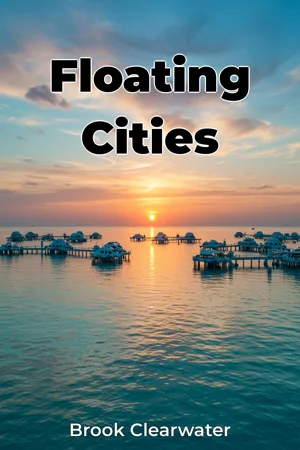
As coastal cities face unprecedented threats from rising sea levels and increasingly intense climate events, can humanity innovate its way to a more sustainable and resilient future? This book, "Floating Cities," investigates the potential of constructing habitable floating structures as a viable adaptation strategy to these pressing environmental challenges. The core topics explored are the engineering feasibility, environmental impact, and socioeconomic implications of constructing and inhabiting floating cities. We begin by examining the current state of climate science, focusing on projections for sea-level rise and the increased frequency of extreme weather events affecting coastal regions globally. This establishes the urgent need for innovative solutions, setting the stage for considering floating cities as a practical response. Our central argument is that while numerous technical and logistical hurdles exist, floating cities represent a worthwhile avenue for exploration and investment, potentially offering a pathway to more secure and sustainable coastal living when designed responsibly. This book champions the idea that proactive adaptation, driven by technological advancements and careful planning, can mitigate the worst effects of climate change on vulnerable populations. The book is structured logically, beginning with an introduction to the environmental drivers behind considering floating urban centers. Chapter 1 summarizes the relevant climate science, providing context for the urgency of finding adaptation strategies. Chapters 2 and 3 delve into various design concepts for floating structures, focusing on their stability, scalability, and integration with existing infrastructure. These sections analyze real-world case studies of existing floating structures, from oil rigs to artificial islands, drawing lessons for urban-scale projects. Chapter 4 evaluates the environmental consequences of building and operating floating cities, considering factors such as energy consumption, waste management, and potential impacts on marine ecosystems. Chapter 5 examines the socioeconomic challenges and opportunities, addressing issues of accessibility, affordability, governance, and community development. The book culminates with a discussion of the policy implications, emphasizing the need for international cooperation and forward-thinking regulations to facilitate the responsible development of floating cities. The evidence presented includes engineering studies, environmental impact assessments, economic models, and policy analyses. Data is sourced from reputable scientific journals, government reports, and industry publications. The book integrates perspectives from diverse fields, including civil engineering, marine biology, urban planning, economics, and political science. By connecting these disciplines, we offer a comprehensive understanding of the multifaceted challenges and possibilities associated with floating cities. This book stands apart by offering a balanced and holistic assessment of floating cities, moving beyond pure technological optimism to critically examine the environmental and societal considerations. We take a solutions-oriented approach, acknowledging potential pitfalls while emphasizing the need for innovation and collaboration. Written in a clear and accessible style, "Floating Cities" is aimed at a broad audience, including students, researchers, policymakers, urban planners, and anyone interested in climate change adaptation and sustainable development. The book offers valuable insights into the technical feasibility, environmental sustainability, and societal implications of floating cities, making it a relevant and timely contribution to the ongoing discussion about adapting to climate change. The scope of this book is limited to exploring the potential of floating cities as an adaptation strategy for climate change and rising sea levels, and does not provide exhaustive coverage of all possible climate change mitigation strategies. It also does not provide deep dives into particular case studies, rather preferring to analyze different project types and scenarios. The concepts discussed have practical applications for coastal communities, governments, and private sector companies involved in infrastructure development, urban planning, and environmental management. The book addresses some of the important controversies and debates related to this topic, such as the potential environmental impact of construction, the social equity of living in such structures, and the economic feasibility of large-scale projects.
As coastal cities face unprecedented threats from rising sea levels and increasingly intense climate events, can humanity innovate its way to a more sustainable and resilient future? This book, "Floating Cities," investigates the potential of constructing habitable floating structures as a viable adaptation strategy to these pressing environmental challenges. The core topics explored are the engineering feasibility, environmental impact, and socioeconomic implications of constructing and inhabiting floating cities. We begin by examining the current state of climate science, focusing on projections for sea-level rise and the increased frequency of extreme weather events affecting coastal regions globally. This establishes the urgent need for innovative solutions, setting the stage for considering floating cities as a practical response. Our central argument is that while numerous technical and logistical hurdles exist, floating cities represent a worthwhile avenue for exploration and investment, potentially offering a pathway to more secure and sustainable coastal living when designed responsibly. This book champions the idea that proactive adaptation, driven by technological advancements and careful planning, can mitigate the worst effects of climate change on vulnerable populations. The book is structured logically, beginning with an introduction to the environmental drivers behind considering floating urban centers. Chapter 1 summarizes the relevant climate science, providing context for the urgency of finding adaptation strategies. Chapters 2 and 3 delve into various design concepts for floating structures, focusing on their stability, scalability, and integration with existing infrastructure. These sections analyze real-world case studies of existing floating structures, from oil rigs to artificial islands, drawing lessons for urban-scale projects. Chapter 4 evaluates the environmental consequences of building and operating floating cities, considering factors such as energy consumption, waste management, and potential impacts on marine ecosystems. Chapter 5 examines the socioeconomic challenges and opportunities, addressing issues of accessibility, affordability, governance, and community development. The book culminates with a discussion of the policy implications, emphasizing the need for international cooperation and forward-thinking regulations to facilitate the responsible development of floating cities. The evidence presented includes engineering studies, environmental impact assessments, economic models, and policy analyses. Data is sourced from reputable scientific journals, government reports, and industry publications. The book integrates perspectives from diverse fields, including civil engineering, marine biology, urban planning, economics, and political science. By connecting these disciplines, we offer a comprehensive understanding of the multifaceted challenges and possibilities associated with floating cities. This book stands apart by offering a balanced and holistic assessment of floating cities, moving beyond pure technological optimism to critically examine the environmental and societal considerations. We take a solutions-oriented approach, acknowledging potential pitfalls while emphasizing the need for innovation and collaboration. Written in a clear and accessible style, "Floating Cities" is aimed at a broad audience, including students, researchers, policymakers, urban planners, and anyone interested in climate change adaptation and sustainable development. The book offers valuable insights into the technical feasibility, environmental sustainability, and societal implications of floating cities, making it a relevant and timely contribution to the ongoing discussion about adapting to climate change. The scope of this book is limited to exploring the potential of floating cities as an adaptation strategy for climate change and rising sea levels, and does not provide exhaustive coverage of all possible climate change mitigation strategies. It also does not provide deep dives into particular case studies, rather preferring to analyze different project types and scenarios. The concepts discussed have practical applications for coastal communities, governments, and private sector companies involved in infrastructure development, urban planning, and environmental management. The book addresses some of the important controversies and debates related to this topic, such as the potential environmental impact of construction, the social equity of living in such structures, and the economic feasibility of large-scale projects.
"Floating Cities" explores the innovative concept of constructing floating urban centers as a response to climate change and rising sea levels. As coastal cities face increasing threats, this book investigates whether these structures can offer a sustainable and resilient future. The book analyzes the engineering feasibility, environmental impact, and socioeconomic implications of these ambitious projects, recognizing both their potential and the challenges they present. For instance, while floating cities could provide secure housing, their construction and operation raise concerns about marine ecosystems and resource consumption. The book methodically progresses from introducing the climate science driving the need for adaptation to examining various design concepts and real-world case studies, such as oil rigs and artificial islands. It then evaluates the environmental consequences, considering energy use, waste management, and effects on marine life. Socioeconomic challenges, including accessibility, affordability, and governance, are also addressed. The book emphasizes that proactive adaptation, driven by technological advancements and careful planning, can mitigate the worst effects of climate change on vulnerable populations. Ultimately, the book champions the idea of floating cities as a worthwhile avenue for exploration, provided they are designed responsibly. It highlights the need for international cooperation and forward-thinking regulations to facilitate their responsible development. This book offers a balanced assessment, moving beyond technological optimism to critically examine the environmental and societal considerations.
Book Details
ISBN
9788233997281
Publisher
Publifye AS
Your Licenses
You don't own any licenses for this book
Purchase a license below to unlock this book and download the EPUB.
Purchase License
Select a tier to unlock this book
Need bulk licensing?
Contact us for enterprise agreements.