
About This Book
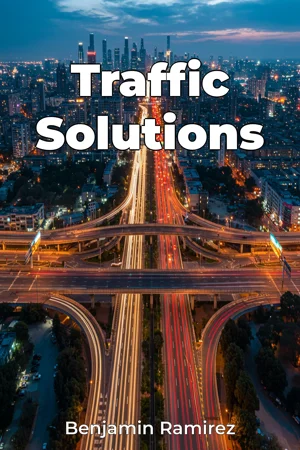
Are our cities destined to remain choked by relentless traffic congestion, or can innovative solutions pave the way for smoother, more efficient urban mobility? "Traffic Solutions" explores how urban planners are leveraging smart traffic management systems and infrastructure improvements to alleviate congestion and create more livable cities. This book argues that an integrated, technologically advanced, and strategically planned approach to urban transportation is not only possible but essential for the future of sustainable urban development. This book examines two core pillars of modern traffic management: the application of smart technologies and the implementation of strategic infrastructure enhancements. The significance of these topics lies in their potential to resolve the escalating challenges of urban congestion, which impacts economic productivity, environmental quality, and the overall quality of life for city residents. Understanding these solutions is crucial for anyone involved in urban planning, policy-making, or simply interested in the future of our cities. Historically, cities have relied on traditional methods to address traffic problems, such as widening roads or building more highways. However, these approaches have often proven to be unsustainable and can even exacerbate congestion in the long run due to induced demand. "Traffic Solutions" moves beyond these outdated strategies and focuses on contemporary, data-driven methods that are proving effective in cities around the world. A basic understanding of urban planning principles and transportation engineering is helpful, but not required, to grasp the concepts discussed. "Traffic Solutions" puts forth the argument that the most effective approach to reducing urban congestion involves a holistic strategy that combines real-time data analysis, intelligent traffic control systems, and well-designed infrastructure improvements. This multifaceted approach allows for a more responsive and adaptive transportation network, capable of dynamically addressing the ever-changing demands of urban mobility. The importance of this argument lies in its potential to shift the paradigm from reactive problem-solving to proactive management, leading to more sustainable and efficient urban transport systems. The book is structured to provide a complete overview of the subject. It begins with an introduction to the fundamental concepts of traffic flow theory and the challenges of urban congestion. The subsequent sections delve into specific strategies, starting with intelligent traffic management systems, exploring adaptive traffic signal control, real-time traffic monitoring, and the use of predictive analytics to anticipate and prevent congestion. A review of infrastructure improvements will follow, including the design and implementation of bus rapid transit (BRT) systems, optimized road networks, and the integration of bicycle and pedestrian infrastructure. The book culminates with a discussion of the policy and planning implications of these solutions, considering funding models, public engagement strategies, and the long-term vision for sustainable urban mobility. Throughout the book, case studies and empirical data from cities around the world will be presented to support the arguments made. This evidence will include traffic flow data, travel time studies, and economic impact assessments. Furthermore, the book will draw on research from transportation engineering, urban planning, and computer science to provide a comprehensive and well-supported analysis. "Traffic Solutions" also connects to several other fields, including environmental science, economics, and public policy. The reduction of traffic congestion has significant environmental benefits, such as lower emissions and improved air quality. The economic implications are also substantial, as reduced congestion can lead to increased productivity and economic growth. Finally, effective traffic management requires sound public policy and careful consideration of the social equity implications of transportation investments. What sets this book apart is its emphasis on the integration of technology and infrastructure within a comprehensive planning framework. Rather than viewing these elements as separate solutions, "Traffic Solutions" demonstrates how they can work together synergistically to achieve meaningful reductions in congestion and improvements in urban mobility. The book will maintain a professional and accessible tone, avoiding technical jargon and presenting information in a clear and concise manner. Complex concepts will be explained in a way that is easy to understand for a broad audience, including urban planners, policymakers, transportation professionals, and concerned citizens. The target audience for "Traffic Solutions" includes urban planners, transportation engineers, policymakers, graduate students in urban studies, and anyone with a general interest in the future of cities and transportation. The book will be valuable to them because it provides a practical and evidence-based guide to addressing one of the most pressing challenges facing urban areas today. As a work in the 'Technology, Architecture General, Architecture' genres, it adheres to the expectation of providing practical, well-researched solutions that are grounded in real-world applications. The scope of the book is limited to addressing traffic congestion in urban areas. While the principles discussed may be applicable to other contexts, the focus remains firmly on the challenges and opportunities presented by dense urban environments. The book also acknowledges that there are ongoing debates in the field regarding the most effective approaches to traffic management. For example, there is often disagreement about the role of pricing strategies, such as congestion pricing, and their potential impact on different socioeconomic groups. "Traffic Solutions" will address these controversies in a balanced and objective manner, presenting different perspectives and providing evidence to support different viewpoints. The information in this book can be applied by readers involved in urban planning, traffic management, and transportation policy to develop and implement effective strategies for reducing congestion and improving urban mobility.
Are our cities destined to remain choked by relentless traffic congestion, or can innovative solutions pave the way for smoother, more efficient urban mobility? "Traffic Solutions" explores how urban planners are leveraging smart traffic management systems and infrastructure improvements to alleviate congestion and create more livable cities. This book argues that an integrated, technologically advanced, and strategically planned approach to urban transportation is not only possible but essential for the future of sustainable urban development. This book examines two core pillars of modern traffic management: the application of smart technologies and the implementation of strategic infrastructure enhancements. The significance of these topics lies in their potential to resolve the escalating challenges of urban congestion, which impacts economic productivity, environmental quality, and the overall quality of life for city residents. Understanding these solutions is crucial for anyone involved in urban planning, policy-making, or simply interested in the future of our cities. Historically, cities have relied on traditional methods to address traffic problems, such as widening roads or building more highways. However, these approaches have often proven to be unsustainable and can even exacerbate congestion in the long run due to induced demand. "Traffic Solutions" moves beyond these outdated strategies and focuses on contemporary, data-driven methods that are proving effective in cities around the world. A basic understanding of urban planning principles and transportation engineering is helpful, but not required, to grasp the concepts discussed. "Traffic Solutions" puts forth the argument that the most effective approach to reducing urban congestion involves a holistic strategy that combines real-time data analysis, intelligent traffic control systems, and well-designed infrastructure improvements. This multifaceted approach allows for a more responsive and adaptive transportation network, capable of dynamically addressing the ever-changing demands of urban mobility. The importance of this argument lies in its potential to shift the paradigm from reactive problem-solving to proactive management, leading to more sustainable and efficient urban transport systems. The book is structured to provide a complete overview of the subject. It begins with an introduction to the fundamental concepts of traffic flow theory and the challenges of urban congestion. The subsequent sections delve into specific strategies, starting with intelligent traffic management systems, exploring adaptive traffic signal control, real-time traffic monitoring, and the use of predictive analytics to anticipate and prevent congestion. A review of infrastructure improvements will follow, including the design and implementation of bus rapid transit (BRT) systems, optimized road networks, and the integration of bicycle and pedestrian infrastructure. The book culminates with a discussion of the policy and planning implications of these solutions, considering funding models, public engagement strategies, and the long-term vision for sustainable urban mobility. Throughout the book, case studies and empirical data from cities around the world will be presented to support the arguments made. This evidence will include traffic flow data, travel time studies, and economic impact assessments. Furthermore, the book will draw on research from transportation engineering, urban planning, and computer science to provide a comprehensive and well-supported analysis. "Traffic Solutions" also connects to several other fields, including environmental science, economics, and public policy. The reduction of traffic congestion has significant environmental benefits, such as lower emissions and improved air quality. The economic implications are also substantial, as reduced congestion can lead to increased productivity and economic growth. Finally, effective traffic management requires sound public policy and careful consideration of the social equity implications of transportation investments. What sets this book apart is its emphasis on the integration of technology and infrastructure within a comprehensive planning framework. Rather than viewing these elements as separate solutions, "Traffic Solutions" demonstrates how they can work together synergistically to achieve meaningful reductions in congestion and improvements in urban mobility. The book will maintain a professional and accessible tone, avoiding technical jargon and presenting information in a clear and concise manner. Complex concepts will be explained in a way that is easy to understand for a broad audience, including urban planners, policymakers, transportation professionals, and concerned citizens. The target audience for "Traffic Solutions" includes urban planners, transportation engineers, policymakers, graduate students in urban studies, and anyone with a general interest in the future of cities and transportation. The book will be valuable to them because it provides a practical and evidence-based guide to addressing one of the most pressing challenges facing urban areas today. As a work in the 'Technology, Architecture General, Architecture' genres, it adheres to the expectation of providing practical, well-researched solutions that are grounded in real-world applications. The scope of the book is limited to addressing traffic congestion in urban areas. While the principles discussed may be applicable to other contexts, the focus remains firmly on the challenges and opportunities presented by dense urban environments. The book also acknowledges that there are ongoing debates in the field regarding the most effective approaches to traffic management. For example, there is often disagreement about the role of pricing strategies, such as congestion pricing, and their potential impact on different socioeconomic groups. "Traffic Solutions" will address these controversies in a balanced and objective manner, presenting different perspectives and providing evidence to support different viewpoints. The information in this book can be applied by readers involved in urban planning, traffic management, and transportation policy to develop and implement effective strategies for reducing congestion and improving urban mobility.
"Traffic Solutions" tackles the growing problem of urban congestion, exploring how smart traffic management and infrastructure improvements can create more livable cities. It argues for an integrated, technologically advanced approach to urban transport, moving beyond outdated solutions like simply widening roads. Did you know that traditional methods can actually worsen congestion due to induced demand? Instead, the book emphasizes data-driven methods, offering a fresh perspective on sustainable urban development. The book progresses from fundamental concepts of traffic flow to specific strategies like adaptive traffic signal control and real-time traffic monitoring. It also reviews infrastructure improvements, such as bus rapid transit systems. What makes this book unique is its focus on integrating technology and infrastructure within a comprehensive planning framework. By combining real-time data analysis with well-designed infrastructure, cities can achieve meaningful reductions in congestion and improvements in urban mobility.
Book Details
ISBN
9788233997274
Publisher
Publifye AS
Your Licenses
You don't own any licenses for this book
Purchase a license below to unlock this book and download the EPUB.
Purchase License
Select a tier to unlock this book
Need bulk licensing?
Contact us for enterprise agreements.