
About This Book
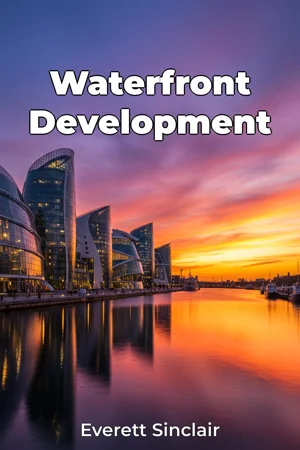
Can urban waterfronts, once symbols of industrial decline, be transformed into engines of economic growth, vibrant public spaces, and models of sustainable development? This book, "Waterfront Development," addresses this question by exploring the multifaceted process of waterfront revitalization and its impact on cities worldwide. We delve into the intricate interplay of economic, architectural, and environmental considerations that shape successful waterfront projects. This book primarily focuses on three key areas: the economic drivers behind waterfront redevelopment, the architectural and urban design principles that contribute to successful and engaging public spaces, and the strategies for ensuring environmental sustainability in these projects. These topics are critical because waterfronts represent valuable underutilized assets with the potential to significantly enhance a city's economy, quality of life, and resilience. The historical context of waterfront development often involves a transition from industrial use to post-industrial landscapes. Understanding this history, along with basic principles of urban economics and sustainable design, is beneficial for readers. No prior expertise is required, but some familiarity with urban planning concepts will enhance the reading experience. Our central argument is that successful waterfront development requires a holistic, integrated approach that balances economic investment, innovative architectural design, environmental responsibility, and community engagement. This book will demonstrate that when these elements are carefully considered and aligned, waterfronts can become catalysts for positive urban transformation, generating economic prosperity, attracting tourism, and providing valuable recreational and cultural amenities for residents. The book is structured to provide a comprehensive understanding of waterfront development. It begins by introducing the core concepts and historical context of waterfront revitalization. We then explore the economics of waterfront development, examining case studies of successful projects and analyzing the factors that contribute to their financial viability. A major section is dedicated to the architectural and urban design aspects, showcasing innovative design solutions, principles of placemaking, and strategies for creating vibrant public spaces. The final portion focuses on environmental sustainability, exploring best practices in ecological restoration, climate change adaptation, and responsible resource management. The book culminates with a discussion of practical applications and policy recommendations, providing a roadmap for cities seeking to revitalize their waterfronts. The evidence presented in this book draws upon a wide range of sources, including case studies of waterfront projects around the globe, economic impact assessments, architectural design analyses, environmental impact studies, and interviews with leading experts in the field. We also utilize publicly available data from government agencies, urban planning organizations, and academic research institutions. "Waterfront Development" connects to several other fields of study, including urban economics, environmental science, and sociology. The economic analysis of waterfront development draws upon principles of urban economics and real estate finance. The discussion of environmental sustainability is informed by environmental science and ecological engineering. The exploration of community engagement and social equity connects to sociological theories of urban development and social justice. This book stands out by offering a multidisciplinary perspective on waterfront development, integrating economic, architectural, and environmental considerations into a comprehensive framework. It emphasizes the importance of a holistic approach that considers the long-term social, economic, and environmental impacts of these projects. The analysis is both rigorous and accessible, providing valuable insights for both academics and practitioners. The tone of the book is informative and analytical, presenting complex information in a clear and concise manner. The writing style is professional and engaging, using case studies and real-world examples to illustrate key concepts. The target audience includes urban planners, architects, developers, policymakers, and anyone interested in the future of cities. This book would be valuable to them because it provides a comprehensive overview of the challenges and opportunities of waterfront development, offering practical guidance and inspiration for creating successful and sustainable waterfront projects. As a work in the genres of economics, architectural general, and architecture, "Waterfront Development" blends analytical frameworks with design thinking and real-world examples, presenting rigorous research and insightful analysis in line with scholarly expectations. The book's scope encompasses a broad range of waterfront development projects worldwide, but it does not delve into the specific technical details of engineering or construction. The focus is on the overall planning, design, and management of waterfront areas. The information presented in this book can be applied practically by readers in a variety of ways. Urban planners can use the book to inform their planning decisions and develop effective waterfront development strategies. Architects and developers can use the book to design innovative and sustainable waterfront projects. Policymakers can use the book to create policies that support responsible waterfront development. The book addresses ongoing debates in the field, such as the balance between economic development and environmental protection, the role of public access in waterfront areas, and the challenges of gentrification and displacement associated with waterfront revitalization.
Can urban waterfronts, once symbols of industrial decline, be transformed into engines of economic growth, vibrant public spaces, and models of sustainable development? This book, "Waterfront Development," addresses this question by exploring the multifaceted process of waterfront revitalization and its impact on cities worldwide. We delve into the intricate interplay of economic, architectural, and environmental considerations that shape successful waterfront projects. This book primarily focuses on three key areas: the economic drivers behind waterfront redevelopment, the architectural and urban design principles that contribute to successful and engaging public spaces, and the strategies for ensuring environmental sustainability in these projects. These topics are critical because waterfronts represent valuable underutilized assets with the potential to significantly enhance a city's economy, quality of life, and resilience. The historical context of waterfront development often involves a transition from industrial use to post-industrial landscapes. Understanding this history, along with basic principles of urban economics and sustainable design, is beneficial for readers. No prior expertise is required, but some familiarity with urban planning concepts will enhance the reading experience. Our central argument is that successful waterfront development requires a holistic, integrated approach that balances economic investment, innovative architectural design, environmental responsibility, and community engagement. This book will demonstrate that when these elements are carefully considered and aligned, waterfronts can become catalysts for positive urban transformation, generating economic prosperity, attracting tourism, and providing valuable recreational and cultural amenities for residents. The book is structured to provide a comprehensive understanding of waterfront development. It begins by introducing the core concepts and historical context of waterfront revitalization. We then explore the economics of waterfront development, examining case studies of successful projects and analyzing the factors that contribute to their financial viability. A major section is dedicated to the architectural and urban design aspects, showcasing innovative design solutions, principles of placemaking, and strategies for creating vibrant public spaces. The final portion focuses on environmental sustainability, exploring best practices in ecological restoration, climate change adaptation, and responsible resource management. The book culminates with a discussion of practical applications and policy recommendations, providing a roadmap for cities seeking to revitalize their waterfronts. The evidence presented in this book draws upon a wide range of sources, including case studies of waterfront projects around the globe, economic impact assessments, architectural design analyses, environmental impact studies, and interviews with leading experts in the field. We also utilize publicly available data from government agencies, urban planning organizations, and academic research institutions. "Waterfront Development" connects to several other fields of study, including urban economics, environmental science, and sociology. The economic analysis of waterfront development draws upon principles of urban economics and real estate finance. The discussion of environmental sustainability is informed by environmental science and ecological engineering. The exploration of community engagement and social equity connects to sociological theories of urban development and social justice. This book stands out by offering a multidisciplinary perspective on waterfront development, integrating economic, architectural, and environmental considerations into a comprehensive framework. It emphasizes the importance of a holistic approach that considers the long-term social, economic, and environmental impacts of these projects. The analysis is both rigorous and accessible, providing valuable insights for both academics and practitioners. The tone of the book is informative and analytical, presenting complex information in a clear and concise manner. The writing style is professional and engaging, using case studies and real-world examples to illustrate key concepts. The target audience includes urban planners, architects, developers, policymakers, and anyone interested in the future of cities. This book would be valuable to them because it provides a comprehensive overview of the challenges and opportunities of waterfront development, offering practical guidance and inspiration for creating successful and sustainable waterfront projects. As a work in the genres of economics, architectural general, and architecture, "Waterfront Development" blends analytical frameworks with design thinking and real-world examples, presenting rigorous research and insightful analysis in line with scholarly expectations. The book's scope encompasses a broad range of waterfront development projects worldwide, but it does not delve into the specific technical details of engineering or construction. The focus is on the overall planning, design, and management of waterfront areas. The information presented in this book can be applied practically by readers in a variety of ways. Urban planners can use the book to inform their planning decisions and develop effective waterfront development strategies. Architects and developers can use the book to design innovative and sustainable waterfront projects. Policymakers can use the book to create policies that support responsible waterfront development. The book addresses ongoing debates in the field, such as the balance between economic development and environmental protection, the role of public access in waterfront areas, and the challenges of gentrification and displacement associated with waterfront revitalization.
"Waterfront Development" explores the revitalization of urban waterfronts, transforming them from industrial zones into thriving hubs of economic activity, attractive public spaces, and models for sustainable development. It uniquely blends economics, architectural design, and environmental considerations, offering a holistic perspective on urban revitalization. The book underscores how successful waterfront projects can significantly boost a city's economy and enhance the quality of life for its residents. The book begins by establishing core concepts and historical context. It then progresses through the economics of waterfront redevelopment, architectural design for vibrant public spaces, and environmental sustainability strategies. By examining global case studies, the book highlights how innovative architectural design and placemaking principles can create engaging public spaces and attract tourism. It also emphasizes the importance of ecological restoration and climate change adaptation in ensuring the long-term viability of these projects. This book provides a roadmap for cities seeking to revitalize their waterfronts. It offers practical applications and policy recommendations, making it a valuable resource for urban planners, architects, policymakers, and anyone interested in the future of cities. The integrated approach emphasizes the need to balance economic investment with environmental responsibility and community engagement.
Book Details
ISBN
9788233997182
Publisher
Publifye AS
Your Licenses
You don't own any licenses for this book
Purchase a license below to unlock this book and download the EPUB.
Purchase License
Select a tier to unlock this book
Need bulk licensing?
Contact us for enterprise agreements.