
About This Book
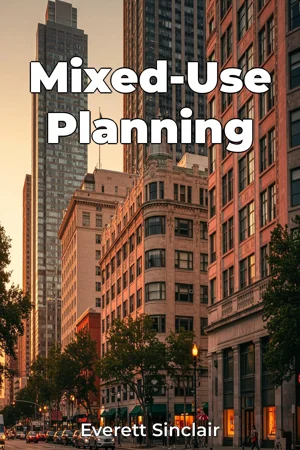
Can the intentional blending of residential, commercial, and industrial spaces truly unlock a city's dormant potential? This book, *Mixed-Use Planning*, argues that it can, offering a comprehensive exploration of how integrated urban design enhances functionality, sustainability, and community well-being. This book delves into three core concepts: the historical evolution of mixed-use development, the economic and environmental benefits of such planning, and the social impact on community building and equity. These topics are crucial because, in an era of increasing urbanization and resource scarcity, the thoughtful integration of different land uses offers a pathway towards more resilient and equitable cities. Ignoring these principles leads to urban sprawl, increased reliance on automobiles, and social segregation. Historically, cities were inherently mixed-use environments. However, the rise of industrialization and subsequent zoning regulations in the 20th century led to the separation of land uses, creating distinct residential, commercial, and industrial zones. This separation has contributed to numerous urban challenges, including traffic congestion, environmental degradation, and social isolation. Understanding this historical context is essential for appreciating the value of reconnecting these distinct zones in modern urban planning. The central argument is that deliberately planned mixed-use environments foster more vibrant, sustainable, and equitable communities. This argument is vital because it challenges conventional zoning practices and proposes a more holistic approach to city planning that prioritizes human needs and environmental responsibility. *Mixed-Use Planning* is structured to provide a thorough understanding of the subject. The book begins with an introduction to the core concepts of mixed-use planning, defining key terms and outlining its principles. It then develops these ideas by examining two major themes. One section explores the economic benefits, such as increased property values, reduced infrastructure costs, and job creation. Another section focuses on the environmental advantages, including reduced carbon footprint, improved air quality, and enhanced biodiversity. A final section examines the social dimensions, like enhanced social interaction, improved safety, and promotion of healthy lifestyles. The book culminates with a discussion of practical applications and policy recommendations, offering specific strategies for implementing mixed-use developments in diverse urban contexts. The arguments presented are supported by a range of evidence, including case studies of successful mixed-use projects from around the world, statistical data on economic and environmental performance, and sociological research on community impacts. Unique data sources, such as urban planning reports and demographic analyses, are also utilized to provide a comprehensive and nuanced understanding of the topic. The book connects to several other fields of study, including economics, environmental science, and sociology. These interdisciplinary connections enhance the argument by providing a more complete picture of the multifaceted benefits of mixed-use planning. It also relates to public health, because mixed-use environments are designed to encourage walking or cycling, improving overall mobility. *Mixed-Use Planning* offers a unique perspective by advocating for a more human-centered approach to urban development. This approach emphasizes the importance of creating places that are not only functional but also enjoyable, engaging, and equitable for all residents. The writing style is academic yet accessible, presenting complex information in a clear and concise manner. The book is intended for urban planners, architects, policymakers, developers, and anyone interested in creating more sustainable and livable cities. It will be valuable to them by providing a comprehensive framework for understanding and implementing mixed-use development. As a work of social science and architecture, the book adheres to the conventions of rigorous research, clear argumentation, and practical application. The scope of the book is broad, covering a wide range of topics related to mixed-use planning. However, it is intentionally limited to urban contexts, focusing specifically on the challenges and opportunities of implementing mixed-use developments in cities. The information in this book can be applied in many real-world scenarios, such as designing new urban developments, revitalizing existing neighborhoods, and creating more sustainable transportation systems. By providing a comprehensive overview of the principles and practices of mixed-use planning, this book empowers readers to make informed decisions that will shape the future of our cities. While the benefits of mixed-use planning are widely recognized, there are also ongoing debates about its potential drawbacks, such as increased density, traffic congestion, and potential displacement of low-income residents. The book addresses these concerns and offers strategies for mitigating the negative impacts of mixed-use development, ensuring that it benefits all members of the community.
Can the intentional blending of residential, commercial, and industrial spaces truly unlock a city's dormant potential? This book, *Mixed-Use Planning*, argues that it can, offering a comprehensive exploration of how integrated urban design enhances functionality, sustainability, and community well-being. This book delves into three core concepts: the historical evolution of mixed-use development, the economic and environmental benefits of such planning, and the social impact on community building and equity. These topics are crucial because, in an era of increasing urbanization and resource scarcity, the thoughtful integration of different land uses offers a pathway towards more resilient and equitable cities. Ignoring these principles leads to urban sprawl, increased reliance on automobiles, and social segregation. Historically, cities were inherently mixed-use environments. However, the rise of industrialization and subsequent zoning regulations in the 20th century led to the separation of land uses, creating distinct residential, commercial, and industrial zones. This separation has contributed to numerous urban challenges, including traffic congestion, environmental degradation, and social isolation. Understanding this historical context is essential for appreciating the value of reconnecting these distinct zones in modern urban planning. The central argument is that deliberately planned mixed-use environments foster more vibrant, sustainable, and equitable communities. This argument is vital because it challenges conventional zoning practices and proposes a more holistic approach to city planning that prioritizes human needs and environmental responsibility. *Mixed-Use Planning* is structured to provide a thorough understanding of the subject. The book begins with an introduction to the core concepts of mixed-use planning, defining key terms and outlining its principles. It then develops these ideas by examining two major themes. One section explores the economic benefits, such as increased property values, reduced infrastructure costs, and job creation. Another section focuses on the environmental advantages, including reduced carbon footprint, improved air quality, and enhanced biodiversity. A final section examines the social dimensions, like enhanced social interaction, improved safety, and promotion of healthy lifestyles. The book culminates with a discussion of practical applications and policy recommendations, offering specific strategies for implementing mixed-use developments in diverse urban contexts. The arguments presented are supported by a range of evidence, including case studies of successful mixed-use projects from around the world, statistical data on economic and environmental performance, and sociological research on community impacts. Unique data sources, such as urban planning reports and demographic analyses, are also utilized to provide a comprehensive and nuanced understanding of the topic. The book connects to several other fields of study, including economics, environmental science, and sociology. These interdisciplinary connections enhance the argument by providing a more complete picture of the multifaceted benefits of mixed-use planning. It also relates to public health, because mixed-use environments are designed to encourage walking or cycling, improving overall mobility. *Mixed-Use Planning* offers a unique perspective by advocating for a more human-centered approach to urban development. This approach emphasizes the importance of creating places that are not only functional but also enjoyable, engaging, and equitable for all residents. The writing style is academic yet accessible, presenting complex information in a clear and concise manner. The book is intended for urban planners, architects, policymakers, developers, and anyone interested in creating more sustainable and livable cities. It will be valuable to them by providing a comprehensive framework for understanding and implementing mixed-use development. As a work of social science and architecture, the book adheres to the conventions of rigorous research, clear argumentation, and practical application. The scope of the book is broad, covering a wide range of topics related to mixed-use planning. However, it is intentionally limited to urban contexts, focusing specifically on the challenges and opportunities of implementing mixed-use developments in cities. The information in this book can be applied in many real-world scenarios, such as designing new urban developments, revitalizing existing neighborhoods, and creating more sustainable transportation systems. By providing a comprehensive overview of the principles and practices of mixed-use planning, this book empowers readers to make informed decisions that will shape the future of our cities. While the benefits of mixed-use planning are widely recognized, there are also ongoing debates about its potential drawbacks, such as increased density, traffic congestion, and potential displacement of low-income residents. The book addresses these concerns and offers strategies for mitigating the negative impacts of mixed-use development, ensuring that it benefits all members of the community.
"Mixed-Use Planning" explores the integration of residential, commercial, and industrial spaces to enhance urban environments. It argues that deliberately blending these zones can unlock a city's potential, fostering functionality, sustainability, and community well-being. Historically, cities naturally featured mixed uses; however, 20th-century zoning led to separation, contributing to issues like urban sprawl. The book examines how reconnecting these zones addresses those challenges. The book delves into the economic and environmental benefits of mixed-use planning, such as increased property values and a reduced carbon footprint, highlighting its potential for creating more resilient and equitable cities. It also explores the social impact, including enhanced social interaction and improved safety. "Mixed-Use Planning" progresses from defining core concepts and principles to examining economic, environmental, and social dimensions, culminating in practical applications and policy recommendations for diverse urban contexts.
Book Details
ISBN
9788233997151
Publisher
Publifye AS
Your Licenses
You don't own any licenses for this book
Purchase a license below to unlock this book and download the EPUB.
Purchase License
Select a tier to unlock this book
Need bulk licensing?
Contact us for enterprise agreements.