
About This Book
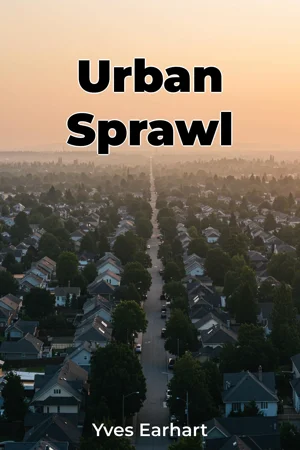
Are our cities growing too fast, too far? "Urban Sprawl" delves into the multifaceted consequences of uncontrolled urban expansion and its profound impact on global sustainability. This book examines the patterns, drivers, and implications of urban sprawl, a phenomenon reshaping landscapes, economies, and societies worldwide. We will explore the unsustainable practices and future challenges presented by this rapid and often poorly planned growth. This book addresses three critical areas. First, it analyzes the *patterns and processes* of urban sprawl, including its spatial characteristics, demographic shifts, and socioeconomic factors. Second, it investigates the *environmental consequences*, focusing on habitat loss, increased pollution, and resource depletion. Third, it explores *policy and planning strategies* for mitigating the negative effects of sprawl and promoting sustainable urban development. These topics are significant as urban sprawl affects everything from commute times to biodiversity, impacting both current and future generations. We will explore the historical roots of urban sprawl, tracing its acceleration from post-World War II suburbanization to the present-day expansion of metropolitan areas. Understanding the social and economic contexts that drive sprawl, such as car dependency and single-family housing preferences, is necessary to grasp the complexity of the issue. The reader will benefit from a basic understanding of urban planning principles and ecological concepts but no specialist knowledge is required. The central argument of "Urban Sprawl" is that unchecked urban expansion poses a significant threat to environmental sustainability and social equity, necessitating a shift towards more compact, mixed-use, and transit-oriented development patterns. Successfully navigating this paradigm shift is of paramount importance for preserving natural resources, reducing carbon emissions, and creating more livable and inclusive communities. The book follows a logical structure. It commences with an introduction to the concept of urban sprawl, defining its key characteristics and differentiating it from other forms of urban growth. The core of the book then develops the argument through examinations of transportation, housing, and land use policies. Major points include the analysis of car-dependent infrastructure, the environmental impact of low-density housing, and social segregation caused by sprawl. The book culminates in a discussion of practical strategies for mitigating sprawl, advocating for integrated land use planning, investments in public transportation, and policies that promote affordable housing. The final chapter explores real-world case studies of cities that have successfully implemented anti-sprawl measures. The evidence presented in "Urban Sprawl" is drawn from a wide range of sources, including statistical data on urban growth, geographic information systems (GIS) analysis of land use changes, case studies of urban development projects, and surveys of resident travel behavior. Unique data sources include remotely sensed imagery to quantify landscape fragmentation and longitudinal studies tracking the environmental impacts of sprawl. The book connects to several other fields, notably economics (examining the costs of infrastructure development), sociology (analyzing the social impacts of segregation), and political science (assessing the role of government policies in shaping urban form). These interdisciplinary connections enrich the book's argument by providing a more holistic understanding of the complex drivers and consequences of urban sprawl. "Urban Sprawl" adopts a fact-based, analytical approach, presenting information in an accessible and engaging manner. The tone is objective and informative, making the book suitable for a broad audience, including students, researchers, policymakers, and concerned citizens. The target audience includes students and academics in earth sciences, geography, environmental studies, and urban planning, as well as policymakers and urban planners seeking practical solutions to manage urban growth. Anyone interested in sustainability and the future of our cities will find this book helpful. As a work of non-fiction, "Urban Sprawl" provides a comprehensive and evidence-based analysis of the topic, adhering to the conventions of scholarly research and clear communication. While the book seeks to provide a broad overview of the causes and consequences of urban sprawl, it will primarily focus on examples from North America and Europe, due to data availability and the prevalence of sprawl in these regions. The book acknowledges the complexities of applying anti-sprawl measures in developing countries with different socio-economic contexts. The information in "Urban Sprawl" can be applied to a range of real-world situations, from informing local planning decisions to advocating for policy changes at the regional and national levels. Readers can use the book's insights to assess the sustainability of their own communities and to advocate for more responsible urban development practices. The book addresses ongoing debates surrounding the effectiveness of different anti-sprawl measures. While some argue for market-based solutions, others advocate for more regulatory approaches. The book explores these different perspectives, offering a balanced assessment of the strengths and limitations of each approach.
Are our cities growing too fast, too far? "Urban Sprawl" delves into the multifaceted consequences of uncontrolled urban expansion and its profound impact on global sustainability. This book examines the patterns, drivers, and implications of urban sprawl, a phenomenon reshaping landscapes, economies, and societies worldwide. We will explore the unsustainable practices and future challenges presented by this rapid and often poorly planned growth. This book addresses three critical areas. First, it analyzes the *patterns and processes* of urban sprawl, including its spatial characteristics, demographic shifts, and socioeconomic factors. Second, it investigates the *environmental consequences*, focusing on habitat loss, increased pollution, and resource depletion. Third, it explores *policy and planning strategies* for mitigating the negative effects of sprawl and promoting sustainable urban development. These topics are significant as urban sprawl affects everything from commute times to biodiversity, impacting both current and future generations. We will explore the historical roots of urban sprawl, tracing its acceleration from post-World War II suburbanization to the present-day expansion of metropolitan areas. Understanding the social and economic contexts that drive sprawl, such as car dependency and single-family housing preferences, is necessary to grasp the complexity of the issue. The reader will benefit from a basic understanding of urban planning principles and ecological concepts but no specialist knowledge is required. The central argument of "Urban Sprawl" is that unchecked urban expansion poses a significant threat to environmental sustainability and social equity, necessitating a shift towards more compact, mixed-use, and transit-oriented development patterns. Successfully navigating this paradigm shift is of paramount importance for preserving natural resources, reducing carbon emissions, and creating more livable and inclusive communities. The book follows a logical structure. It commences with an introduction to the concept of urban sprawl, defining its key characteristics and differentiating it from other forms of urban growth. The core of the book then develops the argument through examinations of transportation, housing, and land use policies. Major points include the analysis of car-dependent infrastructure, the environmental impact of low-density housing, and social segregation caused by sprawl. The book culminates in a discussion of practical strategies for mitigating sprawl, advocating for integrated land use planning, investments in public transportation, and policies that promote affordable housing. The final chapter explores real-world case studies of cities that have successfully implemented anti-sprawl measures. The evidence presented in "Urban Sprawl" is drawn from a wide range of sources, including statistical data on urban growth, geographic information systems (GIS) analysis of land use changes, case studies of urban development projects, and surveys of resident travel behavior. Unique data sources include remotely sensed imagery to quantify landscape fragmentation and longitudinal studies tracking the environmental impacts of sprawl. The book connects to several other fields, notably economics (examining the costs of infrastructure development), sociology (analyzing the social impacts of segregation), and political science (assessing the role of government policies in shaping urban form). These interdisciplinary connections enrich the book's argument by providing a more holistic understanding of the complex drivers and consequences of urban sprawl. "Urban Sprawl" adopts a fact-based, analytical approach, presenting information in an accessible and engaging manner. The tone is objective and informative, making the book suitable for a broad audience, including students, researchers, policymakers, and concerned citizens. The target audience includes students and academics in earth sciences, geography, environmental studies, and urban planning, as well as policymakers and urban planners seeking practical solutions to manage urban growth. Anyone interested in sustainability and the future of our cities will find this book helpful. As a work of non-fiction, "Urban Sprawl" provides a comprehensive and evidence-based analysis of the topic, adhering to the conventions of scholarly research and clear communication. While the book seeks to provide a broad overview of the causes and consequences of urban sprawl, it will primarily focus on examples from North America and Europe, due to data availability and the prevalence of sprawl in these regions. The book acknowledges the complexities of applying anti-sprawl measures in developing countries with different socio-economic contexts. The information in "Urban Sprawl" can be applied to a range of real-world situations, from informing local planning decisions to advocating for policy changes at the regional and national levels. Readers can use the book's insights to assess the sustainability of their own communities and to advocate for more responsible urban development practices. The book addresses ongoing debates surrounding the effectiveness of different anti-sprawl measures. While some argue for market-based solutions, others advocate for more regulatory approaches. The book explores these different perspectives, offering a balanced assessment of the strengths and limitations of each approach.
"Urban Sprawl" explores the far-reaching impacts of uncontrolled urban expansion on our planet. It dives into how rapid, often poorly planned, growth reshapes landscapes, economies, and societies, posing significant challenges to global sustainability. The book highlights the patterns and processes driving this phenomenon, such as car dependency and preferences for single-family housing, and investigates the environmental consequences, including habitat loss and increased pollution. The book examines the historical roots of urban sprawl, tracing its evolution from post-World War II suburbanization to today's sprawling metropolitan areas. It emphasizes the need for a shift towards compact, mixed-use, and transit-oriented development to mitigate the negative effects of sprawl. The approach is fact-based and analytical, making complex information accessible to a broad audience. The book progresses logically, starting with an introduction to urban sprawl, examining transportation, housing, and land use policies, and culminating in a discussion of practical strategies and real-world case studies for sustainable urban development.
Book Details
ISBN
9788233997144
Publisher
Publifye AS
Your Licenses
You don't own any licenses for this book
Purchase a license below to unlock this book and download the EPUB.
Purchase License
Select a tier to unlock this book
Need bulk licensing?
Contact us for enterprise agreements.