
About This Book
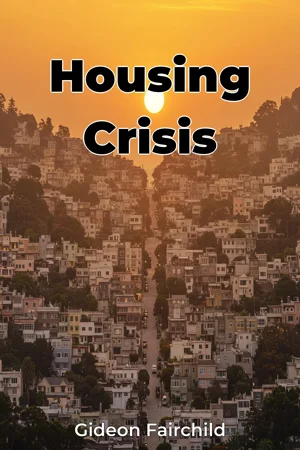
Is access to safe and affordable housing a fundamental human right, or a privilege increasingly out of reach for billions? "Housing Crisis" delves into the multifaceted challenges of the global housing crisis, exploring the rising costs of rent and proposing viable solutions for achieving affordable urban living. This book analyzes the economic and political forces driving the crisis and offers potential pathways toward a more equitable future. We begin by examining the core issues: the financialization of housing markets, stagnant wage growth failing to keep pace with escalating housing costs, and insufficient public investment in affordable housing initiatives. These topics are crucial because they impact communities worldwide, exacerbating inequality, hindering economic mobility, and contributing to social instability. Understanding these dynamics is the first step toward formulating effective policy interventions. To provide context, "Housing Crisis" explores the historical evolution of housing policies, tracing the shift from a social good to a commodity driven by market speculation. We analyze the impact of deregulation, globalization, and financial innovation on housing affordability. Readers will gain an understanding of basic economic principles related to supply and demand, as well as key political ideologies shaping housing policies. The central argument is that the current housing crisis is not simply a market failure but a systemic issue stemming from policy choices that prioritize profit over people. Solving this requires a fundamental reimagining of housing as a social right and a commitment to implementing policies that promote affordability, stability, and accessibility for all. The book is structured in three parts. Part one introduces the core concepts, defining the scope and nature of the housing crisis and its impact on various demographics. Part two dissects the drivers of the crisis, analyzing the roles of government policies, financial institutions, and market forces. This section includes detailed case studies of housing crises in different global cities. Part three presents a range of potential solutions, from innovative financing models and community land trusts to zoning reforms and increased public investment. The book culminates with a call to action, urging policymakers, community leaders, and individuals to advocate for systemic change. The evidence presented is drawn from a wide range of sources, including academic research, government reports, statistical data, and on-the-ground accounts from affected communities. We utilize econometric analysis to quantify the impact of specific policies on housing affordability and employ comparative case studies to identify best practices. "Housing Crisis" considers the housing crisis as a problem that cuts across several disciplines. Urban planning principles are examined to understand how urban design can promote affordability and accessibility. Public health research highlights the links between housing instability and adverse health outcomes, and sociological perspectives are used to analyze the social and cultural dimensions of housing. This book offers a unique perspective by integrating economic analysis with social justice concerns. It moves beyond simplistic market-based solutions and advocates for a more holistic approach that addresses the root causes of housing inequality. The tone is informative but accessible, aiming to engage a broad audience. The target audience includes students, researchers, policymakers, urban planners, and anyone interested in understanding the housing crisis and advocating for solutions. The book will be valuable to readers seeking a comprehensive overview of the issue and practical strategies for addressing it. As a work of economics and politics, "Housing Crisis" conforms to the genre's expectations of objectivity, rigor, and evidence-based analysis. It is intended to inform public discourse and contribute to policy debates. The scope of the book is global, with a focus on urban areas. While we acknowledge the importance of rural housing issues, our primary focus is on the challenges facing cities, where the crisis is most acute. The information presented can be applied practically by readers in several ways. Policymakers can use the analysis to inform policy decisions. Community organizers can use the book's findings to advocate for local reforms. And individuals can use the knowledge gained to make more informed housing choices and support organizations working to address the crisis. Ongoing debates in the field include the role of government intervention in housing markets, the effectiveness of different affordable housing strategies, and the balance between individual property rights and the public good. "Housing Crisis" addresses these debates head-on, presenting a nuanced perspective that considers the complexities of the issue.
Is access to safe and affordable housing a fundamental human right, or a privilege increasingly out of reach for billions? "Housing Crisis" delves into the multifaceted challenges of the global housing crisis, exploring the rising costs of rent and proposing viable solutions for achieving affordable urban living. This book analyzes the economic and political forces driving the crisis and offers potential pathways toward a more equitable future. We begin by examining the core issues: the financialization of housing markets, stagnant wage growth failing to keep pace with escalating housing costs, and insufficient public investment in affordable housing initiatives. These topics are crucial because they impact communities worldwide, exacerbating inequality, hindering economic mobility, and contributing to social instability. Understanding these dynamics is the first step toward formulating effective policy interventions. To provide context, "Housing Crisis" explores the historical evolution of housing policies, tracing the shift from a social good to a commodity driven by market speculation. We analyze the impact of deregulation, globalization, and financial innovation on housing affordability. Readers will gain an understanding of basic economic principles related to supply and demand, as well as key political ideologies shaping housing policies. The central argument is that the current housing crisis is not simply a market failure but a systemic issue stemming from policy choices that prioritize profit over people. Solving this requires a fundamental reimagining of housing as a social right and a commitment to implementing policies that promote affordability, stability, and accessibility for all. The book is structured in three parts. Part one introduces the core concepts, defining the scope and nature of the housing crisis and its impact on various demographics. Part two dissects the drivers of the crisis, analyzing the roles of government policies, financial institutions, and market forces. This section includes detailed case studies of housing crises in different global cities. Part three presents a range of potential solutions, from innovative financing models and community land trusts to zoning reforms and increased public investment. The book culminates with a call to action, urging policymakers, community leaders, and individuals to advocate for systemic change. The evidence presented is drawn from a wide range of sources, including academic research, government reports, statistical data, and on-the-ground accounts from affected communities. We utilize econometric analysis to quantify the impact of specific policies on housing affordability and employ comparative case studies to identify best practices. "Housing Crisis" considers the housing crisis as a problem that cuts across several disciplines. Urban planning principles are examined to understand how urban design can promote affordability and accessibility. Public health research highlights the links between housing instability and adverse health outcomes, and sociological perspectives are used to analyze the social and cultural dimensions of housing. This book offers a unique perspective by integrating economic analysis with social justice concerns. It moves beyond simplistic market-based solutions and advocates for a more holistic approach that addresses the root causes of housing inequality. The tone is informative but accessible, aiming to engage a broad audience. The target audience includes students, researchers, policymakers, urban planners, and anyone interested in understanding the housing crisis and advocating for solutions. The book will be valuable to readers seeking a comprehensive overview of the issue and practical strategies for addressing it. As a work of economics and politics, "Housing Crisis" conforms to the genre's expectations of objectivity, rigor, and evidence-based analysis. It is intended to inform public discourse and contribute to policy debates. The scope of the book is global, with a focus on urban areas. While we acknowledge the importance of rural housing issues, our primary focus is on the challenges facing cities, where the crisis is most acute. The information presented can be applied practically by readers in several ways. Policymakers can use the analysis to inform policy decisions. Community organizers can use the book's findings to advocate for local reforms. And individuals can use the knowledge gained to make more informed housing choices and support organizations working to address the crisis. Ongoing debates in the field include the role of government intervention in housing markets, the effectiveness of different affordable housing strategies, and the balance between individual property rights and the public good. "Housing Crisis" addresses these debates head-on, presenting a nuanced perspective that considers the complexities of the issue.
"Housing Crisis" examines the global housing crisis, highlighting the struggle for affordable urban living. It argues that access to safe housing should be a right, not a privilege, and explores the economic and political factors driving rising costs. The book reveals that stagnant wages and insufficient public investment contribute significantly to the crisis, exacerbating inequality and social instability. This comprehensive analysis challenges the notion that the housing crisis is solely a market failure, asserting that policy choices prioritizing profit have created a systemic problem. The book progresses through three distinct parts. It begins by defining the scope of the crisis and its impact, then dissects the roles of government policies, financial institutions, and market forces. Through case studies of global cities, the book illustrates the historical shift of housing from a social good to a commodity driven by market speculation. Finally, it presents potential solutions like innovative financing models and zoning reforms, advocating for systemic change and urging action from policymakers and community leaders. Uniquely, "Housing Crisis" integrates economic analysis with social justice concerns, offering a holistic approach that addresses the root causes of housing inequality. By drawing upon academic research, government reports, and on-the-ground accounts, it provides a nuanced perspective suitable for students, researchers, policymakers, and anyone seeking to understand and address this pressing issue.
Book Details
ISBN
9788233997090
Publisher
Publifye AS
Your Licenses
You don't own any licenses for this book
Purchase a license below to unlock this book and download the EPUB.
Purchase License
Select a tier to unlock this book
Need bulk licensing?
Contact us for enterprise agreements.