
About This Book
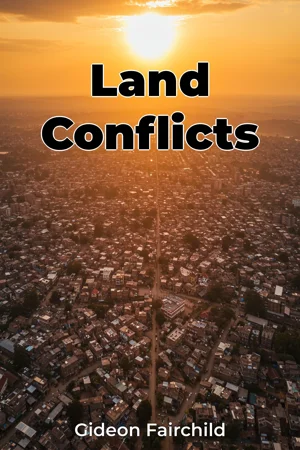
Why, in an era of unprecedented urbanization, do land disputes persist as a major impediment to equitable development? "Land Conflicts" delves into the complex interplay between the emergence of land disputes and the role of policies in shaping land distribution, particularly within urban environments. This book examines the core issues of land tenure security and the efficacy of governmental interventions, both of which are critical for fostering inclusive and sustainable urban growth. This book provides both historical context and examines current challenges. A history of land ownership and property rights systems as they have evolved is included, along with an examination of the social, economic, and political forces that influence land policy. Readers will gain an understanding of the basic principles of urban economics and property law necessary to appreciate the core arguments. The central argument posits that effective and fair land distribution is not merely a technical or economic issue, but one deeply rooted in power dynamics, social equity, and political will. The book asserts that poorly designed or inadequately implemented land policies often exacerbate existing inequalities, leading to increased conflict and hindering overall societal progress. The book unfolds in a structured sequence. Initially, main concepts like land tenure, property rights, and urban planning are defined. Then, the book moves to develop key themes across distinct chapters: (1) analyzing the root causes of land disputes, focusing on issues such as informal settlements, overlapping claims, and inadequate land administration systems; (2) evaluating the impacts of various policy interventions, including land regularization programs, taxation policies, and zoning regulations, on land distribution outcomes; and (3) exploring innovative approaches to land governance that promote transparency, participation, and accountability. The culmination of the argument is a framework for equitable land management, which emphasizes the need for integrated policies. The analysis presented is supported by diverse forms of evidence, including case studies of urban land conflicts from various global contexts, statistical analyses of land ownership patterns, and policy evaluations of land reform initiatives. Data sources come from governmental records, academic research, and on-the-ground surveys. This book connects to several areas, including urban planning, public policy, and development studies. The integration of these perspectives enriches the analysis and provides a holistic understanding of the challenges and opportunities associated with land governance. The book adopts a fact-based, analytical approach, presenting information in a clear and accessible manner. The intended audience includes policymakers, urban planners, academics, and anyone interested in the intersection of land, politics, and economics. This book is valuable to those seeking to understand the complexities of land conflicts and develop strategies for promoting equitable land distribution. The scope of the book is limited to urban land issues. It focuses primarily on the policy and governance aspects of land distribution. The book can be practically applied to the real-world. It highlights how specific policies can be modified or how alternative governance structures can be implemented to foster more equitable outcomes. The issues surrounding land distribution can be quite controversial. This book addresses ongoing debates, such as the balance between private property rights and the public interest, the role of government intervention in land markets, and the effectiveness of different approaches to resolving land disputes.
Why, in an era of unprecedented urbanization, do land disputes persist as a major impediment to equitable development? "Land Conflicts" delves into the complex interplay between the emergence of land disputes and the role of policies in shaping land distribution, particularly within urban environments. This book examines the core issues of land tenure security and the efficacy of governmental interventions, both of which are critical for fostering inclusive and sustainable urban growth. This book provides both historical context and examines current challenges. A history of land ownership and property rights systems as they have evolved is included, along with an examination of the social, economic, and political forces that influence land policy. Readers will gain an understanding of the basic principles of urban economics and property law necessary to appreciate the core arguments. The central argument posits that effective and fair land distribution is not merely a technical or economic issue, but one deeply rooted in power dynamics, social equity, and political will. The book asserts that poorly designed or inadequately implemented land policies often exacerbate existing inequalities, leading to increased conflict and hindering overall societal progress. The book unfolds in a structured sequence. Initially, main concepts like land tenure, property rights, and urban planning are defined. Then, the book moves to develop key themes across distinct chapters: (1) analyzing the root causes of land disputes, focusing on issues such as informal settlements, overlapping claims, and inadequate land administration systems; (2) evaluating the impacts of various policy interventions, including land regularization programs, taxation policies, and zoning regulations, on land distribution outcomes; and (3) exploring innovative approaches to land governance that promote transparency, participation, and accountability. The culmination of the argument is a framework for equitable land management, which emphasizes the need for integrated policies. The analysis presented is supported by diverse forms of evidence, including case studies of urban land conflicts from various global contexts, statistical analyses of land ownership patterns, and policy evaluations of land reform initiatives. Data sources come from governmental records, academic research, and on-the-ground surveys. This book connects to several areas, including urban planning, public policy, and development studies. The integration of these perspectives enriches the analysis and provides a holistic understanding of the challenges and opportunities associated with land governance. The book adopts a fact-based, analytical approach, presenting information in a clear and accessible manner. The intended audience includes policymakers, urban planners, academics, and anyone interested in the intersection of land, politics, and economics. This book is valuable to those seeking to understand the complexities of land conflicts and develop strategies for promoting equitable land distribution. The scope of the book is limited to urban land issues. It focuses primarily on the policy and governance aspects of land distribution. The book can be practically applied to the real-world. It highlights how specific policies can be modified or how alternative governance structures can be implemented to foster more equitable outcomes. The issues surrounding land distribution can be quite controversial. This book addresses ongoing debates, such as the balance between private property rights and the public interest, the role of government intervention in land markets, and the effectiveness of different approaches to resolving land disputes.
"Land Conflicts" examines why land disputes persist despite increasing urbanization, significantly impacting equitable development. It highlights the crucial role of land tenure security and effective governmental interventions in fostering sustainable urban growth. The book argues that fair land distribution is not only an economic or technical issue but is deeply intertwined with power dynamics, social equity, and political will. Readers will understand the historical context of land ownership and property rights systems, alongside the social, economic, and political forces that influence land policy. The book uses a fact-based, analytical approach and progresses through key themes. It begins by defining main concepts like land tenure and urban planning. It then analyzes the root causes of land disputes, such as informal settlements and inadequate land administration. It also evaluates the impacts of policies, like land regularization and zoning, on land distribution. Case studies from various global contexts support the analysis, providing a framework for equitable land management through integrated policies. Ultimately, this book is valuable for policymakers, urban planners, and academics seeking to understand the complexities of land conflicts and develop strategies for promoting equitable land distribution in urban environments. It delves into ongoing debates, such as balancing private property rights with public interest, and the role of government intervention in land markets.
Book Details
ISBN
9788233997076
Publisher
Publifye AS
Your Licenses
You don't own any licenses for this book
Purchase a license below to unlock this book and download the EPUB.
Purchase License
Select a tier to unlock this book
Need bulk licensing?
Contact us for enterprise agreements.