
About This Book
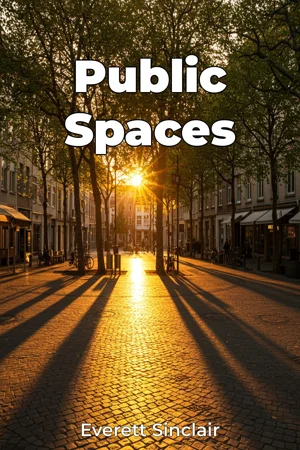
Can well-designed public spaces truly transform our urban experiences and foster stronger communities? "Public Spaces" delves into the critical role that parks, plazas, and pedestrian areas play in shaping urban life and promoting social interaction. This book will explore how these spaces, often overlooked, are essential components of a thriving urban environment, impacting everything from social cohesion and public health to economic vitality and environmental sustainability. The book focuses on three core themes: the design principles that create successful public spaces, the social dynamics that unfold within them, and the practical strategies for their management and revitalization. These themes are crucial because, in an increasingly urbanized world, the quality of public spaces directly affects the well-being of citizens and the overall character of our cities. Neglecting these spaces can lead to social isolation, decreased physical activity, and a diminished sense of community. To understand the importance of these spaces, we will examine their historical evolution, tracing their development from ancient forums and town squares to modern urban parks and pedestrian malls. We will also consider the social and economic forces that have shaped their design and use, including urbanization, industrialization, and the rise of consumer culture. No prior knowledge is explicitly needed; the book will build foundational concepts in social science and architecture to make the subject matter accessible. The central argument of "Public Spaces" is that thoughtfully designed and actively managed public spaces are vital infrastructure for building resilient, equitable, and vibrant cities. This argument is critical because it challenges the conventional view of public spaces as merely aesthetic amenities, instead positioning them as essential components of urban infrastructure that require strategic investment and careful planning. The book will begin by introducing core concepts such as "place-making," "social capital," and "urban morphology." It will then examine several major themes in detail. First, it will analyze the design elements that contribute to successful public spaces, including accessibility, safety, comfort, and aesthetics. Second, it will explore the social dynamics that unfold within these spaces, focusing on how they facilitate social interaction, promote civic engagement, and foster a sense of community. Third, it will examine the practical strategies for managing and revitalizing public spaces, including community participation, public-private partnerships, and innovative funding models. The book culminates by demonstrating how these principles and strategies can be applied in diverse urban contexts to create more inclusive, sustainable, and livable cities. The evidence presented will be drawn from a variety of sources, including case studies of successful public spaces around the world, empirical research on the social and economic impacts of public spaces, and expert interviews with urban planners, architects, and community leaders. The book will draw upon urban planning data, sociological studies, and architectural design principles. "Public Spaces" also connects to other fields, such as public health, environmental studies, and economics. Public health is relevant because access to parks and green spaces has been linked to improved physical and mental well-being. Environmental studies are important because public spaces can play a role in mitigating climate change and promoting biodiversity. Economics are also essential because public spaces can stimulate local economies by attracting tourists, supporting small businesses, and increasing property values. These interdisciplinary connections strengthen the book's argument by demonstrating the multifaceted benefits of investing in public spaces. This book offers a unique perspective by integrating design principles with social and economic analysis, providing a holistic understanding of the role of public spaces in urban life. It will be written in an accessible yet informative style, suitable for students, researchers, policymakers, and anyone interested in urban planning and community development. The intended audience includes urban planners, architects, landscape architects, policymakers, community organizers, and students in related fields. This book would be valuable to them because it provides a comprehensive overview of the key issues and challenges related to public spaces, as well as practical strategies for creating and managing successful ones. As a general social science and architecture work, the book will employ clear language and real-world examples to illustrate key concepts, adhering to the conventions of the genre. The scope of this book is limited to parks, plazas, and pedestrian areas within urban environments. While other types of public spaces, such as libraries and community centers, are also important, they are beyond the scope of this book. Readers can apply the information in this book to their own communities by advocating for improved public spaces, participating in community planning processes, and supporting policies that promote the creation and maintenance of high-quality public spaces. The book will address ongoing debates in the field, such as the role of private funding in public spaces and the challenge of balancing the needs of different user groups. By exploring these controversies, the book aims to provide a nuanced and balanced perspective on the complex issues surrounding public spaces.
Can well-designed public spaces truly transform our urban experiences and foster stronger communities? "Public Spaces" delves into the critical role that parks, plazas, and pedestrian areas play in shaping urban life and promoting social interaction. This book will explore how these spaces, often overlooked, are essential components of a thriving urban environment, impacting everything from social cohesion and public health to economic vitality and environmental sustainability. The book focuses on three core themes: the design principles that create successful public spaces, the social dynamics that unfold within them, and the practical strategies for their management and revitalization. These themes are crucial because, in an increasingly urbanized world, the quality of public spaces directly affects the well-being of citizens and the overall character of our cities. Neglecting these spaces can lead to social isolation, decreased physical activity, and a diminished sense of community. To understand the importance of these spaces, we will examine their historical evolution, tracing their development from ancient forums and town squares to modern urban parks and pedestrian malls. We will also consider the social and economic forces that have shaped their design and use, including urbanization, industrialization, and the rise of consumer culture. No prior knowledge is explicitly needed; the book will build foundational concepts in social science and architecture to make the subject matter accessible. The central argument of "Public Spaces" is that thoughtfully designed and actively managed public spaces are vital infrastructure for building resilient, equitable, and vibrant cities. This argument is critical because it challenges the conventional view of public spaces as merely aesthetic amenities, instead positioning them as essential components of urban infrastructure that require strategic investment and careful planning. The book will begin by introducing core concepts such as "place-making," "social capital," and "urban morphology." It will then examine several major themes in detail. First, it will analyze the design elements that contribute to successful public spaces, including accessibility, safety, comfort, and aesthetics. Second, it will explore the social dynamics that unfold within these spaces, focusing on how they facilitate social interaction, promote civic engagement, and foster a sense of community. Third, it will examine the practical strategies for managing and revitalizing public spaces, including community participation, public-private partnerships, and innovative funding models. The book culminates by demonstrating how these principles and strategies can be applied in diverse urban contexts to create more inclusive, sustainable, and livable cities. The evidence presented will be drawn from a variety of sources, including case studies of successful public spaces around the world, empirical research on the social and economic impacts of public spaces, and expert interviews with urban planners, architects, and community leaders. The book will draw upon urban planning data, sociological studies, and architectural design principles. "Public Spaces" also connects to other fields, such as public health, environmental studies, and economics. Public health is relevant because access to parks and green spaces has been linked to improved physical and mental well-being. Environmental studies are important because public spaces can play a role in mitigating climate change and promoting biodiversity. Economics are also essential because public spaces can stimulate local economies by attracting tourists, supporting small businesses, and increasing property values. These interdisciplinary connections strengthen the book's argument by demonstrating the multifaceted benefits of investing in public spaces. This book offers a unique perspective by integrating design principles with social and economic analysis, providing a holistic understanding of the role of public spaces in urban life. It will be written in an accessible yet informative style, suitable for students, researchers, policymakers, and anyone interested in urban planning and community development. The intended audience includes urban planners, architects, landscape architects, policymakers, community organizers, and students in related fields. This book would be valuable to them because it provides a comprehensive overview of the key issues and challenges related to public spaces, as well as practical strategies for creating and managing successful ones. As a general social science and architecture work, the book will employ clear language and real-world examples to illustrate key concepts, adhering to the conventions of the genre. The scope of this book is limited to parks, plazas, and pedestrian areas within urban environments. While other types of public spaces, such as libraries and community centers, are also important, they are beyond the scope of this book. Readers can apply the information in this book to their own communities by advocating for improved public spaces, participating in community planning processes, and supporting policies that promote the creation and maintenance of high-quality public spaces. The book will address ongoing debates in the field, such as the role of private funding in public spaces and the challenge of balancing the needs of different user groups. By exploring these controversies, the book aims to provide a nuanced and balanced perspective on the complex issues surrounding public spaces.
"Public Spaces" examines the vital role of parks, plazas, and pedestrian areas in shaping urban life, fostering social interaction, and enhancing community development. It highlights how well-designed public spaces contribute to social cohesion, public health, and economic vitality, transforming our urban experiences. The book argues that these spaces are essential urban infrastructure, not merely aesthetic amenities, and explores the historical evolution from ancient forums to modern urban parks. Intriguingly, access to green spaces has been linked to improved mental well-being, and public spaces can stimulate local economies. The book takes a holistic approach, integrating design principles with social and economic analysis. It begins by introducing core concepts like "place-making" and "urban morphology" before delving into design elements such as accessibility and safety. It then explores social dynamics, focusing on how public spaces promote civic engagement. The book concludes by demonstrating how these principles can be applied in diverse urban contexts to create inclusive and sustainable cities, drawing from case studies, empirical research, and expert interviews.
Book Details
ISBN
9788233997038
Publisher
Publifye AS
Your Licenses
You don't own any licenses for this book
Purchase a license below to unlock this book and download the EPUB.
Purchase License
Select a tier to unlock this book
Need bulk licensing?
Contact us for enterprise agreements.