
About This Book
Are you aware that the air inside your home or office could be more polluted than the air outside? In "Fresh Air Indoors," we delve into the critical, often-overlooked realm of indoor air quality, providing a comprehensive guide to understanding, assessing, and improving the air you breathe every day. This book addresses three core concepts: the sources and types of indoor pollutants, the mechanics of effective ventilation, and the direct impact of indoor air quality on human health and well-being. These topics are paramount because the majority of individuals spend upwards of 90% of their time indoors, making indoor air quality a significant determinant of overall health. The book provides context by examining the historical evolution of building practices and their effects on indoor environments. Modern construction techniques, designed for energy efficiency, often inadvertently seal buildings too tightly, trapping pollutants inside. We explore the rise of synthetic materials and their contribution to volatile organic compounds (VOCs), prevalent in many homes and offices. No prior scientific or technical knowledge is required of the reader; we present information accessibly, clarifying complex concepts. The central argument of "Fresh Air Indoors" is that proactively managing indoor air quality is not merely a lifestyle choice but a necessity for safeguarding health and preventing numerous ailments. The book underscores the importance of viewing indoor air quality as a controllable environmental factor, much like water quality or food safety. The book's structure is designed to guide the reader from basic awareness to practical implementation. Initially, we introduce the primary categories of indoor pollutants: particulate matter, gases (including radon and carbon monoxide), and biological contaminants like mold and allergens. We then explore the principles of ventilation, examining both natural and mechanical systems and their effectiveness in different building types and climates. The bulk of the book is dedicated to practical strategies for improving air quality, covering topics such as selecting appropriate air filtration devices, mitigating sources of pollutants through material selection, and optimizing ventilation practices. We conclude by detailing the long-term benefits of improved indoor air quality, from reduced allergy symptoms to enhanced cognitive function and decreased risk of chronic diseases. The evidence presented in "Fresh Air Indoors" is drawn from a wide range of scientific studies, governmental reports from organizations like the EPA and WHO, and practical case studies. We analyze data from epidemiological studies linking poor indoor air quality to respiratory problems, cardiovascular issues, and even certain cancers. We also incorporate data from building science research to demonstrate the effectiveness of various ventilation and filtration techniques. "Fresh Air Indoors" connects to several interdisciplinary fields. Firstly, it intersects with public health by highlighting the relationship between indoor environments and disease prevalence. Secondly, it ties into environmental science by examining the broader impact of building materials and practices on global sustainability. Finally, it integrates with architecture and design, focusing on how building design can promote or hinder healthy indoor environments. This book offers a unique perspective by combining rigorous scientific research with practical, actionable advice. Unlike many resources that focus solely on theoretical aspects, "Fresh Air Indoors" empowers readers to take control of their indoor environments through cost-effective and sustainable solutions. The tone is informative and accessible, aiming to educate and empower readers without overwhelming them with technical jargon. We strive to create a conversational yet authoritative voice that resonates with individuals from diverse backgrounds. The intended audience includes homeowners, renters, building managers, healthcare professionals, and anyone concerned about the impact of their environment on their health. The book is valuable to those seeking to reduce allergy symptoms, improve sleep quality, enhance productivity, or simply create a healthier living or working space. As a health and fitness book, it underscores the proactive steps individuals can take to improve their well-being, aligning with the genre's focus on health and wellness. "Fresh Air Indoors" provides a comprehensive overview of indoor air quality, focusing primarily on residential and commercial buildings. While we touch upon industrial settings, the book's primary focus remains on spaces where people spend the majority of their time. The strategies outlined in this book can be directly applied to homes, offices, schools, and other indoor environments. Readers will learn how to conduct basic air quality assessments, identify potential sources of pollution, and implement effective mitigation strategies. The field of indoor air quality is not without its controversies. One ongoing debate concerns the relative effectiveness of different air filtration technologies, particularly in relation to cost and energy consumption. "Fresh Air Indoors" addresses these debates by presenting balanced perspectives and evidence-based recommendations, allowing readers to make informed decisions based on their specific needs and circumstances.
Are you aware that the air inside your home or office could be more polluted than the air outside? In "Fresh Air Indoors," we delve into the critical, often-overlooked realm of indoor air quality, providing a comprehensive guide to understanding, assessing, and improving the air you breathe every day. This book addresses three core concepts: the sources and types of indoor pollutants, the mechanics of effective ventilation, and the direct impact of indoor air quality on human health and well-being. These topics are paramount because the majority of individuals spend upwards of 90% of their time indoors, making indoor air quality a significant determinant of overall health. The book provides context by examining the historical evolution of building practices and their effects on indoor environments. Modern construction techniques, designed for energy efficiency, often inadvertently seal buildings too tightly, trapping pollutants inside. We explore the rise of synthetic materials and their contribution to volatile organic compounds (VOCs), prevalent in many homes and offices. No prior scientific or technical knowledge is required of the reader; we present information accessibly, clarifying complex concepts. The central argument of "Fresh Air Indoors" is that proactively managing indoor air quality is not merely a lifestyle choice but a necessity for safeguarding health and preventing numerous ailments. The book underscores the importance of viewing indoor air quality as a controllable environmental factor, much like water quality or food safety. The book's structure is designed to guide the reader from basic awareness to practical implementation. Initially, we introduce the primary categories of indoor pollutants: particulate matter, gases (including radon and carbon monoxide), and biological contaminants like mold and allergens. We then explore the principles of ventilation, examining both natural and mechanical systems and their effectiveness in different building types and climates. The bulk of the book is dedicated to practical strategies for improving air quality, covering topics such as selecting appropriate air filtration devices, mitigating sources of pollutants through material selection, and optimizing ventilation practices. We conclude by detailing the long-term benefits of improved indoor air quality, from reduced allergy symptoms to enhanced cognitive function and decreased risk of chronic diseases. The evidence presented in "Fresh Air Indoors" is drawn from a wide range of scientific studies, governmental reports from organizations like the EPA and WHO, and practical case studies. We analyze data from epidemiological studies linking poor indoor air quality to respiratory problems, cardiovascular issues, and even certain cancers. We also incorporate data from building science research to demonstrate the effectiveness of various ventilation and filtration techniques. "Fresh Air Indoors" connects to several interdisciplinary fields. Firstly, it intersects with public health by highlighting the relationship between indoor environments and disease prevalence. Secondly, it ties into environmental science by examining the broader impact of building materials and practices on global sustainability. Finally, it integrates with architecture and design, focusing on how building design can promote or hinder healthy indoor environments. This book offers a unique perspective by combining rigorous scientific research with practical, actionable advice. Unlike many resources that focus solely on theoretical aspects, "Fresh Air Indoors" empowers readers to take control of their indoor environments through cost-effective and sustainable solutions. The tone is informative and accessible, aiming to educate and empower readers without overwhelming them with technical jargon. We strive to create a conversational yet authoritative voice that resonates with individuals from diverse backgrounds. The intended audience includes homeowners, renters, building managers, healthcare professionals, and anyone concerned about the impact of their environment on their health. The book is valuable to those seeking to reduce allergy symptoms, improve sleep quality, enhance productivity, or simply create a healthier living or working space. As a health and fitness book, it underscores the proactive steps individuals can take to improve their well-being, aligning with the genre's focus on health and wellness. "Fresh Air Indoors" provides a comprehensive overview of indoor air quality, focusing primarily on residential and commercial buildings. While we touch upon industrial settings, the book's primary focus remains on spaces where people spend the majority of their time. The strategies outlined in this book can be directly applied to homes, offices, schools, and other indoor environments. Readers will learn how to conduct basic air quality assessments, identify potential sources of pollution, and implement effective mitigation strategies. The field of indoor air quality is not without its controversies. One ongoing debate concerns the relative effectiveness of different air filtration technologies, particularly in relation to cost and energy consumption. "Fresh Air Indoors" addresses these debates by presenting balanced perspectives and evidence-based recommendations, allowing readers to make informed decisions based on their specific needs and circumstances.
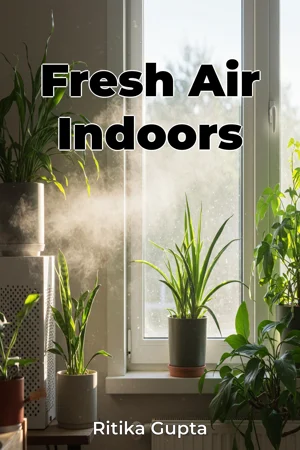
Did you know the air inside your home could be more polluted than outdoor air? "Fresh Air Indoors" explores the critical issue of indoor air quality and its impact on health. Since many spend upwards of 90% of their time indoors, understanding pollutants, ventilation, and their effects is vital. The book uniquely combines scientific research with actionable advice, empowering readers to improve their living spaces and overall well-being through sustainable solutions. The book progresses from identifying primary indoor pollutants like particulate matter and gases to exploring ventilation principles and practical strategies for improvement. Readers will discover how modern, tightly sealed buildings can trap pollutants and how synthetic materials contribute to VOCs. By viewing indoor air quality as a controllable environmental factor, readers can reduce allergy symptoms, enhance cognitive function, and decrease the risk of chronic diseases. "Fresh Air Indoors" offers a comprehensive guide to creating a healthier indoor environment.
Book Details
ISBN
9788233996987
Publisher
Publifye AS
Your Licenses
You don't own any licenses for this book
Purchase a license below to unlock this book and download the EPUB.
Purchase License
Select a tier to unlock this book
Need bulk licensing?
Contact us for enterprise agreements.