
About This Book
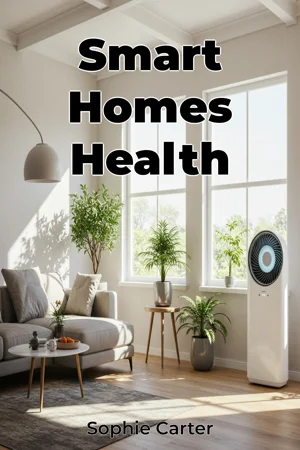
Are you unknowingly breathing unhealthy air within your own home? "Smart Homes Health" delves into the transformative potential of smart home technology to revolutionize indoor environments, focusing on air quality enhancement, safety improvements, and overall well-being. This book addresses a critical intersection of technology and health, exploring how interconnected devices can proactively monitor and improve the spaces where we spend most of our lives. This book primarily covers three main areas: the science of indoor air quality, the safety and security enhancements possible through smart home integration, and the impact of these technologies on mental and physical well-being. These topics are important because of the increasing amount of time people spend indoors, coupled with rising awareness of environmental factors impacting health. Historically, monitoring and controlling indoor environments required specialized equipment and expert knowledge. However, advancements in sensor technology, data analytics, and automation have made it possible to create responsive, intelligent homes that adapt to the needs of their occupants. This book builds upon existing knowledge of environmental health science and integrates it with the rapidly evolving field of smart home technology. "Smart Homes Health" argues that proactive integration of smart home systems provides a tangible pathway to creating healthier and safer living spaces. This argument is crucial because it shifts the focus from reactive healthcare to preventative measures managed within the home environment. Beginning with an introduction to the fundamentals of indoor environmental quality, the book explains key concepts such as particulate matter, volatile organic compounds (VOCs), and common indoor pollutants. It then explores the development of smart home devices designed to monitor and mitigate these issues, detailing capabilities of air quality sensors, smart ventilation systems, and automated purification technologies. A significant portion of the book is devoted to safety, examining how smart security systems, along with environmental sensors capable of detecting hazards such as carbon monoxide and gas leaks, can protect residents from harm. Finally, it analyzes the relationship between these environmental improvements and overall well-being, discussing how optimized light, temperature, and air quality positively influence sleep patterns, mental health, and physical comfort. The book culminates with practical advice on implementing these technologies, considering cost-effectiveness and long-term usability. The analysis presented depends on data from scientific studies, reports from environmental agencies, and case studies of homes already implementing these technologies. Additionally, interviews with industry experts and homeowners provide firsthand accounts of the challenges and successes associated with creating healthy smart homes. "Smart Homes Health" connects to several other fields. First, it intersects with public health, emphasizing preventative strategies for reducing exposure to environmental hazards. Second, it draws upon engineering principles in examining the design and performance of smart home devices. It further relates to psychology, especially in understanding how environmental factors influence mood and cognitive function. This book differentiates itself by providing a holistic perspective on the interplay of technology and health within the home. Rather than focusing solely on individual devices or specific health outcomes, it examines the synergistic effects of creating a comprehensively intelligent and responsive living environment. The tone is informative and accessible, blending scientific rigor with practical advice to empower readers to make informed decisions about their homes. The target audience includes homeowners, renters, and individuals interested in improving their living environments through technology. Professionals in fields like interior design, real estate, and healthcare will also find valuable insights into the growing importance of healthy homes. As a non-fiction book, "Smart Homes Health" provides factual and evidence-based information. It will maintain objectivity while presenting diverse perspectives on the benefits and limitations of smart home technologies. The scope is limited to residential applications of smart home technology for health and safety, intentionally excluding large-scale commercial or industrial applications. Readers will learn how to select, install, and manage smart home devices to improve air quality, enhance safety, and promote well-being. The book also offers guidance on interpreting sensor data, troubleshooting common issues, and maximizing the benefits of these investments. The book addresses debates surrounding data privacy and security within smart home systems, presenting balanced perspectives on the risks and benefits of interconnected devices.
Are you unknowingly breathing unhealthy air within your own home? "Smart Homes Health" delves into the transformative potential of smart home technology to revolutionize indoor environments, focusing on air quality enhancement, safety improvements, and overall well-being. This book addresses a critical intersection of technology and health, exploring how interconnected devices can proactively monitor and improve the spaces where we spend most of our lives. This book primarily covers three main areas: the science of indoor air quality, the safety and security enhancements possible through smart home integration, and the impact of these technologies on mental and physical well-being. These topics are important because of the increasing amount of time people spend indoors, coupled with rising awareness of environmental factors impacting health. Historically, monitoring and controlling indoor environments required specialized equipment and expert knowledge. However, advancements in sensor technology, data analytics, and automation have made it possible to create responsive, intelligent homes that adapt to the needs of their occupants. This book builds upon existing knowledge of environmental health science and integrates it with the rapidly evolving field of smart home technology. "Smart Homes Health" argues that proactive integration of smart home systems provides a tangible pathway to creating healthier and safer living spaces. This argument is crucial because it shifts the focus from reactive healthcare to preventative measures managed within the home environment. Beginning with an introduction to the fundamentals of indoor environmental quality, the book explains key concepts such as particulate matter, volatile organic compounds (VOCs), and common indoor pollutants. It then explores the development of smart home devices designed to monitor and mitigate these issues, detailing capabilities of air quality sensors, smart ventilation systems, and automated purification technologies. A significant portion of the book is devoted to safety, examining how smart security systems, along with environmental sensors capable of detecting hazards such as carbon monoxide and gas leaks, can protect residents from harm. Finally, it analyzes the relationship between these environmental improvements and overall well-being, discussing how optimized light, temperature, and air quality positively influence sleep patterns, mental health, and physical comfort. The book culminates with practical advice on implementing these technologies, considering cost-effectiveness and long-term usability. The analysis presented depends on data from scientific studies, reports from environmental agencies, and case studies of homes already implementing these technologies. Additionally, interviews with industry experts and homeowners provide firsthand accounts of the challenges and successes associated with creating healthy smart homes. "Smart Homes Health" connects to several other fields. First, it intersects with public health, emphasizing preventative strategies for reducing exposure to environmental hazards. Second, it draws upon engineering principles in examining the design and performance of smart home devices. It further relates to psychology, especially in understanding how environmental factors influence mood and cognitive function. This book differentiates itself by providing a holistic perspective on the interplay of technology and health within the home. Rather than focusing solely on individual devices or specific health outcomes, it examines the synergistic effects of creating a comprehensively intelligent and responsive living environment. The tone is informative and accessible, blending scientific rigor with practical advice to empower readers to make informed decisions about their homes. The target audience includes homeowners, renters, and individuals interested in improving their living environments through technology. Professionals in fields like interior design, real estate, and healthcare will also find valuable insights into the growing importance of healthy homes. As a non-fiction book, "Smart Homes Health" provides factual and evidence-based information. It will maintain objectivity while presenting diverse perspectives on the benefits and limitations of smart home technologies. The scope is limited to residential applications of smart home technology for health and safety, intentionally excluding large-scale commercial or industrial applications. Readers will learn how to select, install, and manage smart home devices to improve air quality, enhance safety, and promote well-being. The book also offers guidance on interpreting sensor data, troubleshooting common issues, and maximizing the benefits of these investments. The book addresses debates surrounding data privacy and security within smart home systems, presenting balanced perspectives on the risks and benefits of interconnected devices.
"Smart Homes Health" explores how technology can transform our homes into healthier and safer environments. It highlights the potential of smart home devices to monitor and improve indoor air quality, enhance home safety, and promote overall well-being. Did you know that smart ventilation systems can automatically adjust airflow to reduce indoor pollutants, and that smart security systems can detect hazards like carbon monoxide leaks? This book emphasizes a proactive approach to health, empowering readers to manage their living spaces for optimal health. The book progresses from explaining the science behind indoor air quality to detailing the capabilities of smart home devices and their impact on well-being. It examines how smart home technology intersects with public health, engineering, and even psychology. By offering a holistic perspective, "Smart Homes Health" differentiates itself, offering a balanced view of the benefits and limitations of creating intelligent, responsive living environments. It provides practical advice on implementing and managing these technologies, considering cost-effectiveness and long-term usability.
Book Details
ISBN
9788233996864
Publisher
Publifye AS
Your Licenses
You don't own any licenses for this book
Purchase a license below to unlock this book and download the EPUB.
Purchase License
Select a tier to unlock this book
Need bulk licensing?
Contact us for enterprise agreements.