
About This Book
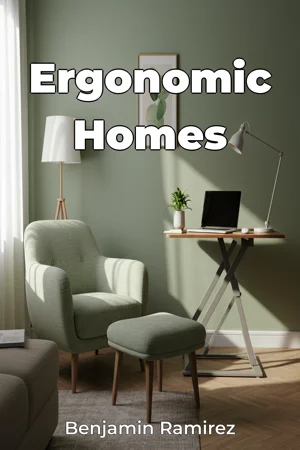
Are you living in a home that unknowingly contributes to aches, pains, and long-term health issues? "Ergonomic Homes" explores how the design and arrangement of your living space significantly impacts your physical well-being, revealing practical methods to foster comfort and prevent chronic pain through thoughtful furniture placement and posture-friendly design. This book addresses two core topics: the principles of ergonomics as they apply to the home environment, and the actionable steps homeowners can take to optimize their spaces for better health. These topics are crucial because many common ailments, from back pain to carpal tunnel syndrome, are exacerbated by poorly designed or arranged homes. This exploration is set against a backdrop of increasing awareness regarding the impact of our environment on health. Historically, ergonomics focused primarily on workplace settings, but as people spend more time at home, the need to apply these principles domestically has become evident. Prior knowledge of basic ergonomic concepts is helpful, but not essential, as the book provides a comprehensive introduction to the subject. The central argument of "Ergonomic Homes" is that a proactive approach to home design, incorporating ergonomic principles, can substantially improve physical comfort and prevent chronic pain. This argument is vital because it empowers individuals to take control of their health by modifying their immediate surroundings, rather than relying solely on reactive treatments. The book is structured to guide readers through a transformative process. It begins by introducing fundamental ergonomic concepts and their relevance to the home. Moving forward, it delves into specific areas of the home, such as the living room, bedroom, and home office, providing detailed guidelines for optimizing each space. This development of ideas spans across several chapters, each focused on a different area of the home and incorporating elements such as furniture selection, lighting, and spatial arrangement. The culmination of the book presents a holistic approach to creating an ergonomic home, emphasizing the interconnectedness of design choices. Finally, it offers practical applications through case studies and step-by-step instructions for implementing changes. The evidence presented in "Ergonomic Homes" draws from a variety of sources, including scientific studies on posture and biomechanics, research on the effects of environmental design on health, and case studies of individuals who have successfully implemented ergonomic home improvements. Interdisciplinary connections enrich the content of "Ergonomic Homes". The book intersects with fields such as interior design, health and wellness, and environmental psychology. These connections enhance the argument by demonstrating the multifaceted impact of home design on well-being. "Ergonomic Homes' " unique approach lies in its focus on translating established ergonomic principles into accessible and actionable advice for the average homeowner. It goes beyond general tips and provides specific guidance on furniture selection, placement, and modification. The tone is informative and accessible, designed to empower readers with knowledge without overwhelming them with technical jargon. The target audience includes homeowners, renters, interior designers, and healthcare professionals interested in preventative health measures. This book would be valuable to them because it offers practical, evidence-based strategies for creating healthier and more comfortable living environments. As a non-fiction book in the design and health genres, "Ergonomic Homes" emphasizes accuracy, clarity, and practical application. The scope of the book is limited to the application of ergonomic principles within the domestic environment. It does not delve into the complexities of clinical treatments or advanced biomechanics, focusing instead on preventative measures that can be implemented at home. The information in "Ergonomic Homes" can be applied directly by readers to improve their living spaces. This includes adjusting furniture, optimizing lighting, and incorporating ergonomic accessories. While the benefits of ergonomic design are generally accepted, there are ongoing discussions about the most effective methods for implementation. "Ergonomic Homes" addresses these debates by presenting a balanced perspective based on current research and best practices.
Are you living in a home that unknowingly contributes to aches, pains, and long-term health issues? "Ergonomic Homes" explores how the design and arrangement of your living space significantly impacts your physical well-being, revealing practical methods to foster comfort and prevent chronic pain through thoughtful furniture placement and posture-friendly design. This book addresses two core topics: the principles of ergonomics as they apply to the home environment, and the actionable steps homeowners can take to optimize their spaces for better health. These topics are crucial because many common ailments, from back pain to carpal tunnel syndrome, are exacerbated by poorly designed or arranged homes. This exploration is set against a backdrop of increasing awareness regarding the impact of our environment on health. Historically, ergonomics focused primarily on workplace settings, but as people spend more time at home, the need to apply these principles domestically has become evident. Prior knowledge of basic ergonomic concepts is helpful, but not essential, as the book provides a comprehensive introduction to the subject. The central argument of "Ergonomic Homes" is that a proactive approach to home design, incorporating ergonomic principles, can substantially improve physical comfort and prevent chronic pain. This argument is vital because it empowers individuals to take control of their health by modifying their immediate surroundings, rather than relying solely on reactive treatments. The book is structured to guide readers through a transformative process. It begins by introducing fundamental ergonomic concepts and their relevance to the home. Moving forward, it delves into specific areas of the home, such as the living room, bedroom, and home office, providing detailed guidelines for optimizing each space. This development of ideas spans across several chapters, each focused on a different area of the home and incorporating elements such as furniture selection, lighting, and spatial arrangement. The culmination of the book presents a holistic approach to creating an ergonomic home, emphasizing the interconnectedness of design choices. Finally, it offers practical applications through case studies and step-by-step instructions for implementing changes. The evidence presented in "Ergonomic Homes" draws from a variety of sources, including scientific studies on posture and biomechanics, research on the effects of environmental design on health, and case studies of individuals who have successfully implemented ergonomic home improvements. Interdisciplinary connections enrich the content of "Ergonomic Homes". The book intersects with fields such as interior design, health and wellness, and environmental psychology. These connections enhance the argument by demonstrating the multifaceted impact of home design on well-being. "Ergonomic Homes' " unique approach lies in its focus on translating established ergonomic principles into accessible and actionable advice for the average homeowner. It goes beyond general tips and provides specific guidance on furniture selection, placement, and modification. The tone is informative and accessible, designed to empower readers with knowledge without overwhelming them with technical jargon. The target audience includes homeowners, renters, interior designers, and healthcare professionals interested in preventative health measures. This book would be valuable to them because it offers practical, evidence-based strategies for creating healthier and more comfortable living environments. As a non-fiction book in the design and health genres, "Ergonomic Homes" emphasizes accuracy, clarity, and practical application. The scope of the book is limited to the application of ergonomic principles within the domestic environment. It does not delve into the complexities of clinical treatments or advanced biomechanics, focusing instead on preventative measures that can be implemented at home. The information in "Ergonomic Homes" can be applied directly by readers to improve their living spaces. This includes adjusting furniture, optimizing lighting, and incorporating ergonomic accessories. While the benefits of ergonomic design are generally accepted, there are ongoing discussions about the most effective methods for implementation. "Ergonomic Homes" addresses these debates by presenting a balanced perspective based on current research and best practices.
"Ergonomic Homes" explores the profound impact of home design on our physical well-being, offering actionable strategies to create healthier living spaces. It reveals how seemingly innocuous elements, such as furniture placement and lighting, can significantly contribute to or alleviate chronic pain. The book emphasizes preventative health by translating ergonomic principles, traditionally applied in workplace settings, into practical advice for homeowners. Did you know that back pain and even carpal tunnel syndrome can be exacerbated by a poorly designed home environment? The book progresses systematically, starting with fundamental ergonomic concepts before delving into specific areas like the living room, bedroom, and home office. Each chapter provides detailed guidelines for optimizing these spaces, focusing on furniture selection, spatial arrangement, and the interconnectedness of design choices. The book uniquely focuses on empowering individuals to proactively modify their immediate surroundings for improved comfort.
Book Details
ISBN
9788233996840
Publisher
Publifye AS
Your Licenses
You don't own any licenses for this book
Purchase a license below to unlock this book and download the EPUB.
Purchase License
Select a tier to unlock this book
Need bulk licensing?
Contact us for enterprise agreements.