
About This Book
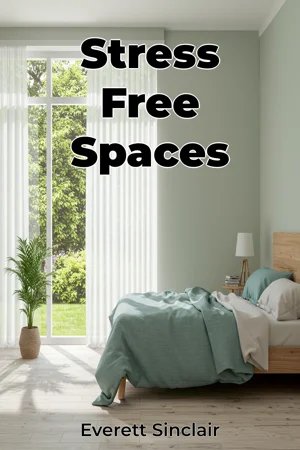
Can the spaces we inhabit truly alleviate stress and foster well-being? "Stress Free Spaces" explores the profound impact of interior design on our psychological states, revealing how principles of environmental psychology can be leveraged to create calming, focus-enhancing, and restorative indoor environments. This book delves into the crucial intersection of design and psychology, offering actionable insights for transforming homes, workplaces, and other interior settings into havens of tranquility. We examine the core tenets of environmental psychology, demonstrating how elements such as color, light, spatial arrangement, and biophilic design directly influence mood, cognitive performance, and overall health. The significance of these topics lies in their potential to mitigate the pervasive stress of modern life and to proactively cultivate environments that support mental and physical resilience. Understanding these principles allows individuals and professionals to move beyond purely aesthetic considerations in design and to create spaces that actively promote well-being. The ideas presented are rooted in decades of research exploring the human-environment interaction, touching upon historical perspectives on architectural psychology and the emerging field of neuroarchitecture. While a basic understanding of design principles or psychological concepts is beneficial, the book is crafted to be accessible to a broad audience, bridging the gap between scientific research and practical application. The central argument underscores that strategic interior design, informed by environmental psychology, is not a luxury but a necessity for promoting individual and collective well-being. This argument is vital because it shifts the focus from reactive stress management to proactive environmental design, empowering individuals and organizations to shape their surroundings in ways that foster health, productivity, and happiness. "Stress Free Spaces" unfolds in a logical progression. First, it introduces the core concepts of environmental psychology and their relevance to interior design. Next, it dedicates chapters to the key elements of design – color, light, space, and nature – each exploring their specific psychological effects and providing evidence-based recommendations for their optimal use. The book then synthesizes these elements into a cohesive framework for creating restorative environments. Finally, it provides case studies and actionable guidelines for applying these principles in diverse settings, from residential homes to corporate offices. The book draws upon a wide range of evidence, including experimental studies, field research, and meta-analyses from the fields of psychology, neuroscience, and design. Unique data sources, such as physiological measurements of stress responses in different environments, are incorporated to provide a robust and compelling case for the book's central argument. The book creates interdisciplinary connections, linking design with health sciences, cognitive psychology, and organizational behavior. By bridging these disciplines, the book offers a holistic perspective on the human-environment interaction and demonstrates the far-reaching implications of informed design choices. The book's unique approach lies in its emphasis on translating complex scientific research into practical, actionable design strategies. It moves beyond abstract theoretical discussions, empowering readers with the knowledge and tools to actively transform their own spaces. The tone is both informative and accessible, presenting complex research in a clear and engaging manner. While grounded in scientific rigor, the writing style avoids jargon and strives to create a comfortable and relatable reading experience. The target audience includes interior designers, architects, healthcare professionals, educators, and anyone interested in creating environments that promote well-being. The book is particularly valuable to those seeking practical, evidence-based guidance for designing spaces that reduce stress, enhance focus, and foster a sense of calm. As a design-focused book with psychological depth, it offers practical advice grounded in scientific research. The scope encompasses interior spaces, focusing on the elements that can be controlled and manipulated through design. While acknowledging the influence of external factors, the book deliberately limits its focus to the interior environment to provide a concentrated and actionable framework. The information presented can be applied in numerous real-world settings, from optimizing home offices for productivity to designing therapeutic environments for healthcare facilities. The book provides practical guidelines and case studies to illustrate the diverse applications of its principles. While the core principles of environmental psychology are generally accepted, there are ongoing debates regarding the relative importance of different design elements and the best methods for measuring their impact. The book acknowledges these debates and presents a balanced perspective on the current state of research.
Can the spaces we inhabit truly alleviate stress and foster well-being? "Stress Free Spaces" explores the profound impact of interior design on our psychological states, revealing how principles of environmental psychology can be leveraged to create calming, focus-enhancing, and restorative indoor environments. This book delves into the crucial intersection of design and psychology, offering actionable insights for transforming homes, workplaces, and other interior settings into havens of tranquility. We examine the core tenets of environmental psychology, demonstrating how elements such as color, light, spatial arrangement, and biophilic design directly influence mood, cognitive performance, and overall health. The significance of these topics lies in their potential to mitigate the pervasive stress of modern life and to proactively cultivate environments that support mental and physical resilience. Understanding these principles allows individuals and professionals to move beyond purely aesthetic considerations in design and to create spaces that actively promote well-being. The ideas presented are rooted in decades of research exploring the human-environment interaction, touching upon historical perspectives on architectural psychology and the emerging field of neuroarchitecture. While a basic understanding of design principles or psychological concepts is beneficial, the book is crafted to be accessible to a broad audience, bridging the gap between scientific research and practical application. The central argument underscores that strategic interior design, informed by environmental psychology, is not a luxury but a necessity for promoting individual and collective well-being. This argument is vital because it shifts the focus from reactive stress management to proactive environmental design, empowering individuals and organizations to shape their surroundings in ways that foster health, productivity, and happiness. "Stress Free Spaces" unfolds in a logical progression. First, it introduces the core concepts of environmental psychology and their relevance to interior design. Next, it dedicates chapters to the key elements of design – color, light, space, and nature – each exploring their specific psychological effects and providing evidence-based recommendations for their optimal use. The book then synthesizes these elements into a cohesive framework for creating restorative environments. Finally, it provides case studies and actionable guidelines for applying these principles in diverse settings, from residential homes to corporate offices. The book draws upon a wide range of evidence, including experimental studies, field research, and meta-analyses from the fields of psychology, neuroscience, and design. Unique data sources, such as physiological measurements of stress responses in different environments, are incorporated to provide a robust and compelling case for the book's central argument. The book creates interdisciplinary connections, linking design with health sciences, cognitive psychology, and organizational behavior. By bridging these disciplines, the book offers a holistic perspective on the human-environment interaction and demonstrates the far-reaching implications of informed design choices. The book's unique approach lies in its emphasis on translating complex scientific research into practical, actionable design strategies. It moves beyond abstract theoretical discussions, empowering readers with the knowledge and tools to actively transform their own spaces. The tone is both informative and accessible, presenting complex research in a clear and engaging manner. While grounded in scientific rigor, the writing style avoids jargon and strives to create a comfortable and relatable reading experience. The target audience includes interior designers, architects, healthcare professionals, educators, and anyone interested in creating environments that promote well-being. The book is particularly valuable to those seeking practical, evidence-based guidance for designing spaces that reduce stress, enhance focus, and foster a sense of calm. As a design-focused book with psychological depth, it offers practical advice grounded in scientific research. The scope encompasses interior spaces, focusing on the elements that can be controlled and manipulated through design. While acknowledging the influence of external factors, the book deliberately limits its focus to the interior environment to provide a concentrated and actionable framework. The information presented can be applied in numerous real-world settings, from optimizing home offices for productivity to designing therapeutic environments for healthcare facilities. The book provides practical guidelines and case studies to illustrate the diverse applications of its principles. While the core principles of environmental psychology are generally accepted, there are ongoing debates regarding the relative importance of different design elements and the best methods for measuring their impact. The book acknowledges these debates and presents a balanced perspective on the current state of research.
"Stress Free Spaces" explores the powerful connection between interior design and our psychological well-being, demonstrating how thoughtful space design can alleviate stress and promote calm. Drawing from environmental psychology and neuroarchitecture, the book reveals how elements like color, light, and spatial arrangement significantly impact mood and cognitive function. For example, biophilic design, incorporating natural elements, has been shown to reduce stress levels. The book uniquely bridges scientific research with practical application, offering actionable strategies for creating restorative environments in homes, workplaces, and healthcare settings. It progresses logically, starting with core concepts, then delving into the psychological effects of individual design elements, and culminating in a framework for creating cohesive, stress-reducing spaces. Case studies further illustrate how these principles can be applied in diverse real-world settings, making it an invaluable resource for anyone seeking to design spaces that foster health, productivity, and happiness.
Book Details
ISBN
9788233996796
Publisher
Publifye AS
Your Licenses
You don't own any licenses for this book
Purchase a license below to unlock this book and download the EPUB.
Purchase License
Select a tier to unlock this book
Need bulk licensing?
Contact us for enterprise agreements.