
About This Book
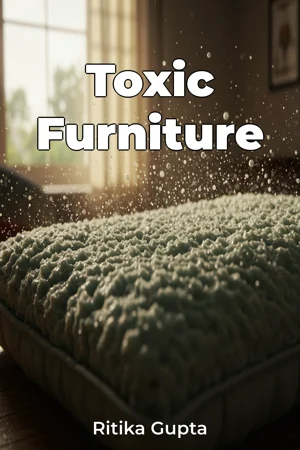
Are the furnishings meant to provide comfort in your home silently undermining your family’s health? "Toxic Furniture" uncovers the hidden dangers lurking within our sofas, mattresses, and tables, revealing how the chemicals used in their production contribute significantly to indoor air pollution and pose risks to our well-being. This book explores the pervasive issue of chemical off-gassing from furniture, its health implications, and pathways toward creating healthier, safer living spaces. We delve into the complex world of volatile organic compounds (VOCs), flame retardants, and formaldehyde – chemicals commonly found in furniture materials like foams, fabrics, and adhesives. Understanding these chemicals, their sources in furniture, and their effects—ranging from mild allergies and respiratory irritation to more severe long-term health problems—is crucial for informed decision-making. We will examine the historical context of furniture manufacturing, tracing the evolution of chemical use and the increasing awareness of its impact on indoor air quality. The central argument of "Toxic Furniture" is that consumers have the right to comprehensive information about the materials used in their furniture and access to readily available, safer alternatives. We assert that reducing exposure to toxic chemicals in furniture is essential for protecting public health, particularly for vulnerable populations like children, pregnant women, and individuals with pre-existing respiratory conditions. The book is structured in three parts. First, we introduce the core concepts of indoor air quality, sources of pollution, and the specific chemicals of concern in furniture. This section sets the stage with clear definitions and scientific background, accessible even to readers without prior knowledge of chemistry or environmental science. Second, we examine the evidence linking these chemicals to adverse health effects, drawing from epidemiological studies, toxicology reports, and case studies. We analyze the regulatory landscape, exploring current standards and certifications, and discussing their limitations in protecting consumers. This section includes major points such as the long-term impacts of flame retardants and the deceptive practices of "greenwashing" within the furniture industry. Third, we then shift to practical solutions, providing a comprehensive guide to selecting safer furniture options, identifying eco-friendly materials, and mitigating chemical exposure in existing homes. This section offers actionable steps, empowering readers to create healthier indoor environments. The evidence presented in "Toxic Furniture" is based on a synthesis of peer-reviewed scientific literature, government reports from agencies like the EPA and CDC, and data from independent testing laboratories. We also incorporate insights from interviews with environmental scientists, furniture manufacturers committed to sustainability, and individuals who have experienced health problems linked to chemical exposure from furniture. The book draws interdisciplinary connections between environmental science, public health, and consumer advocacy. By highlighting the health consequences of chemical exposure, the book contributes to the field of public health. Furthermore, it intersects with environmental science by examining the broader impact of chemical production and disposal. Its focus on consumer choice and product transparency links it to consumer advocacy and environmental justice. Our approach stands out by providing a practical guide with clear, actionable steps that empowers readers to transform their homes into healthier spaces. The tone is informative and empowering, aiming to educate and motivate readers to advocate for safer products and policies. The target audience includes health-conscious consumers, parents, homeowners, interior designers, and anyone concerned about indoor air quality. This book is invaluable for those seeking to make informed decisions about furniture purchases and create healthier living environments. As a book within the ‘Health Fitness, Health & Fitness, Environment’ genres, it adheres to the principles of providing evidence-based information, practical advice, and a focus on improving well-being through environmental awareness. The scope of the book focuses primarily on residential furniture and its chemical composition, with less emphasis on commercial or industrial settings. We also focus predominantly on the North American and European regulatory contexts. The information within "Toxic Furniture" can be immediately applied to real-world scenarios, such as making informed purchasing decisions, advocating for stricter regulations on chemical use in furniture manufacturing, and implementing strategies to reduce indoor air pollution. While some manufacturers defend the use of certain chemicals for safety reasons, such as flame retardants, "Toxic Furniture" addresses these debates by presenting a balanced view, highlighting the documented health risks associated with these chemicals and safer, effective alternatives.
Are the furnishings meant to provide comfort in your home silently undermining your family’s health? "Toxic Furniture" uncovers the hidden dangers lurking within our sofas, mattresses, and tables, revealing how the chemicals used in their production contribute significantly to indoor air pollution and pose risks to our well-being. This book explores the pervasive issue of chemical off-gassing from furniture, its health implications, and pathways toward creating healthier, safer living spaces. We delve into the complex world of volatile organic compounds (VOCs), flame retardants, and formaldehyde – chemicals commonly found in furniture materials like foams, fabrics, and adhesives. Understanding these chemicals, their sources in furniture, and their effects—ranging from mild allergies and respiratory irritation to more severe long-term health problems—is crucial for informed decision-making. We will examine the historical context of furniture manufacturing, tracing the evolution of chemical use and the increasing awareness of its impact on indoor air quality. The central argument of "Toxic Furniture" is that consumers have the right to comprehensive information about the materials used in their furniture and access to readily available, safer alternatives. We assert that reducing exposure to toxic chemicals in furniture is essential for protecting public health, particularly for vulnerable populations like children, pregnant women, and individuals with pre-existing respiratory conditions. The book is structured in three parts. First, we introduce the core concepts of indoor air quality, sources of pollution, and the specific chemicals of concern in furniture. This section sets the stage with clear definitions and scientific background, accessible even to readers without prior knowledge of chemistry or environmental science. Second, we examine the evidence linking these chemicals to adverse health effects, drawing from epidemiological studies, toxicology reports, and case studies. We analyze the regulatory landscape, exploring current standards and certifications, and discussing their limitations in protecting consumers. This section includes major points such as the long-term impacts of flame retardants and the deceptive practices of "greenwashing" within the furniture industry. Third, we then shift to practical solutions, providing a comprehensive guide to selecting safer furniture options, identifying eco-friendly materials, and mitigating chemical exposure in existing homes. This section offers actionable steps, empowering readers to create healthier indoor environments. The evidence presented in "Toxic Furniture" is based on a synthesis of peer-reviewed scientific literature, government reports from agencies like the EPA and CDC, and data from independent testing laboratories. We also incorporate insights from interviews with environmental scientists, furniture manufacturers committed to sustainability, and individuals who have experienced health problems linked to chemical exposure from furniture. The book draws interdisciplinary connections between environmental science, public health, and consumer advocacy. By highlighting the health consequences of chemical exposure, the book contributes to the field of public health. Furthermore, it intersects with environmental science by examining the broader impact of chemical production and disposal. Its focus on consumer choice and product transparency links it to consumer advocacy and environmental justice. Our approach stands out by providing a practical guide with clear, actionable steps that empowers readers to transform their homes into healthier spaces. The tone is informative and empowering, aiming to educate and motivate readers to advocate for safer products and policies. The target audience includes health-conscious consumers, parents, homeowners, interior designers, and anyone concerned about indoor air quality. This book is invaluable for those seeking to make informed decisions about furniture purchases and create healthier living environments. As a book within the ‘Health Fitness, Health & Fitness, Environment’ genres, it adheres to the principles of providing evidence-based information, practical advice, and a focus on improving well-being through environmental awareness. The scope of the book focuses primarily on residential furniture and its chemical composition, with less emphasis on commercial or industrial settings. We also focus predominantly on the North American and European regulatory contexts. The information within "Toxic Furniture" can be immediately applied to real-world scenarios, such as making informed purchasing decisions, advocating for stricter regulations on chemical use in furniture manufacturing, and implementing strategies to reduce indoor air pollution. While some manufacturers defend the use of certain chemicals for safety reasons, such as flame retardants, "Toxic Furniture" addresses these debates by presenting a balanced view, highlighting the documented health risks associated with these chemicals and safer, effective alternatives.
"Toxic Furniture" sheds light on the often-overlooked dangers lurking within our homes, revealing how everyday furnishings can significantly impact indoor air quality. The book uncovers the hidden chemicals in sofas, mattresses, and tables that contribute to health problems. Did you know that furniture is a source of volatile organic compounds (VOCs), flame retardants, and formaldehyde? The book is structured in three parts, starting by introducing core concepts of indoor air quality, then examining the evidence linking chemicals to adverse health effects. Finally, it shifts to practical solutions, providing a comprehensive guide to selecting safer furniture options. A key argument is that consumers have the right to know what's in their furniture and to have access to safer alternatives. By synthesizing scientific literature and expert insights, "Toxic Furniture" empowers health-conscious consumers to make informed choices, advocate for safer products, and create healthier living spaces.
Book Details
ISBN
9788233996789
Publisher
Publifye AS
Your Licenses
You don't own any licenses for this book
Purchase a license below to unlock this book and download the EPUB.
Purchase License
Select a tier to unlock this book
Need bulk licensing?
Contact us for enterprise agreements.