
About This Book
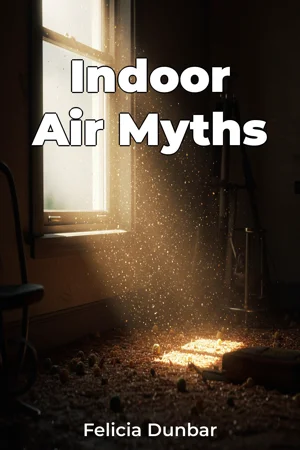
Are you confident that the air you breathe indoors is as clean as it could be? "Indoor Air Myths" challenges widespread misconceptions about indoor air quality and presents science-backed solutions for fostering healthier living spaces. We aim to empower you with the knowledge to improve your environment, addressing concerns that affect everyone from homeowners to renters, and even professionals in building management and healthcare. This book centers around three core topics: identifying pollutants, understanding their health impacts, and implementing effective mitigation strategies. These topics are significant because indoor air quality directly affects respiratory health, cognitive function, and overall well-being. Considering that most people spend a substantial amount of time indoors, the quality of this air has a profound influence on our lives. The prevailing understanding of indoor air quality has often been shaped by marketing hype and unsubstantiated claims. This book provides a foundation for critical evaluation by presenting the scientific consensus, devoid of sensationalism. No prior scientific knowledge is required; we begin with fundamental concepts and gradually introduce more complex information in an accessible manner. Our central argument is that informed action, based on verifiable scientific evidence, is the most effective means to create healthier indoor environments. By dispelling pervasive myths, this book will enable readers to make informed decisions about air purification, ventilation, and material selection. This is crucial because misinformation can lead to ineffective or even counterproductive measures. The book is structured to first introduce the main concepts and set the stage. We begin by identifying common indoor air pollutants, such as volatile organic compounds (VOCs), particulate matter, and biological contaminants. Building on this foundation, we will investigate the health impacts of these pollutants, examining the scientific literature on respiratory illnesses, allergies, and other adverse health outcomes. The book then covers a comprehensive range of mitigation strategies, including ventilation techniques, air purification technologies, and source control measures. We conclude by consolidating the argument and offering practical recommendations for creating healthier homes and workplaces. The evidence presented in this book is primarily drawn from peer-reviewed scientific studies, governmental reports from organizations like the EPA and WHO, and data collected from controlled experiments. The book also references data from real-world case studies. This book also connects to fields outside of just science. "Indoor Air Myths" intersects with fields such as public health, environmental science, and building science. By considering the interplay between these disciplines, the book offers a multifaceted understanding of indoor air quality. One innovative aspect of this book is its emphasis on debunking common myths with solid scientific data. The book uses a conversational style, presenting complex information in a clear and engaging manner. The target audience includes homeowners, renters, and individuals concerned about their health and well-being. Professionals in related fields, such as healthcare providers, building managers, and interior designers, will also find this book valuable. As a non-fiction work in the health and fitness genre, this book upholds standards of accuracy, objectivity, and transparency. We clearly cite sources and differentiate between established facts and areas of ongoing research. While comprehensive, the book focuses primarily on residential and commercial settings. Industrial environments and specific occupational hazards are outside the scope of this work. The information presented in this book can be directly applied to improve indoor air quality in homes, offices, schools, and other buildings. Readers will learn how to select appropriate air purifiers, optimize ventilation systems, and choose building materials that minimize pollutant emissions. Ongoing debates within the field, such as the effectiveness of certain air purification technologies and the regulation of VOC emissions in consumer products, are addressed. These debates are presented objectively, acknowledging the limitations of current research.
Are you confident that the air you breathe indoors is as clean as it could be? "Indoor Air Myths" challenges widespread misconceptions about indoor air quality and presents science-backed solutions for fostering healthier living spaces. We aim to empower you with the knowledge to improve your environment, addressing concerns that affect everyone from homeowners to renters, and even professionals in building management and healthcare. This book centers around three core topics: identifying pollutants, understanding their health impacts, and implementing effective mitigation strategies. These topics are significant because indoor air quality directly affects respiratory health, cognitive function, and overall well-being. Considering that most people spend a substantial amount of time indoors, the quality of this air has a profound influence on our lives. The prevailing understanding of indoor air quality has often been shaped by marketing hype and unsubstantiated claims. This book provides a foundation for critical evaluation by presenting the scientific consensus, devoid of sensationalism. No prior scientific knowledge is required; we begin with fundamental concepts and gradually introduce more complex information in an accessible manner. Our central argument is that informed action, based on verifiable scientific evidence, is the most effective means to create healthier indoor environments. By dispelling pervasive myths, this book will enable readers to make informed decisions about air purification, ventilation, and material selection. This is crucial because misinformation can lead to ineffective or even counterproductive measures. The book is structured to first introduce the main concepts and set the stage. We begin by identifying common indoor air pollutants, such as volatile organic compounds (VOCs), particulate matter, and biological contaminants. Building on this foundation, we will investigate the health impacts of these pollutants, examining the scientific literature on respiratory illnesses, allergies, and other adverse health outcomes. The book then covers a comprehensive range of mitigation strategies, including ventilation techniques, air purification technologies, and source control measures. We conclude by consolidating the argument and offering practical recommendations for creating healthier homes and workplaces. The evidence presented in this book is primarily drawn from peer-reviewed scientific studies, governmental reports from organizations like the EPA and WHO, and data collected from controlled experiments. The book also references data from real-world case studies. This book also connects to fields outside of just science. "Indoor Air Myths" intersects with fields such as public health, environmental science, and building science. By considering the interplay between these disciplines, the book offers a multifaceted understanding of indoor air quality. One innovative aspect of this book is its emphasis on debunking common myths with solid scientific data. The book uses a conversational style, presenting complex information in a clear and engaging manner. The target audience includes homeowners, renters, and individuals concerned about their health and well-being. Professionals in related fields, such as healthcare providers, building managers, and interior designers, will also find this book valuable. As a non-fiction work in the health and fitness genre, this book upholds standards of accuracy, objectivity, and transparency. We clearly cite sources and differentiate between established facts and areas of ongoing research. While comprehensive, the book focuses primarily on residential and commercial settings. Industrial environments and specific occupational hazards are outside the scope of this work. The information presented in this book can be directly applied to improve indoor air quality in homes, offices, schools, and other buildings. Readers will learn how to select appropriate air purifiers, optimize ventilation systems, and choose building materials that minimize pollutant emissions. Ongoing debates within the field, such as the effectiveness of certain air purification technologies and the regulation of VOC emissions in consumer products, are addressed. These debates are presented objectively, acknowledging the limitations of current research.
"Indoor Air Myths" tackles the pervasive misconceptions surrounding indoor air quality, revealing how these misunderstandings impact our health and well-being. Given that people spend the majority of their time indoors, understanding and improving this environment is crucial. The book emphasizes that common beliefs are often shaped by marketing rather than science, and that informed action is the key to creating healthier spaces. Did you know that indoor air can be more polluted than outdoor air and that certain air fresheners can actually worsen air quality? The book progresses logically, starting with identifying common indoor air pollutants such as volatile organic compounds (VOCs) and particulate matter. It then delves into the health impacts, linking these pollutants to respiratory illnesses and cognitive function. Finally, it provides mitigation strategies, including ventilation and air purification. Through a conversational style, "Indoor Air Myths" presents scientific data, dispelling myths with evidence-based solutions, and empowering readers to improve their living spaces.
Book Details
ISBN
9788233996772
Publisher
Publifye AS
Your Licenses
You don't own any licenses for this book
Purchase a license below to unlock this book and download the EPUB.
Purchase License
Select a tier to unlock this book
Need bulk licensing?
Contact us for enterprise agreements.