
About This Book
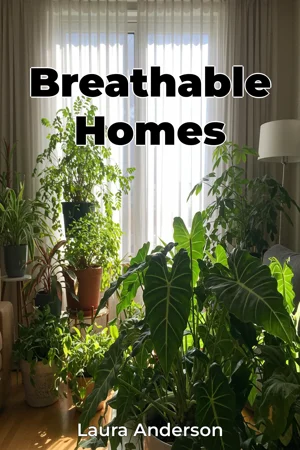
Are you aware that the air inside your home could be significantly more polluted than the air outside? In "Breathable Homes," we explore the critical factors influencing indoor air quality and provide actionable strategies to create healthier living environments. This book delves into air circulation, humidity control, and the integration of plant life as essential components of a breathable home. The book's central argument is that actively managing these three elements – air circulation, humidity, and indoor plants – can demonstrably improve indoor air quality, leading to enhanced health and well-being. This argument is vital because modern construction practices often prioritize energy efficiency, sometimes at the expense of natural ventilation, creating sealed environments where pollutants can accumulate. We begin by establishing the context of indoor air pollution, discussing its sources, which range from common household cleaning products and furniture to mold and volatile organic compounds (VOCs). We examine historical building practices and how they have evolved, often reducing natural airflow and trapping pollutants. We then introduce the core concepts of air circulation, explaining the principles of natural and mechanical ventilation and their impact on pollutant dispersal. Next, we discuss humidity control, detailing its role in preventing mold growth and the proliferation of dust mites, both significant contributors to respiratory problems and allergies. Finally, we introduce the often-overlooked power of plants to naturally filter air pollutants, showcasing research on specific species known for their air-purifying capabilities. The book is structured to provide a comprehensive understanding of these interconnected topics. We start by defining key terms related to air quality and pollution. We delve into the science of air circulation, explaining convection, diffusion, and the stack effect. We analyze different ventilation systems, including their advantages and disadvantages. The section on humidity explores the ideal ranges for indoor environments and outlines practical methods for maintaining them, such as using dehumidifiers or humidifiers, improving insulation, and managing moisture sources. The plant life section analyzes scientific research on phytoremediation, focusing on which plants are most effective at removing specific pollutants like formaldehyde, benzene, and xylene. Evidence presented throughout the book comes from a variety of sources, including peer-reviewed scientific studies, reports from environmental agencies like the EPA and WHO, and case studies of homes where these principles have been successfully implemented. We also incorporate data from building science and engineering, demonstrating the practical application of these concepts. "Breathable Homes" connects to several other fields. It draws upon principles of environmental science to understand pollutant behavior. It utilizes knowledge from building science to analyze how construction materials and design impact air quality. Finally, it connects to the field of health and wellness by exploring the direct link between indoor air quality and human health outcomes. What sets this book apart is its holistic approach, integrating the three key elements of air circulation, humidity control, and plant life to create a synergistic effect. It goes beyond simply identifying problems; it provides practical, step-by-step solutions tailored to different living situations and budgets. The tone of the book is informative and accessible, aiming to empower readers with the knowledge they need to take control of their indoor environments. We avoid technical jargon where possible, opting for clear explanations and illustrative examples. The target audience includes homeowners, renters, and anyone concerned about the health and well-being of themselves and their families. It is also beneficial for building professionals, interior designers, and real estate agents who want to create healthier and more marketable properties. As a health and fitness-focused book, "Breathable Homes" emphasizes the direct impact of air quality on physical and mental well-being. It aligns with the genre's focus on practical strategies for improving health through lifestyle choices. The scope of the book is primarily focused on residential environments, although many of the principles can also be applied to office spaces and other indoor settings. We do not delve into highly specialized industrial air filtration systems, but rather concentrate on solutions that are accessible and manageable for the average person. The information in "Breathable Homes" can be applied in numerous ways, from simple steps like opening windows regularly and choosing low-VOC paints to more involved projects like installing a whole-house ventilation system or creating an indoor green wall. While there is broad agreement on the detrimental effects of poor air quality, there are ongoing debates about the effectiveness of certain air purification technologies and the optimal levels of ventilation in different climates. We address these controversies by presenting balanced perspectives and evidence-based recommendations.
Are you aware that the air inside your home could be significantly more polluted than the air outside? In "Breathable Homes," we explore the critical factors influencing indoor air quality and provide actionable strategies to create healthier living environments. This book delves into air circulation, humidity control, and the integration of plant life as essential components of a breathable home. The book's central argument is that actively managing these three elements – air circulation, humidity, and indoor plants – can demonstrably improve indoor air quality, leading to enhanced health and well-being. This argument is vital because modern construction practices often prioritize energy efficiency, sometimes at the expense of natural ventilation, creating sealed environments where pollutants can accumulate. We begin by establishing the context of indoor air pollution, discussing its sources, which range from common household cleaning products and furniture to mold and volatile organic compounds (VOCs). We examine historical building practices and how they have evolved, often reducing natural airflow and trapping pollutants. We then introduce the core concepts of air circulation, explaining the principles of natural and mechanical ventilation and their impact on pollutant dispersal. Next, we discuss humidity control, detailing its role in preventing mold growth and the proliferation of dust mites, both significant contributors to respiratory problems and allergies. Finally, we introduce the often-overlooked power of plants to naturally filter air pollutants, showcasing research on specific species known for their air-purifying capabilities. The book is structured to provide a comprehensive understanding of these interconnected topics. We start by defining key terms related to air quality and pollution. We delve into the science of air circulation, explaining convection, diffusion, and the stack effect. We analyze different ventilation systems, including their advantages and disadvantages. The section on humidity explores the ideal ranges for indoor environments and outlines practical methods for maintaining them, such as using dehumidifiers or humidifiers, improving insulation, and managing moisture sources. The plant life section analyzes scientific research on phytoremediation, focusing on which plants are most effective at removing specific pollutants like formaldehyde, benzene, and xylene. Evidence presented throughout the book comes from a variety of sources, including peer-reviewed scientific studies, reports from environmental agencies like the EPA and WHO, and case studies of homes where these principles have been successfully implemented. We also incorporate data from building science and engineering, demonstrating the practical application of these concepts. "Breathable Homes" connects to several other fields. It draws upon principles of environmental science to understand pollutant behavior. It utilizes knowledge from building science to analyze how construction materials and design impact air quality. Finally, it connects to the field of health and wellness by exploring the direct link between indoor air quality and human health outcomes. What sets this book apart is its holistic approach, integrating the three key elements of air circulation, humidity control, and plant life to create a synergistic effect. It goes beyond simply identifying problems; it provides practical, step-by-step solutions tailored to different living situations and budgets. The tone of the book is informative and accessible, aiming to empower readers with the knowledge they need to take control of their indoor environments. We avoid technical jargon where possible, opting for clear explanations and illustrative examples. The target audience includes homeowners, renters, and anyone concerned about the health and well-being of themselves and their families. It is also beneficial for building professionals, interior designers, and real estate agents who want to create healthier and more marketable properties. As a health and fitness-focused book, "Breathable Homes" emphasizes the direct impact of air quality on physical and mental well-being. It aligns with the genre's focus on practical strategies for improving health through lifestyle choices. The scope of the book is primarily focused on residential environments, although many of the principles can also be applied to office spaces and other indoor settings. We do not delve into highly specialized industrial air filtration systems, but rather concentrate on solutions that are accessible and manageable for the average person. The information in "Breathable Homes" can be applied in numerous ways, from simple steps like opening windows regularly and choosing low-VOC paints to more involved projects like installing a whole-house ventilation system or creating an indoor green wall. While there is broad agreement on the detrimental effects of poor air quality, there are ongoing debates about the effectiveness of certain air purification technologies and the optimal levels of ventilation in different climates. We address these controversies by presenting balanced perspectives and evidence-based recommendations.
Did you know the air inside your home might be more polluted than outdoor air? "Breathable Homes" explores how to create healthier living spaces by focusing on indoor air quality. The book emphasizes three critical elements: air circulation, humidity control, and the integration of indoor plants. Modern homes, built for energy efficiency, often trap pollutants, but this book provides actionable strategies to counteract this. Learn how managing these elements can significantly improve your well-being. The book progresses logically, first establishing the sources of indoor air pollution, from household products to mold. It then delves into the science of air circulation, explaining ventilation principles. Next, it examines humidity control's role in preventing mold and dust mites. Finally, it highlights the power of plants to filter pollutants, showcasing research on effective species like those that remove formaldehyde. What sets "Breathable Homes" apart is its holistic approach, integrating these elements to provide practical solutions for creating a truly healthy home environment.
Book Details
ISBN
9788233996741
Publisher
Publifye AS
Your Licenses
You don't own any licenses for this book
Purchase a license below to unlock this book and download the EPUB.
Purchase License
Select a tier to unlock this book
Need bulk licensing?
Contact us for enterprise agreements.