
About This Book
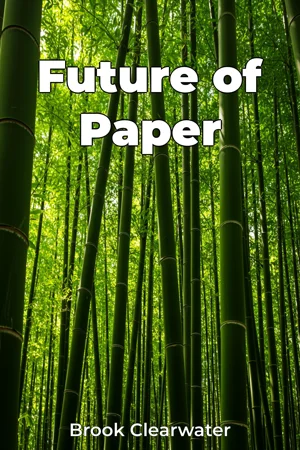
Can paper, a material so deeply ingrained in human civilization, evolve to meet the demands of a sustainable future? "Future of Paper" delves into the pioneering innovations in recyclable and tree-free paper materials that are poised to reshape our relationship with this ubiquitous substance and significantly reduce its environmental footprint. This book addresses the urgent need for sustainable alternatives in the paper industry, a sector historically associated with deforestation and significant environmental impact. Understanding the complexities of paper production, its environmental consequences, and the potential of new materials is essential for informed decision-making in a world striving for ecological balance. This book provides a comprehensive analysis of three interconnected themes: the limitations of traditional wood-pulp paper production, the emergence of recyclable paper technologies, and the revolutionary potential of tree-free paper alternatives. We will explore the historical context of paper manufacturing, tracing its evolution from ancient techniques to modern industrial processes and highlighting the escalating environmental costs associated with conventional practices. The central argument of "Future of Paper" posits that a transition to recyclable and tree-free paper materials is not only environmentally imperative but also technologically feasible and economically viable, offering a pathway towards a sustainable paper industry. The book is structured to provide a clear and logical progression of ideas. It begins by outlining the environmental impact of traditional paper production, including deforestation, water pollution, and greenhouse gas emissions. Following this, it investigates the advancements in recyclable paper technologies, examining the efficiency of current recycling processes, the challenges of deinking and fiber degradation, and the potential for closed-loop systems. The core of the book is dedicated to exploring a diverse range of tree-free paper alternatives, including agricultural residues (such as wheat straw and sugarcane bagasse), bamboo, hemp, and innovative materials like seaweed and recycled textiles. Each alternative is analyzed in terms of its environmental benefits, production processes, economic feasibility, and potential applications. Culminating this analysis, the book explores the latest research and development in sustainable paper technologies, analyzes case studies of successful implementations, and proposes policy recommendations to accelerate the adoption of eco-friendly paper solutions. "Future of Paper" draws upon a wide array of sources, including scientific research papers, industry reports, government publications, and case studies of companies at the forefront of sustainable paper innovation. Data on deforestation rates, carbon emissions, water usage, and the life cycle assessments of different paper products will be presented to support the arguments. The book connects to several interdisciplinary fields, including environmental science, materials science, and economics. By integrating these perspectives, "Future of Paper" provides a holistic understanding of the challenges and opportunities in the transition to sustainable paper materials. This book offers a unique perspective by presenting a comprehensive overview of both recyclable and tree-free paper options, accompanied by an objective assessment of their respective strengths and limitations. Written in an accessible, fact-based style, "Future of Paper" is intended for a broad audience, including environmental scientists, policymakers, industry professionals, students, and anyone interested in sustainable practices. It provides the necessary information to understand the paper industry's environmental challenges and empowers readers to advocate for and implement sustainable solutions. While this book aims to provide a broad overview of sustainable paper alternatives, it acknowledges the limitations of focusing primarily on technological solutions and the need for complementary approaches, such as reducing overall paper consumption. The information in "Future of Paper" can be applied in various real-world contexts, from informing consumer choices to guiding corporate sustainability strategies and shaping government regulations. The book addresses the ongoing debates surrounding the sustainability of different paper products and provides a framework for evaluating the environmental claims made by manufacturers. By providing a balanced and informed perspective, "Future of Paper" aims to contribute to a more sustainable and environmentally responsible paper industry.
Can paper, a material so deeply ingrained in human civilization, evolve to meet the demands of a sustainable future? "Future of Paper" delves into the pioneering innovations in recyclable and tree-free paper materials that are poised to reshape our relationship with this ubiquitous substance and significantly reduce its environmental footprint. This book addresses the urgent need for sustainable alternatives in the paper industry, a sector historically associated with deforestation and significant environmental impact. Understanding the complexities of paper production, its environmental consequences, and the potential of new materials is essential for informed decision-making in a world striving for ecological balance. This book provides a comprehensive analysis of three interconnected themes: the limitations of traditional wood-pulp paper production, the emergence of recyclable paper technologies, and the revolutionary potential of tree-free paper alternatives. We will explore the historical context of paper manufacturing, tracing its evolution from ancient techniques to modern industrial processes and highlighting the escalating environmental costs associated with conventional practices. The central argument of "Future of Paper" posits that a transition to recyclable and tree-free paper materials is not only environmentally imperative but also technologically feasible and economically viable, offering a pathway towards a sustainable paper industry. The book is structured to provide a clear and logical progression of ideas. It begins by outlining the environmental impact of traditional paper production, including deforestation, water pollution, and greenhouse gas emissions. Following this, it investigates the advancements in recyclable paper technologies, examining the efficiency of current recycling processes, the challenges of deinking and fiber degradation, and the potential for closed-loop systems. The core of the book is dedicated to exploring a diverse range of tree-free paper alternatives, including agricultural residues (such as wheat straw and sugarcane bagasse), bamboo, hemp, and innovative materials like seaweed and recycled textiles. Each alternative is analyzed in terms of its environmental benefits, production processes, economic feasibility, and potential applications. Culminating this analysis, the book explores the latest research and development in sustainable paper technologies, analyzes case studies of successful implementations, and proposes policy recommendations to accelerate the adoption of eco-friendly paper solutions. "Future of Paper" draws upon a wide array of sources, including scientific research papers, industry reports, government publications, and case studies of companies at the forefront of sustainable paper innovation. Data on deforestation rates, carbon emissions, water usage, and the life cycle assessments of different paper products will be presented to support the arguments. The book connects to several interdisciplinary fields, including environmental science, materials science, and economics. By integrating these perspectives, "Future of Paper" provides a holistic understanding of the challenges and opportunities in the transition to sustainable paper materials. This book offers a unique perspective by presenting a comprehensive overview of both recyclable and tree-free paper options, accompanied by an objective assessment of their respective strengths and limitations. Written in an accessible, fact-based style, "Future of Paper" is intended for a broad audience, including environmental scientists, policymakers, industry professionals, students, and anyone interested in sustainable practices. It provides the necessary information to understand the paper industry's environmental challenges and empowers readers to advocate for and implement sustainable solutions. While this book aims to provide a broad overview of sustainable paper alternatives, it acknowledges the limitations of focusing primarily on technological solutions and the need for complementary approaches, such as reducing overall paper consumption. The information in "Future of Paper" can be applied in various real-world contexts, from informing consumer choices to guiding corporate sustainability strategies and shaping government regulations. The book addresses the ongoing debates surrounding the sustainability of different paper products and provides a framework for evaluating the environmental claims made by manufacturers. By providing a balanced and informed perspective, "Future of Paper" aims to contribute to a more sustainable and environmentally responsible paper industry.
"Future of Paper" explores the pivotal shift toward sustainable practices within the paper industry, addressing the urgent need for alternatives to traditional wood-pulp paper. With deforestation and environmental impact being major concerns, the book highlights innovations in recyclable and tree-free paper materials. For instance, the book examines how agricultural residues like wheat straw and sugarcane bagasse can be utilized, presenting viable options beyond conventional methods. The book begins by detailing the environmental consequences of traditional paper production. It then progresses to analyzing advancements in recycling technologies, including the challenges of deinking and fiber degradation. A significant portion of the book is dedicated to exploring various tree-free alternatives like bamboo and hemp paper, assessing their environmental benefits, production processes, and economic feasibility. By providing a balanced overview, "Future of Paper" equips readers with the knowledge to understand and advocate for sustainable solutions.
Book Details
ISBN
9788233996642
Publisher
Publifye AS
Your Licenses
You don't own any licenses for this book
Purchase a license below to unlock this book and download the EPUB.
Purchase License
Select a tier to unlock this book
Need bulk licensing?
Contact us for enterprise agreements.