
About This Book
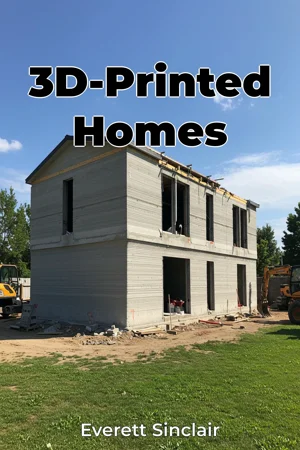
Can a machine truly build a home? "3D-Printed Homes" delves into the transformative potential of additive manufacturing in the construction industry, exploring how this nascent technology is poised to reshape housing markets with methods promising to be faster, cheaper, and more sustainable than traditional building practices. This book examines the core principles, technical challenges, and real-world implementations of 3D-printed construction, offering a comprehensive overview for anyone interested in the future of housing. The central argument of "3D-Printed Homes" is that while 3D printing offers compelling solutions to global housing shortages and environmental concerns, its widespread adoption hinges on overcoming technological limitations, regulatory hurdles, and societal acceptance. This argument is crucial because it frames 3D printing not as a futuristic fantasy but as a practical technology requiring careful consideration and strategic development. This book unfolds by first introducing the fundamental concepts of 3D printing, specifically focusing on concrete printing techniques and the materials science involved. We explore the various types of 3D printers used in construction, highlighting their capabilities and limitations in terms of scale, material compatibility, and environmental control. The initial chapters provide the necessary technical background for understanding the subsequent discussions on design, engineering, and implementation. The book then develops its argument by examining case studies of 3D-printed homes and communities around the world. These examples showcase the range of architectural styles, construction methods, and materials being used, while also addressing the practical challenges encountered in real-world projects, such as structural integrity, weather resistance, and code compliance. A significant portion is dedicated to analyzing the cost-effectiveness and environmental impact of 3D-printed construction compared to conventional methods, using lifecycle assessments and economic models to support its claims. Furthermore, "3D-Printed Homes" explores the interdisciplinary connections between 3D printing and fields such as sustainable architecture, materials engineering, and urban planning. By integrating insights from these diverse areas, the book offers a holistic perspective on the potential of 3D printing to create more resilient, affordable, and environmentally friendly housing solutions. The book also addresses pertinent controversies, such as the displacement of traditional construction workers and the potential for regulatory capture by established industry players. The book’s unique approach lies in its balanced assessment of the technology’s potential and limitations, backed by empirical evidence and data-driven analysis. It adopts a pragmatic, informative tone, presenting complex technical information in an accessible manner for a broad audience, including architects, engineers, policymakers, and anyone curious about the future of construction. The target audience includes architects seeking innovative design options, engineers interested in novel construction techniques, policymakers grappling with housing crises, and students exploring sustainable building practices. It serves as a valuable resource for understanding the current state of 3D-printed construction and its potential to transform the built environment. In line with the conventions of architecture and technology writing, the book includes detailed diagrams, photographs, and technical specifications to illustrate key concepts and projects. The scope is intentionally limited to the application of 3D printing in residential construction, allowing for a focused and in-depth analysis of this specific area. The real-world applications discussed range from rapid disaster relief housing to customizable, affordable homes for low-income communities. The book concludes by outlining the steps needed to overcome the remaining challenges and unlock the full potential of 3D-printed homes, advocating for increased research, standardization of materials and processes, and supportive regulatory frameworks. "3D-Printed Homes" provides a crucial perspective on a technology that is already changing the face of architecture and promises to build a more sustainable and equitable future.
Can a machine truly build a home? "3D-Printed Homes" delves into the transformative potential of additive manufacturing in the construction industry, exploring how this nascent technology is poised to reshape housing markets with methods promising to be faster, cheaper, and more sustainable than traditional building practices. This book examines the core principles, technical challenges, and real-world implementations of 3D-printed construction, offering a comprehensive overview for anyone interested in the future of housing. The central argument of "3D-Printed Homes" is that while 3D printing offers compelling solutions to global housing shortages and environmental concerns, its widespread adoption hinges on overcoming technological limitations, regulatory hurdles, and societal acceptance. This argument is crucial because it frames 3D printing not as a futuristic fantasy but as a practical technology requiring careful consideration and strategic development. This book unfolds by first introducing the fundamental concepts of 3D printing, specifically focusing on concrete printing techniques and the materials science involved. We explore the various types of 3D printers used in construction, highlighting their capabilities and limitations in terms of scale, material compatibility, and environmental control. The initial chapters provide the necessary technical background for understanding the subsequent discussions on design, engineering, and implementation. The book then develops its argument by examining case studies of 3D-printed homes and communities around the world. These examples showcase the range of architectural styles, construction methods, and materials being used, while also addressing the practical challenges encountered in real-world projects, such as structural integrity, weather resistance, and code compliance. A significant portion is dedicated to analyzing the cost-effectiveness and environmental impact of 3D-printed construction compared to conventional methods, using lifecycle assessments and economic models to support its claims. Furthermore, "3D-Printed Homes" explores the interdisciplinary connections between 3D printing and fields such as sustainable architecture, materials engineering, and urban planning. By integrating insights from these diverse areas, the book offers a holistic perspective on the potential of 3D printing to create more resilient, affordable, and environmentally friendly housing solutions. The book also addresses pertinent controversies, such as the displacement of traditional construction workers and the potential for regulatory capture by established industry players. The book’s unique approach lies in its balanced assessment of the technology’s potential and limitations, backed by empirical evidence and data-driven analysis. It adopts a pragmatic, informative tone, presenting complex technical information in an accessible manner for a broad audience, including architects, engineers, policymakers, and anyone curious about the future of construction. The target audience includes architects seeking innovative design options, engineers interested in novel construction techniques, policymakers grappling with housing crises, and students exploring sustainable building practices. It serves as a valuable resource for understanding the current state of 3D-printed construction and its potential to transform the built environment. In line with the conventions of architecture and technology writing, the book includes detailed diagrams, photographs, and technical specifications to illustrate key concepts and projects. The scope is intentionally limited to the application of 3D printing in residential construction, allowing for a focused and in-depth analysis of this specific area. The real-world applications discussed range from rapid disaster relief housing to customizable, affordable homes for low-income communities. The book concludes by outlining the steps needed to overcome the remaining challenges and unlock the full potential of 3D-printed homes, advocating for increased research, standardization of materials and processes, and supportive regulatory frameworks. "3D-Printed Homes" provides a crucial perspective on a technology that is already changing the face of architecture and promises to build a more sustainable and equitable future.
"3D-Printed Homes" explores the revolutionary potential of 3D printing in residential construction, examining its promise to deliver faster, cheaper, and more sustainable housing solutions. The book dives into the core principles of additive manufacturing, specifically concrete printing, and analyzes real-world case studies of 3D-printed homes globally. One intriguing fact is the technology's ability to rapidly deploy housing in disaster-stricken areas. It also addresses the use of lifecycle assessments to compare the environmental impact against traditional methods. This book uniquely balances the technology’s potential with its limitations, using data-driven analysis to present complex information accessibly. It unfolds by first introducing the fundamental concepts, then progresses to case studies and analysis of cost-effectiveness and environmental impact. It further explores the interdisciplinary connections with sustainable architecture and materials engineering. Ultimately, the book advocates for increased research and standardization to unlock the full potential of 3D-printed construction and address the global need for affordable housing.
Book Details
ISBN
9788233996567
Publisher
Publifye AS
Your Licenses
You don't own any licenses for this book
Purchase a license below to unlock this book and download the EPUB.
Purchase License
Select a tier to unlock this book
Need bulk licensing?
Contact us for enterprise agreements.