
About This Book
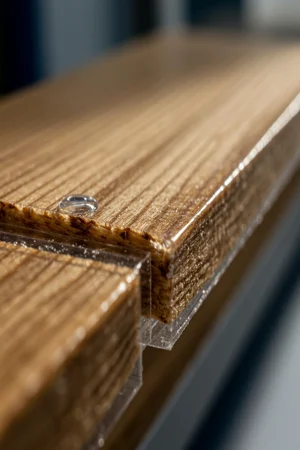
Imagine a world where buildings are constructed from transparent wood, stronger than glass and capable of revolutionizing architecture and material science. This book, *Transparent Wood*, delves into the groundbreaking science and technological advancements that are making this vision a reality. We explore the creation, properties, applications, and potential impact of transparent wood, a material poised to reshape our understanding of sustainable construction and advanced materials. This exploration is significant because it addresses the limitations of current building materials. Glass, while transparent, is brittle and energy-intensive to produce. Steel and concrete contribute heavily to carbon emissions. Transparent wood offers a sustainable, strong, and potentially more energy-efficient alternative. Our journey begins with an introduction to the fundamental principles of wood anatomy and the physics of transparency. Understanding the cellular structure of wood and how light interacts with it is crucial before we can grasp the revolutionary processes used to render it transparent. This involves removing lignin, the component that gives wood its color and structural rigidity, and replacing it with a polymer that allows light to pass through. We then delve into the methods of delignification, detailing both chemical and emerging bio-based techniques. This section examines the careful balance required to remove lignin without compromising the wood's structural integrity. We present comprehensive data from material science testing, showcasing the enhanced strength and durability of transparent wood compared to traditional wood, glass, and even some plastics. The central argument of *Transparent Wood* is that this bio-based composite material represents a viable and potentially superior alternative to conventional materials in various applications, offering a blend of sustainability, strength, and unique optical properties. This claim is supported by extensive research and experimental data meticulously compiled and analyzed throughout the book. The book is structured to guide the reader through the evolution of transparent wood technology. First, we introduce the basic concepts of wood science and the principles of transparency. Second, we explore in detail the processes involved in creating transparent wood, examining different delignification methods, polymer impregnation techniques, and surface treatments. Third, we present a thorough analysis of the mechanical, optical, and thermal properties of transparent wood, comparing it to other materials and highlighting its advantages. Fourth, we discuss the diverse applications of transparent wood, from architectural design and construction to solar cells and packaging. Finally, we address the environmental impact and sustainability of transparent wood production, considering its lifecycle analysis and potential for large-scale implementation. The evidence presented is drawn from a variety of sources, including peer-reviewed scientific publications, experimental data from material testing labs, and case studies of pilot projects using transparent wood. We also incorporate insights from leading researchers and engineers in the field, providing a comprehensive and authoritative account of the current state of the technology. The interdisciplinary nature of transparent wood connects it to fields such as forestry, chemistry, materials science, engineering, architecture, and sustainable development. Its development and adoption will require collaborative efforts across these fields, fostering innovation and addressing complex challenges. Our approach is unique in its comprehensive coverage of the topic, blending scientific rigor with practical applications and a focus on sustainability. The book is written in an accessible style, suitable for a broad audience with an interest in science, technology, and the environment. The target audience includes students, researchers, engineers, architects, designers, policymakers, and anyone curious about the future of materials. This book is valuable to them because it provides a comprehensive overview of a rapidly developing field with the potential to transform various industries. As a work of technology and science, *Transparent Wood* presents factual information, experimental results, and objective analyses. The scope of the book encompasses the science, technology, applications, sustainability, and economics of transparent wood. However, we acknowledge that the technology is still relatively new, and further research is needed to optimize production methods, reduce costs, and ensure long-term durability. Real-world applications of transparent wood include windows, facades, structural components, solar cell substrates, and packaging materials. While transparent wood holds immense promise, there are ongoing debates regarding the scalability of production, the long-term environmental impact, and the cost-effectiveness compared to existing materials. These debates are addressed in the book, providing a balanced perspective on the challenges and opportunities associated with this innovative material.
Imagine a world where buildings are constructed from transparent wood, stronger than glass and capable of revolutionizing architecture and material science. This book, *Transparent Wood*, delves into the groundbreaking science and technological advancements that are making this vision a reality. We explore the creation, properties, applications, and potential impact of transparent wood, a material poised to reshape our understanding of sustainable construction and advanced materials. This exploration is significant because it addresses the limitations of current building materials. Glass, while transparent, is brittle and energy-intensive to produce. Steel and concrete contribute heavily to carbon emissions. Transparent wood offers a sustainable, strong, and potentially more energy-efficient alternative. Our journey begins with an introduction to the fundamental principles of wood anatomy and the physics of transparency. Understanding the cellular structure of wood and how light interacts with it is crucial before we can grasp the revolutionary processes used to render it transparent. This involves removing lignin, the component that gives wood its color and structural rigidity, and replacing it with a polymer that allows light to pass through. We then delve into the methods of delignification, detailing both chemical and emerging bio-based techniques. This section examines the careful balance required to remove lignin without compromising the wood's structural integrity. We present comprehensive data from material science testing, showcasing the enhanced strength and durability of transparent wood compared to traditional wood, glass, and even some plastics. The central argument of *Transparent Wood* is that this bio-based composite material represents a viable and potentially superior alternative to conventional materials in various applications, offering a blend of sustainability, strength, and unique optical properties. This claim is supported by extensive research and experimental data meticulously compiled and analyzed throughout the book. The book is structured to guide the reader through the evolution of transparent wood technology. First, we introduce the basic concepts of wood science and the principles of transparency. Second, we explore in detail the processes involved in creating transparent wood, examining different delignification methods, polymer impregnation techniques, and surface treatments. Third, we present a thorough analysis of the mechanical, optical, and thermal properties of transparent wood, comparing it to other materials and highlighting its advantages. Fourth, we discuss the diverse applications of transparent wood, from architectural design and construction to solar cells and packaging. Finally, we address the environmental impact and sustainability of transparent wood production, considering its lifecycle analysis and potential for large-scale implementation. The evidence presented is drawn from a variety of sources, including peer-reviewed scientific publications, experimental data from material testing labs, and case studies of pilot projects using transparent wood. We also incorporate insights from leading researchers and engineers in the field, providing a comprehensive and authoritative account of the current state of the technology. The interdisciplinary nature of transparent wood connects it to fields such as forestry, chemistry, materials science, engineering, architecture, and sustainable development. Its development and adoption will require collaborative efforts across these fields, fostering innovation and addressing complex challenges. Our approach is unique in its comprehensive coverage of the topic, blending scientific rigor with practical applications and a focus on sustainability. The book is written in an accessible style, suitable for a broad audience with an interest in science, technology, and the environment. The target audience includes students, researchers, engineers, architects, designers, policymakers, and anyone curious about the future of materials. This book is valuable to them because it provides a comprehensive overview of a rapidly developing field with the potential to transform various industries. As a work of technology and science, *Transparent Wood* presents factual information, experimental results, and objective analyses. The scope of the book encompasses the science, technology, applications, sustainability, and economics of transparent wood. However, we acknowledge that the technology is still relatively new, and further research is needed to optimize production methods, reduce costs, and ensure long-term durability. Real-world applications of transparent wood include windows, facades, structural components, solar cell substrates, and packaging materials. While transparent wood holds immense promise, there are ongoing debates regarding the scalability of production, the long-term environmental impact, and the cost-effectiveness compared to existing materials. These debates are addressed in the book, providing a balanced perspective on the challenges and opportunities associated with this innovative material.
*Transparent Wood* explores the revolutionary potential of a novel bio-based composite, poised to transform sustainable construction and various advanced material applications. This technology addresses the limitations of conventional materials like glass and steel, which are either brittle or contribute significantly to carbon emissions. The book reveals how removing lignin, the substance that gives wood its color, and replacing it with polymers can create a material stronger than traditional wood while allowing light to pass through. The book details various methods of delignification, including chemical and emerging bio-based techniques, to enhance the strength and durability of the wood. It meticulously presents data from material science testing, showcasing the enhanced properties of transparent wood compared to conventional materials. Structured to guide the reader through the evolution of this exciting technology, the book progresses from the basic concepts of wood science and transparency principles to the diverse applications of transparent wood in architecture, solar cells, and sustainable development.
Book Details
ISBN
9788233996543
Publisher
Publifye AS
Your Licenses
You don't own any licenses for this book
Purchase a license below to unlock this book and download the EPUB.
Purchase License
Select a tier to unlock this book
Need bulk licensing?
Contact us for enterprise agreements.