
About This Book
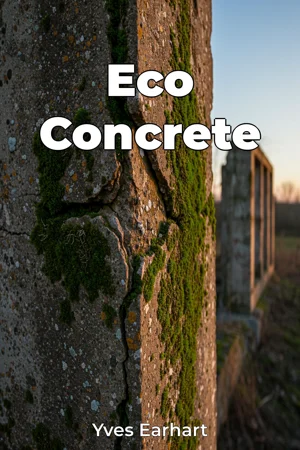
Is concrete, the very foundation of our modern infrastructure, also a significant contributor to its potential collapse? "Eco Concrete" delves into this critical question, exploring the burgeoning field of sustainable concrete alternatives designed to mitigate the substantial environmental impact of traditional concrete production while simultaneously enhancing its durability and longevity. This book examines the technology and environmental consequences of our reliance on conventional concrete, presents viable alternative materials and methodologies, and assesses their potential for widespread adoption. This book addresses the urgent need to revolutionize concrete production, currently responsible for an estimated 8% of global carbon dioxide emissions. We explore two primary avenues for change. First, the incorporation of supplementary cementitious materials (SCMs) such as fly ash, slag, and silica fume, byproducts from other industrial processes, into concrete mixes. These SCMs not only reduce the amount of carbon-intensive Portland cement required but often improve concrete's strength and resistance to chemical attack. Second, the development of entirely new binder systems that move away from traditional cement chemistry, including geopolymers and magnesium oxide-based concretes. Understanding the science behind traditional concrete and the potential of these alternatives is crucial for engineers, policymakers, and anyone concerned with sustainable development. The book begins by establishing a historical context of concrete usage, from its early Roman applications to its modern ubiquity, highlighting the escalating environmental costs associated with its production. It then introduces the fundamental science of cement hydration and concrete properties to provide a solid baseline for evaluating alternative materials. The core of "Eco Concrete" is divided into chapters dedicated to specific sustainable alternatives. Fly ash concrete, slag concrete, and silica fume concrete are examined in detail, including their production processes, performance characteristics, and environmental benefits. Geopolymers, formed through the alkaline activation of aluminosilicate materials, and magnesium oxide concretes, which offer potential for carbon sequestration, are also explored. Each alternative is analyzed through the lens of lifecycle assessment (LCA), quantifying its environmental footprint from raw material extraction to end-of-life disposal. Support for the book's arguments comes from a comprehensive review of existing research, including laboratory testing data, field studies, and LCA reports. We also incorporate case studies of real-world applications, showcasing the successful implementation of sustainable concrete in various construction projects. Furthermore, the book considers the economic factors influencing the adoption of these alternatives, addressing issues of cost-competitiveness and market availability. "Eco Concrete" draws connections between material science, civil engineering, environmental science, and economics. The book presents a material science perspective on the chemical reactions involved in concrete production and hydration and a civil engineering perspective on the structural performance of concrete in various applications. The environmental science perspective is explored when assessing the environmental impact of concrete production and a review of economic principles is used when discussing viable market alternatives. These interdisciplinary connections enrich our understanding of the challenges and opportunities associated with sustainable concrete. A unique aspect of this book is its focus on the long-term durability of sustainable concrete alternatives. While many studies focus on initial strength and environmental impact, "Eco Concrete" emphasizes the importance of long-term performance, considering factors such as resistance to freeze-thaw cycles, chloride ingress, and alkali-silica reaction. This perspective is crucial for ensuring the long-term viability of sustainable concrete solutions. The book adopts a fact-based, technical approach, presenting information in a clear and accessible manner. The writing style is geared towards students, researchers, engineers, architects, and policymakers seeking a comprehensive understanding of sustainable concrete technologies. It will also appeal to environmentally conscious individuals interested in the built environment. The book is intentionally focused on the technical aspects of sustainable concrete alternatives and their environmental impact. It does not delve into policy debates surrounding carbon pricing or specific regulatory frameworks, although the implications of these policies are briefly discussed. The knowledge presented in this book can be directly applied in the design and construction of more sustainable infrastructure. Engineers can use the information to select appropriate concrete mixes for specific applications, reducing the environmental footprint of their projects. Policymakers can use the book to inform the development of building codes and regulations that promote the use of sustainable materials. While the benefits of sustainable concrete alternatives are generally well-established, some debates remain regarding the optimal mix designs and curing conditions for specific applications. This book addresses these controversies by presenting a balanced overview of the available research and highlighting areas where further investigation is needed.
Is concrete, the very foundation of our modern infrastructure, also a significant contributor to its potential collapse? "Eco Concrete" delves into this critical question, exploring the burgeoning field of sustainable concrete alternatives designed to mitigate the substantial environmental impact of traditional concrete production while simultaneously enhancing its durability and longevity. This book examines the technology and environmental consequences of our reliance on conventional concrete, presents viable alternative materials and methodologies, and assesses their potential for widespread adoption. This book addresses the urgent need to revolutionize concrete production, currently responsible for an estimated 8% of global carbon dioxide emissions. We explore two primary avenues for change. First, the incorporation of supplementary cementitious materials (SCMs) such as fly ash, slag, and silica fume, byproducts from other industrial processes, into concrete mixes. These SCMs not only reduce the amount of carbon-intensive Portland cement required but often improve concrete's strength and resistance to chemical attack. Second, the development of entirely new binder systems that move away from traditional cement chemistry, including geopolymers and magnesium oxide-based concretes. Understanding the science behind traditional concrete and the potential of these alternatives is crucial for engineers, policymakers, and anyone concerned with sustainable development. The book begins by establishing a historical context of concrete usage, from its early Roman applications to its modern ubiquity, highlighting the escalating environmental costs associated with its production. It then introduces the fundamental science of cement hydration and concrete properties to provide a solid baseline for evaluating alternative materials. The core of "Eco Concrete" is divided into chapters dedicated to specific sustainable alternatives. Fly ash concrete, slag concrete, and silica fume concrete are examined in detail, including their production processes, performance characteristics, and environmental benefits. Geopolymers, formed through the alkaline activation of aluminosilicate materials, and magnesium oxide concretes, which offer potential for carbon sequestration, are also explored. Each alternative is analyzed through the lens of lifecycle assessment (LCA), quantifying its environmental footprint from raw material extraction to end-of-life disposal. Support for the book's arguments comes from a comprehensive review of existing research, including laboratory testing data, field studies, and LCA reports. We also incorporate case studies of real-world applications, showcasing the successful implementation of sustainable concrete in various construction projects. Furthermore, the book considers the economic factors influencing the adoption of these alternatives, addressing issues of cost-competitiveness and market availability. "Eco Concrete" draws connections between material science, civil engineering, environmental science, and economics. The book presents a material science perspective on the chemical reactions involved in concrete production and hydration and a civil engineering perspective on the structural performance of concrete in various applications. The environmental science perspective is explored when assessing the environmental impact of concrete production and a review of economic principles is used when discussing viable market alternatives. These interdisciplinary connections enrich our understanding of the challenges and opportunities associated with sustainable concrete. A unique aspect of this book is its focus on the long-term durability of sustainable concrete alternatives. While many studies focus on initial strength and environmental impact, "Eco Concrete" emphasizes the importance of long-term performance, considering factors such as resistance to freeze-thaw cycles, chloride ingress, and alkali-silica reaction. This perspective is crucial for ensuring the long-term viability of sustainable concrete solutions. The book adopts a fact-based, technical approach, presenting information in a clear and accessible manner. The writing style is geared towards students, researchers, engineers, architects, and policymakers seeking a comprehensive understanding of sustainable concrete technologies. It will also appeal to environmentally conscious individuals interested in the built environment. The book is intentionally focused on the technical aspects of sustainable concrete alternatives and their environmental impact. It does not delve into policy debates surrounding carbon pricing or specific regulatory frameworks, although the implications of these policies are briefly discussed. The knowledge presented in this book can be directly applied in the design and construction of more sustainable infrastructure. Engineers can use the information to select appropriate concrete mixes for specific applications, reducing the environmental footprint of their projects. Policymakers can use the book to inform the development of building codes and regulations that promote the use of sustainable materials. While the benefits of sustainable concrete alternatives are generally well-established, some debates remain regarding the optimal mix designs and curing conditions for specific applications. This book addresses these controversies by presenting a balanced overview of the available research and highlighting areas where further investigation is needed.
"Eco Concrete" addresses the critical need for sustainable construction materials by exploring alternatives to traditional concrete. Given concrete production's significant contribution to global carbon dioxide emissions—approximately 8%—the book investigates methods to reduce its environmental impact. It focuses on two primary strategies: integrating supplementary cementitious materials (SCMs) like fly ash and slag, which are byproducts from other industries, and developing entirely new binder systems such as geopolymers and magnesium oxide-based concretes. These alternatives not only lower carbon emissions but can also enhance concrete's strength and durability. The book uniquely emphasizes the long-term durability of these sustainable alternatives, considering factors like resistance to freeze-thaw cycles and chemical attacks, which are vital for ensuring the long-term viability of infrastructure. Through a comprehensive review of research, laboratory data, field studies, and lifecycle assessment (LCA) reports, "Eco Concrete" provides a fact-based technical approach suitable for students, engineers, and policymakers. Beginning with a historical overview and the science of cement hydration, the book dedicates chapters to specific alternatives, progresses through their production processes, and concludes with performance evaluations. The value of this book lies in its interdisciplinary approach, drawing connections between material science, civil engineering, environmental science, and economics. By presenting case studies and economic considerations, "Eco Concrete" aims to bridge the gap between research and practical application, promoting the widespread adoption of sustainable concrete for a more environmentally responsible future.
Book Details
ISBN
9788233996468
Publisher
Publifye AS
Your Licenses
You don't own any licenses for this book
Purchase a license below to unlock this book and download the EPUB.
Purchase License
Select a tier to unlock this book
Need bulk licensing?
Contact us for enterprise agreements.