
About This Book
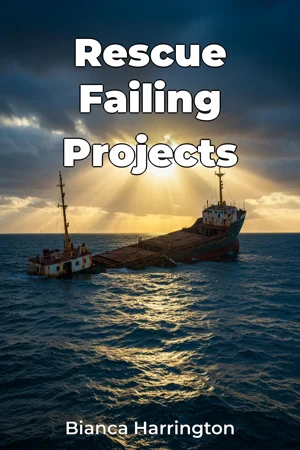
Are your projects consistently missing deadlines, exceeding budgets, or failing to deliver expected results? "Rescue Failing Projects" provides a comprehensive, practical guide designed to equip managers and team leaders with the tools and strategies necessary to diagnose, address, and ultimately revive struggling projects. This book focuses on two critical areas: proactive risk management and reactive intervention techniques, both essential for navigating the turbulent waters of project management. Understanding these principles is crucial because project failure not only leads to financial losses but also damages team morale and organizational reputation. This book argues that most project failures, while seemingly unique, often stem from a limited set of identifiable and correctable root causes. The central thesis is that by implementing a structured approach to early problem detection, coupled with decisive and informed corrective actions, almost any project can be steered back toward success. This argument is vital in today’s fast-paced business environment, where adaptability and resilience are key to maintaining a competitive edge. The book is structured in four parts. Part one introduces the core concepts of project pathology, focusing on identifying the common symptoms and underlying diseases that plague ailing projects. This includes an exploration of inadequate planning, poor communication, scope creep, and resource mismanagement. Part two delves into diagnostic frameworks, offering a step-by-step methodology for assessing the true state of a project. This section provides practical checklists and analytical tools to uncover hidden problems and quantify their impact. Part three focuses on intervention strategies, outlining a range of corrective actions tailored to specific project challenges. This includes techniques for renegotiating scope, reallocating resources, improving communication, and rebuilding team morale. Part four deals with preventative measures, emphasizing the importance of proactive risk management and continuous monitoring to prevent future project failures. The arguments presented are supported by a combination of case studies, empirical research, and best practices drawn from various industries. The book references project management methodologies, such as Agile and Waterfall, and incorporates lessons learned from both successful and unsuccessful project turnarounds. Data from industry reports and academic studies are used to illustrate the prevalence and impact of project failure, providing a solid foundation for the proposed solutions. "Rescue Failing Projects" also connects to other fields, such as organizational behavior, change management, and risk assessment. Understanding team dynamics and leadership styles is crucial for implementing effective intervention strategies. Change management principles are applied to help teams adapt to new processes and overcome resistance to change. Risk assessment techniques are used to proactively identify and mitigate potential project threats. This book distinguishes itself by offering a prescriptive, action-oriented approach to project recovery. Unlike theoretical discussions of project management, this book provides a hands-on guide for diagnosing problems and implementing solutions in real-time. The tone is practical and professional, aiming to provide actionable advice that readers can immediately apply to their own projects. The target audience includes project managers, team leaders, senior executives, and anyone involved in overseeing or participating in projects. This book offers value by providing a systematic framework for turning around failing projects and preventing future failures. As a business management book, it adheres to the genre's focus on providing practical solutions and actionable strategies for improving organizational performance. The scope of this book is limited to the recovery and prevention of failing projects. While it touches on broader project management principles, it does not delve into the intricacies of project initiation or planning in the absence of existing problems. The information presented can be directly applied to real-world projects by following the diagnostic frameworks and intervention strategies outlined in the book. Readers can use the checklists and analytical tools to assess the health of their projects and implement targeted corrective actions. While there is general agreement on the importance of project management best practices, there are ongoing debates about the most effective approaches to project recovery. This book addresses these debates by presenting a balanced perspective that considers various methodologies and adapts them to the specific needs of the project.
Are your projects consistently missing deadlines, exceeding budgets, or failing to deliver expected results? "Rescue Failing Projects" provides a comprehensive, practical guide designed to equip managers and team leaders with the tools and strategies necessary to diagnose, address, and ultimately revive struggling projects. This book focuses on two critical areas: proactive risk management and reactive intervention techniques, both essential for navigating the turbulent waters of project management. Understanding these principles is crucial because project failure not only leads to financial losses but also damages team morale and organizational reputation. This book argues that most project failures, while seemingly unique, often stem from a limited set of identifiable and correctable root causes. The central thesis is that by implementing a structured approach to early problem detection, coupled with decisive and informed corrective actions, almost any project can be steered back toward success. This argument is vital in today’s fast-paced business environment, where adaptability and resilience are key to maintaining a competitive edge. The book is structured in four parts. Part one introduces the core concepts of project pathology, focusing on identifying the common symptoms and underlying diseases that plague ailing projects. This includes an exploration of inadequate planning, poor communication, scope creep, and resource mismanagement. Part two delves into diagnostic frameworks, offering a step-by-step methodology for assessing the true state of a project. This section provides practical checklists and analytical tools to uncover hidden problems and quantify their impact. Part three focuses on intervention strategies, outlining a range of corrective actions tailored to specific project challenges. This includes techniques for renegotiating scope, reallocating resources, improving communication, and rebuilding team morale. Part four deals with preventative measures, emphasizing the importance of proactive risk management and continuous monitoring to prevent future project failures. The arguments presented are supported by a combination of case studies, empirical research, and best practices drawn from various industries. The book references project management methodologies, such as Agile and Waterfall, and incorporates lessons learned from both successful and unsuccessful project turnarounds. Data from industry reports and academic studies are used to illustrate the prevalence and impact of project failure, providing a solid foundation for the proposed solutions. "Rescue Failing Projects" also connects to other fields, such as organizational behavior, change management, and risk assessment. Understanding team dynamics and leadership styles is crucial for implementing effective intervention strategies. Change management principles are applied to help teams adapt to new processes and overcome resistance to change. Risk assessment techniques are used to proactively identify and mitigate potential project threats. This book distinguishes itself by offering a prescriptive, action-oriented approach to project recovery. Unlike theoretical discussions of project management, this book provides a hands-on guide for diagnosing problems and implementing solutions in real-time. The tone is practical and professional, aiming to provide actionable advice that readers can immediately apply to their own projects. The target audience includes project managers, team leaders, senior executives, and anyone involved in overseeing or participating in projects. This book offers value by providing a systematic framework for turning around failing projects and preventing future failures. As a business management book, it adheres to the genre's focus on providing practical solutions and actionable strategies for improving organizational performance. The scope of this book is limited to the recovery and prevention of failing projects. While it touches on broader project management principles, it does not delve into the intricacies of project initiation or planning in the absence of existing problems. The information presented can be directly applied to real-world projects by following the diagnostic frameworks and intervention strategies outlined in the book. Readers can use the checklists and analytical tools to assess the health of their projects and implement targeted corrective actions. While there is general agreement on the importance of project management best practices, there are ongoing debates about the most effective approaches to project recovery. This book addresses these debates by presenting a balanced perspective that considers various methodologies and adapts them to the specific needs of the project.
"Rescue Failing Projects" offers a practical guide to diagnosing and reviving struggling projects, emphasizing that many failures stem from identifiable root causes. The book argues that early problem detection and decisive corrective actions are key to project turnaround. Did you know that project failures can significantly damage team morale and organizational reputation, in addition to financial losses? The book uniquely provides a prescriptive, action-oriented approach, moving beyond theory to offer hands-on advice for real-time problem-solving. The book is structured in four parts, beginning with identifying symptoms and underlying issues such as scope creep and resource mismanagement. It then progresses to diagnostic frameworks, providing checklists and tools for assessment. Next, it outlines intervention strategies for specific challenges, including techniques for improving communication and reallocating resources. Finally, it addresses preventative measures, stressing proactive risk management. This business management approach makes the content directly applicable, offering readers a systematic framework for achieving project success.
Book Details
ISBN
9788233996192
Publisher
Publifye AS
Your Licenses
You don't own any licenses for this book
Purchase a license below to unlock this book and download the EPUB.
Purchase License
Select a tier to unlock this book
Need bulk licensing?
Contact us for enterprise agreements.