
About This Book
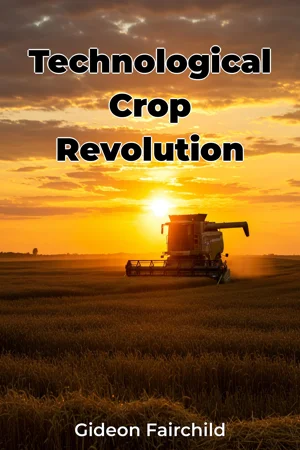
Did the late 20th century witness a quiet revolution in agriculture, one driven not by new crops, but by transformative technologies altering the very methods of harvesting? This book, *Technological Crop Revolution*, delves into the profound impact of technological advancements on crop harvesting between 1970 and 2000, examining the economic and engineering forces that reshaped agricultural practices worldwide. We explore how innovations like combine harvesters, precision agriculture techniques, and improved irrigation systems fundamentally altered the efficiency, scale, and profitability of crop harvesting. Understanding this transformation is crucial for comprehending the modern agricultural landscape and anticipating future technological disruptions. Our analysis centers on three key areas: the engineering innovations themselves, the economic forces driving their adoption, and the resulting impact on agricultural labor and productivity. We provide a historical context beginning with the mechanical advancements of the early 20th century, moving to the electronic and computer-aided technologies that defined the late century. This includes an overview of basic agricultural principles related to crop yields, soil management, and the impact of weather patterns on harvest outcomes, ensuring accessibility for readers from diverse backgrounds. The central argument of *Technological Crop Revolution* posits that technological advancements in crop harvesting during the late 20th century led to significant increases in agricultural productivity and profitability, but also contributed to labor displacement and increased capital investment requirements. This transformation highlights the intricate relationship between technological progress, economic realities, and social consequences in the agricultural sector. Understanding this dynamic is essential for policymakers, agricultural businesses, and anyone interested in the future of food production. The book is structured to methodically examine this revolution. First, we introduce the core technologies, providing detailed explanations of their engineering principles and operational mechanics. Second, we analyze the economic factors that spurred adoption, including government subsidies, market demand, and the increasing consolidation of agricultural operations. Third, we trace the consequences of these changes, examining their effects on rural employment, the environment, and global food supply chains. Finally, we consider the future trajectory of agricultural technology, exploring emerging trends and potential challenges. Our analysis relies heavily on a combination of economic data, engineering specifications, and case studies of specific crops and regions. We draw upon reports from the United States Department of Agriculture (USDA), the Food and Agriculture Organization (FAO) of the United Nations, and academic research in agricultural economics and engineering. A unique element of our research involves analyzing patent data to identify key technological breakthroughs and their diffusion patterns. This book bridges the gap between technology, economics, and agricultural science, offering a multidisciplinary perspective on the mechanization of crop harvesting. It connects to fields such as rural sociology, environmental science, and public policy, examining the social and environmental consequences of technological change and informing policy debates related to agricultural sustainability and labor practices. A key innovation of this book is its integrated analysis of both the technological advancements and socioeconomic impacts, providing a holistic view of agricultural transformation. *Technological Crop Revolution* takes an academic approach, presenting information with clarity and precision, suitable for use in university courses and research. This book is intended for agricultural economists, engineers, policymakers, students, and anyone interested in the intersection of technology and agriculture. It provides valuable insights into the history and future of food production. The scope of the book is limited to the period between 1970 and 2000, focusing on the core technologies that defined this era. While we acknowledge the importance of earlier and later developments, we maintain this narrow focus to provide a detailed and in-depth analysis. The information presented can equip readers with a better understanding of the forces shaping modern agriculture, enabling them to make informed decisions about investments, policies, and sustainable farming practices. While the book acknowledges the benefits of technology in increasing crop yields and efficiency, it also examines the ongoing debate around the social costs of agricultural mechanization, including job displacement and the consolidation of farmland. This book is not an endorsement of any particular technology, but rather an objective analysis of the complex relationship between technological progress and societal well-being in the agricultural sector.
Did the late 20th century witness a quiet revolution in agriculture, one driven not by new crops, but by transformative technologies altering the very methods of harvesting? This book, *Technological Crop Revolution*, delves into the profound impact of technological advancements on crop harvesting between 1970 and 2000, examining the economic and engineering forces that reshaped agricultural practices worldwide. We explore how innovations like combine harvesters, precision agriculture techniques, and improved irrigation systems fundamentally altered the efficiency, scale, and profitability of crop harvesting. Understanding this transformation is crucial for comprehending the modern agricultural landscape and anticipating future technological disruptions. Our analysis centers on three key areas: the engineering innovations themselves, the economic forces driving their adoption, and the resulting impact on agricultural labor and productivity. We provide a historical context beginning with the mechanical advancements of the early 20th century, moving to the electronic and computer-aided technologies that defined the late century. This includes an overview of basic agricultural principles related to crop yields, soil management, and the impact of weather patterns on harvest outcomes, ensuring accessibility for readers from diverse backgrounds. The central argument of *Technological Crop Revolution* posits that technological advancements in crop harvesting during the late 20th century led to significant increases in agricultural productivity and profitability, but also contributed to labor displacement and increased capital investment requirements. This transformation highlights the intricate relationship between technological progress, economic realities, and social consequences in the agricultural sector. Understanding this dynamic is essential for policymakers, agricultural businesses, and anyone interested in the future of food production. The book is structured to methodically examine this revolution. First, we introduce the core technologies, providing detailed explanations of their engineering principles and operational mechanics. Second, we analyze the economic factors that spurred adoption, including government subsidies, market demand, and the increasing consolidation of agricultural operations. Third, we trace the consequences of these changes, examining their effects on rural employment, the environment, and global food supply chains. Finally, we consider the future trajectory of agricultural technology, exploring emerging trends and potential challenges. Our analysis relies heavily on a combination of economic data, engineering specifications, and case studies of specific crops and regions. We draw upon reports from the United States Department of Agriculture (USDA), the Food and Agriculture Organization (FAO) of the United Nations, and academic research in agricultural economics and engineering. A unique element of our research involves analyzing patent data to identify key technological breakthroughs and their diffusion patterns. This book bridges the gap between technology, economics, and agricultural science, offering a multidisciplinary perspective on the mechanization of crop harvesting. It connects to fields such as rural sociology, environmental science, and public policy, examining the social and environmental consequences of technological change and informing policy debates related to agricultural sustainability and labor practices. A key innovation of this book is its integrated analysis of both the technological advancements and socioeconomic impacts, providing a holistic view of agricultural transformation. *Technological Crop Revolution* takes an academic approach, presenting information with clarity and precision, suitable for use in university courses and research. This book is intended for agricultural economists, engineers, policymakers, students, and anyone interested in the intersection of technology and agriculture. It provides valuable insights into the history and future of food production. The scope of the book is limited to the period between 1970 and 2000, focusing on the core technologies that defined this era. While we acknowledge the importance of earlier and later developments, we maintain this narrow focus to provide a detailed and in-depth analysis. The information presented can equip readers with a better understanding of the forces shaping modern agriculture, enabling them to make informed decisions about investments, policies, and sustainable farming practices. While the book acknowledges the benefits of technology in increasing crop yields and efficiency, it also examines the ongoing debate around the social costs of agricultural mechanization, including job displacement and the consolidation of farmland. This book is not an endorsement of any particular technology, but rather an objective analysis of the complex relationship between technological progress and societal well-being in the agricultural sector.
The *Technological Crop Revolution* examines the significant technological advancements in crop harvesting from 1970 to 2000, revealing how these innovations reshaped agricultural practices globally. The book explores the intricate interplay between engineering breakthroughs, economic forces, and their combined impact on agricultural productivity. For example, the adoption of combine harvesters and precision agriculture drastically altered the scale and profitability of crop harvesting. This transformation, while boosting yields, also led to labor displacement and increased capital investment requirements, highlighting the complex relationship between technology and economics in agriculture. The book begins by establishing a historical context, then methodically analyzes core technologies and the economic factors driving their adoption, such as government subsidies and market demands. It then traces the consequences of these changes on rural employment, the environment, and global food supply chains. A key aspect of the book is its multidisciplinary approach, bridging technology, economics, and agricultural science to offer a holistic view of the mechanization of crop harvesting. Through economic data, engineering specifications, and case studies, the book provides valuable insights for policymakers, agricultural businesses, and those interested in the future of food production.
Book Details
ISBN
9788233995843
Publisher
Publifye AS
Your Licenses
You don't own any licenses for this book
Purchase a license below to unlock this book and download the EPUB.
Purchase License
Select a tier to unlock this book
Need bulk licensing?
Contact us for enterprise agreements.