
About This Book
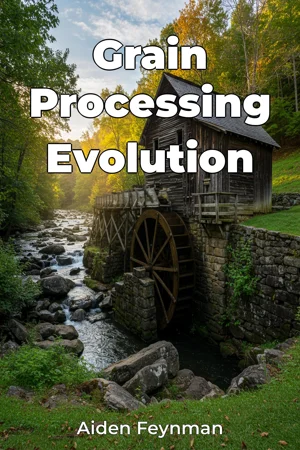
How has something as fundamental as processing grain shaped civilizations and technological advancement? "Grain Processing Evolution" explores this question by tracing the development of grain processing technologies from their rudimentary origins to the sophisticated systems in place today. This book examines not only the mechanical evolution of milling but also its profound impact on food security, societal structures, and industrial practices. The central argument of this book is that advancements in grain processing have consistently acted as catalysts for broader technological and societal progress. Improved milling techniques led to increased food production, enabling population growth and the specialization of labor, which in turn fueled innovation across various sectors. This cycle illustrates a fundamental link between grain processing technology and the advancement of human civilization. The book is structured to provide a comprehensive overview of this evolution. It starts by detailing ancient methods of grain processing, such as hand grinding and the earliest forms of water-powered mills, setting the stage by exploring their limitations and the societal impacts of their introduction. The narrative then progresses to the development of more efficient milling technologies during the medieval and early modern periods, focusing on the advancements in mill design, the rise of commercial milling, and the socio-economic changes these advancements engendered. A significant portion of the book is dedicated to the industrial revolution and the subsequent rise of modern milling techniques, analyzing the impact of steam power, automation, and the development of roller mills on processing capacity and product quality. Finally, the book examines current trends in grain processing, including the integration of digital technologies, concerns about sustainability, and the ongoing quest for improved nutritional value in processed grains. The evidence presented in this book draws upon historical records, archaeological findings, engineering schematics, and contemporary research in food science and technology. Primary source materials, such as historical millwright blueprints and early agricultural treatises, provide concrete examples of technological advancements. Additionally, the book incorporates data from modern nutritional studies and engineering analyses to support its arguments about the impact of grain processing on human health and food security. This book connects to diverse fields such as agricultural history, mechanical engineering, food science, and economic history. Understanding the evolution of grain processing provides insights into the broader history of technology and its impact on human societies. The book's analysis of milling technologies also offers valuable lessons for contemporary engineers and food scientists working to improve the efficiency and sustainability of modern food production systems. Furthermore, its examination of the economic and social impacts of grain processing is relevant to scholars studying agricultural economics and rural sociology. "Grain Processing Evolution" distinguishes itself through its holistic approach, which integrates technological, historical, and societal perspectives. It not only describes the mechanical changes in milling technology, but it also analyzes their broader implications for human civilization. Written in a fact-based style, the book is intended for a broad audience, including students, researchers, historians, engineers, and anyone interested in the history of technology, food production, or agricultural practices. It would be of particular value to those seeking to understand how seemingly simple technological innovations can have profound and far-reaching consequences. The book focuses on key technological developments and their immediate consequences, while acknowledging the vastness of industrial history. While it covers the subject in sufficient depth, it does not delve into every regional variation or minor technological adaptation. The information presented in this book has numerous real-world applications. For example, understanding the historical challenges of grain processing can inform contemporary efforts to improve food security in developing countries. The book's analysis of milling efficiency and sustainability can also guide the development of more environmentally friendly food production systems. "Grain Processing Evolution" addresses these topics in a balanced and objective manner, presenting multiple perspectives and acknowledging the complexities of the issues involved. By tracing the evolution of grain processing technologies, this book aims to provide a comprehensive and insightful account of a fundamental aspect of human history and technological progress.
How has something as fundamental as processing grain shaped civilizations and technological advancement? "Grain Processing Evolution" explores this question by tracing the development of grain processing technologies from their rudimentary origins to the sophisticated systems in place today. This book examines not only the mechanical evolution of milling but also its profound impact on food security, societal structures, and industrial practices. The central argument of this book is that advancements in grain processing have consistently acted as catalysts for broader technological and societal progress. Improved milling techniques led to increased food production, enabling population growth and the specialization of labor, which in turn fueled innovation across various sectors. This cycle illustrates a fundamental link between grain processing technology and the advancement of human civilization. The book is structured to provide a comprehensive overview of this evolution. It starts by detailing ancient methods of grain processing, such as hand grinding and the earliest forms of water-powered mills, setting the stage by exploring their limitations and the societal impacts of their introduction. The narrative then progresses to the development of more efficient milling technologies during the medieval and early modern periods, focusing on the advancements in mill design, the rise of commercial milling, and the socio-economic changes these advancements engendered. A significant portion of the book is dedicated to the industrial revolution and the subsequent rise of modern milling techniques, analyzing the impact of steam power, automation, and the development of roller mills on processing capacity and product quality. Finally, the book examines current trends in grain processing, including the integration of digital technologies, concerns about sustainability, and the ongoing quest for improved nutritional value in processed grains. The evidence presented in this book draws upon historical records, archaeological findings, engineering schematics, and contemporary research in food science and technology. Primary source materials, such as historical millwright blueprints and early agricultural treatises, provide concrete examples of technological advancements. Additionally, the book incorporates data from modern nutritional studies and engineering analyses to support its arguments about the impact of grain processing on human health and food security. This book connects to diverse fields such as agricultural history, mechanical engineering, food science, and economic history. Understanding the evolution of grain processing provides insights into the broader history of technology and its impact on human societies. The book's analysis of milling technologies also offers valuable lessons for contemporary engineers and food scientists working to improve the efficiency and sustainability of modern food production systems. Furthermore, its examination of the economic and social impacts of grain processing is relevant to scholars studying agricultural economics and rural sociology. "Grain Processing Evolution" distinguishes itself through its holistic approach, which integrates technological, historical, and societal perspectives. It not only describes the mechanical changes in milling technology, but it also analyzes their broader implications for human civilization. Written in a fact-based style, the book is intended for a broad audience, including students, researchers, historians, engineers, and anyone interested in the history of technology, food production, or agricultural practices. It would be of particular value to those seeking to understand how seemingly simple technological innovations can have profound and far-reaching consequences. The book focuses on key technological developments and their immediate consequences, while acknowledging the vastness of industrial history. While it covers the subject in sufficient depth, it does not delve into every regional variation or minor technological adaptation. The information presented in this book has numerous real-world applications. For example, understanding the historical challenges of grain processing can inform contemporary efforts to improve food security in developing countries. The book's analysis of milling efficiency and sustainability can also guide the development of more environmentally friendly food production systems. "Grain Processing Evolution" addresses these topics in a balanced and objective manner, presenting multiple perspectives and acknowledging the complexities of the issues involved. By tracing the evolution of grain processing technologies, this book aims to provide a comprehensive and insightful account of a fundamental aspect of human history and technological progress.
"Grain Processing Evolution" explores how milling technology has shaped civilization, demonstrating its catalytic role in technological and societal progress. The book highlights that improved milling techniques spurred population growth and specialized labor, fueling innovation across sectors. One intriguing fact is how early water-powered mills, despite their limitations, significantly altered societal structures. Another insight reveals the profound impact of the industrial revolution, where advancements like steam power and automation dramatically increased processing capacity and product quality. The book takes a holistic approach, integrating technological, historical, and societal perspectives. It begins with ancient methods like hand grinding, progresses through medieval advancements, and culminates in modern digital technologies and sustainability concerns. By examining historical records, archaeological findings, and contemporary research, it connects diverse fields like agricultural history, mechanical engineering, and food science. This comprehensive exploration makes it a valuable resource for students, researchers, and anyone interested in the history of technology and its broad implications.
Book Details
ISBN
9788233995805
Publisher
Publifye AS
Your Licenses
You don't own any licenses for this book
Purchase a license below to unlock this book and download the EPUB.
Purchase License
Select a tier to unlock this book
Need bulk licensing?
Contact us for enterprise agreements.