
About This Book
Can the echoes of steam engines still resonate in the fields of modern agriculture? This book, *Steam Power Agriculture*, explores the transformative impact of steam power on agricultural practices during the early industrial era, revealing how this technology fundamentally reshaped food production and rural life. The central focus is on understanding how steam-driven machinery transitioned agriculture from manual labor and animal power to mechanized systems, thus paving the way for modern agricultural techniques. This transition, marked by ingenuity and innovation, is crucial for understanding the trajectory of food production and its profound social and economic consequences. This book delves into three main topics: the initial inventions and adaptations of steam engines for agricultural use, the socio-economic effects of mechanization on rural communities, and the evolution of agricultural technology through patent records and engineering innovations. Each topic illuminates a different facet of the steam power revolution in agriculture, revealing its complexities and lasting impact. The historical context is rooted in the late 18th and 19th centuries, a period characterized by rapid industrial expansion and technological advancement. A basic understanding of the principles of steam power and the socio-economic conditions of agrarian societies during this time will enhance the reader's appreciation of the material. The central argument posits that the introduction of steam power was not merely a technological upgrade but a catalyst for systemic change in agriculture. It argues that the mechanization of agriculture, driven by steam power, fundamentally restructured rural economies, altered labor dynamics, and increased food production on an unprecedented scale. This argument highlights the interconnectedness of technology, society, and economics. The book is structured to methodically unpack this transformation. The initial chapters introduce the fundamental principles of stationary and mobile steam engines adapted for farming. Following this, the book examines specific innovations, such as steam-powered plows, threshing machines, and reapers, detailing their designs and operational mechanisms. These innovations are brought to life using patent records from the United States and the United Kingdom to showcase the inventive spirit of the era. The middle section analyzes the socio-economic consequences, addressing labor displacement, shifts in land ownership, and the rise of agricultural capitalism. The concluding chapters explore the gradual decline of steam power in favor of internal combustion engines and electricity, reflecting on the long-term legacy of steam-driven mechanization. Supporting this analysis is a wealth of primary source material: patent records, engineering diagrams, agricultural journals, and census data. These resources provide factual evidence of the technological advancements and their measurable impacts on agricultural productivity and rural demographics. This book intersects with several fields, including economic history, engineering history, and rural sociology. The analysis of technological innovation connects to engineering history, while the assessment of socio-economic impacts aligns with economic history and rural sociology. These interdisciplinary connections enrich the book's argument by providing a holistic understanding of steam power's influence. This book stands out by combining technological analysis with socio-economic impact assessment. It uses patent records not just as documentation of inventions but as a window into the iterative process of technological development and its integration into agricultural practices. The book adopts a fact-based, non-fiction approach, presenting information in a clear and accessible style suitable for both academic and general audiences. Complex technological details are explained in plain language, and socio-economic analyses are grounded in empirical evidence. The target audience includes historians of technology, agricultural economists, students of industrial history, and general readers interested in the history of agriculture and technological innovation. The book will be valuable to anyone seeking a deeper understanding of the forces that shaped modern agriculture. As a work of non-fiction, this book emphasizes accuracy, objectivity, and thorough research. All claims are meticulously documented, and interpretations are supported with evidence from credible sources. The scope of the book is limited to the core period of steam-powered agricultural mechanization, primarily focusing on the 19th century in the United States and the United Kingdom. While it acknowledges later developments, it does not delve into the intricacies of 20th-century agricultural technology beyond the decline of steam power. The insights from this book can be applied to understand the ongoing interplay between technological innovation and societal change in contemporary agriculture. By understanding the historical impact of steam power, readers can gain a broader perspective on current debates about automation, sustainability, and the future of food production. The book also touches upon the controversies surrounding the adoption of steam power, including debates about its environmental impact and its role in displacing agricultural labor. By presenting these varying perspectives, the book offers a balanced and nuanced understanding of the steam power revolution in agriculture.
Can the echoes of steam engines still resonate in the fields of modern agriculture? This book, *Steam Power Agriculture*, explores the transformative impact of steam power on agricultural practices during the early industrial era, revealing how this technology fundamentally reshaped food production and rural life. The central focus is on understanding how steam-driven machinery transitioned agriculture from manual labor and animal power to mechanized systems, thus paving the way for modern agricultural techniques. This transition, marked by ingenuity and innovation, is crucial for understanding the trajectory of food production and its profound social and economic consequences. This book delves into three main topics: the initial inventions and adaptations of steam engines for agricultural use, the socio-economic effects of mechanization on rural communities, and the evolution of agricultural technology through patent records and engineering innovations. Each topic illuminates a different facet of the steam power revolution in agriculture, revealing its complexities and lasting impact. The historical context is rooted in the late 18th and 19th centuries, a period characterized by rapid industrial expansion and technological advancement. A basic understanding of the principles of steam power and the socio-economic conditions of agrarian societies during this time will enhance the reader's appreciation of the material. The central argument posits that the introduction of steam power was not merely a technological upgrade but a catalyst for systemic change in agriculture. It argues that the mechanization of agriculture, driven by steam power, fundamentally restructured rural economies, altered labor dynamics, and increased food production on an unprecedented scale. This argument highlights the interconnectedness of technology, society, and economics. The book is structured to methodically unpack this transformation. The initial chapters introduce the fundamental principles of stationary and mobile steam engines adapted for farming. Following this, the book examines specific innovations, such as steam-powered plows, threshing machines, and reapers, detailing their designs and operational mechanisms. These innovations are brought to life using patent records from the United States and the United Kingdom to showcase the inventive spirit of the era. The middle section analyzes the socio-economic consequences, addressing labor displacement, shifts in land ownership, and the rise of agricultural capitalism. The concluding chapters explore the gradual decline of steam power in favor of internal combustion engines and electricity, reflecting on the long-term legacy of steam-driven mechanization. Supporting this analysis is a wealth of primary source material: patent records, engineering diagrams, agricultural journals, and census data. These resources provide factual evidence of the technological advancements and their measurable impacts on agricultural productivity and rural demographics. This book intersects with several fields, including economic history, engineering history, and rural sociology. The analysis of technological innovation connects to engineering history, while the assessment of socio-economic impacts aligns with economic history and rural sociology. These interdisciplinary connections enrich the book's argument by providing a holistic understanding of steam power's influence. This book stands out by combining technological analysis with socio-economic impact assessment. It uses patent records not just as documentation of inventions but as a window into the iterative process of technological development and its integration into agricultural practices. The book adopts a fact-based, non-fiction approach, presenting information in a clear and accessible style suitable for both academic and general audiences. Complex technological details are explained in plain language, and socio-economic analyses are grounded in empirical evidence. The target audience includes historians of technology, agricultural economists, students of industrial history, and general readers interested in the history of agriculture and technological innovation. The book will be valuable to anyone seeking a deeper understanding of the forces that shaped modern agriculture. As a work of non-fiction, this book emphasizes accuracy, objectivity, and thorough research. All claims are meticulously documented, and interpretations are supported with evidence from credible sources. The scope of the book is limited to the core period of steam-powered agricultural mechanization, primarily focusing on the 19th century in the United States and the United Kingdom. While it acknowledges later developments, it does not delve into the intricacies of 20th-century agricultural technology beyond the decline of steam power. The insights from this book can be applied to understand the ongoing interplay between technological innovation and societal change in contemporary agriculture. By understanding the historical impact of steam power, readers can gain a broader perspective on current debates about automation, sustainability, and the future of food production. The book also touches upon the controversies surrounding the adoption of steam power, including debates about its environmental impact and its role in displacing agricultural labor. By presenting these varying perspectives, the book offers a balanced and nuanced understanding of the steam power revolution in agriculture.
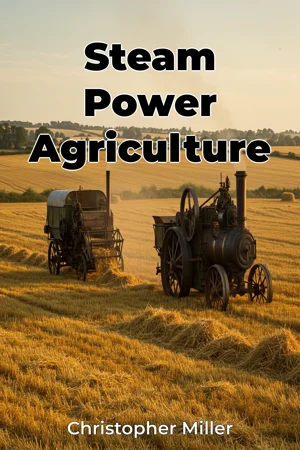
*Steam Power Agriculture* examines the significant role of steam power in transforming agricultural practices during the industrial era. This book explores how steam-driven machinery replaced manual labor and animal power, leading to modern agricultural techniques. It highlights the ingenuity behind innovations like steam-powered plows and threshing machines, which drastically increased food production. The book also sheds light on the socio-economic effects of this mechanization, including shifts in labor dynamics and land ownership. The book uses patent records from the United States and the United Kingdom to showcase the inventive spirit driving agricultural mechanization. It argues that the introduction of steam power was not just a technological upgrade but a catalyst for systemic change, restructuring rural economies. For example, the transition led to both increased yields and debates about environmental impact and labor displacement. Organized methodically, the book begins with the fundamentals of steam engines adapted for farming. It then progresses to specific innovations and their designs, analyzes the consequent socio-economic changes, and concludes with the decline of steam power and its lasting legacy. By combining technological analysis with socio-economic impact assessment, the book offers a holistic understanding of steam power's influence, making it valuable for historians, economists, and anyone interested in the evolution of agriculture.
Book Details
ISBN
9788233995775
Publisher
Publifye AS
Your Licenses
You don't own any licenses for this book
Purchase a license below to unlock this book and download the EPUB.
Purchase License
Select a tier to unlock this book
Need bulk licensing?
Contact us for enterprise agreements.