
About This Book
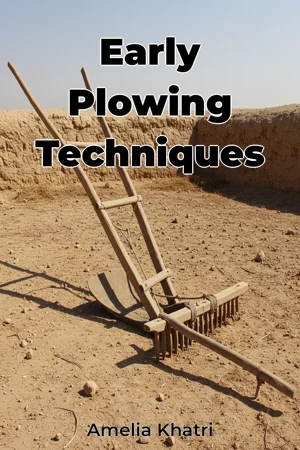
Did the scratch plow truly liberate humanity, or was its adoption a more nuanced story of adaptation and societal transformation? "Early Plowing Techniques" delves into the world of early agrarian societies to explore the traditional plowing methods and equipment that shaped civilizations. This book will illuminate the pivotal role of the plow in the transition from hunter-gatherer lifestyles to settled agriculture, examining its impact on food production, social structures, and technological development. This book focuses on two key concepts. First, the evolution of plowing technology, tracing its development from simple digging sticks to more complex animal-drawn plows. Second, the societal impact of plowing, analyzing the consequences of increased agricultural productivity on population growth, social stratification, and environmental change. These topics are important because they provide insight into the foundations of modern civilization and the complex relationship between technology and society. Understanding the development of early plowing requires a grasp of the broader historical context of the Neolithic Revolution and the subsequent rise of agrarian societies. This book will provide a concise overview of these developments, assuming a basic familiarity with world history on the part of the reader. The central argument of "Early Plowing Techniques" is that the adoption of plowing was not simply a technological advancement, but rather a complex process of adaptation and innovation shaped by environmental factors, social organization, and cultural beliefs. This argument challenges simplistic narratives of technological determinism and emphasizes the agency of early agricultural communities in shaping their own destinies. The book begins by introducing the fundamental concepts of early agriculture and the challenges of tilling the soil with rudimentary tools. It then proceeds with three major sections: (1) the development of early plows in Mesopotamia and Egypt, focusing on archaeological evidence and textual accounts; (2) the spread of plowing technology to other regions of the world, including Europe and Asia, examining the adaptation of plows to different soil types and farming systems; (3) an analysis of the societal consequences of plowing, including its impact on land ownership, labor organization, diet, and settlement patterns. The book culminates with a discussion of the long-term legacies of early plowing techniques and their relevance to contemporary issues of food security and sustainable agriculture. Evidence presented will include archaeological findings of early plows and plowing practices, analysis of ancient texts that describe plowing techniques, and comparative studies of different agricultural systems. Unique data sources include paleoenvironmental records, which provide insights into the environmental conditions that shaped the development of plowing. This book makes interdisciplinary connections to archaeology, anthropology, and environmental history. For instance, archaeological evidence provides direct insights into the tools and techniques used in early agriculture, while anthropological studies shed light on the social and cultural context of plowing. Environmental history helps us understand the ecological consequences of early agricultural practices, such as soil erosion and deforestation. "Early Plowing Techniques" stands out by adopting a holistic approach that integrates technological, social, and environmental perspectives. It presents a comprehensive and nuanced account of early plowing practices, challenging conventional narratives and offering fresh insights into the origins of agriculture. The writing style is academic yet accessible, aiming to engage both scholars and general readers with an interest in history, archaeology, or agricultural technology. The intended audience includes students, researchers, and anyone interested in the history of agriculture, technology, and society. The book would be valuable to those seeking a deeper understanding of the roots of modern civilization and the complex interplay between technology and human development. As a work of historical non-fiction, this book adheres to standards of accuracy, objectivity, and rigorous documentation. The scope of the book is limited to the early history of plowing, primarily focusing on the period from the Neolithic Revolution to the early Iron Age. The book focuses on the historical development and impact of plowing, more than on specific practical advice for modern farming. The information in this book can provide valuable insights for contemporary discussions about food security and sustainable agriculture. By understanding the historical roots of our agricultural systems, we can better address the challenges of feeding a growing global population while minimizing environmental damage. The book addresses debates surrounding the environmental impact of early agriculture, particularly the role of plowing in soil erosion and land degradation. It presents competing perspectives on this issue and offers a balanced assessment of the evidence.
Did the scratch plow truly liberate humanity, or was its adoption a more nuanced story of adaptation and societal transformation? "Early Plowing Techniques" delves into the world of early agrarian societies to explore the traditional plowing methods and equipment that shaped civilizations. This book will illuminate the pivotal role of the plow in the transition from hunter-gatherer lifestyles to settled agriculture, examining its impact on food production, social structures, and technological development. This book focuses on two key concepts. First, the evolution of plowing technology, tracing its development from simple digging sticks to more complex animal-drawn plows. Second, the societal impact of plowing, analyzing the consequences of increased agricultural productivity on population growth, social stratification, and environmental change. These topics are important because they provide insight into the foundations of modern civilization and the complex relationship between technology and society. Understanding the development of early plowing requires a grasp of the broader historical context of the Neolithic Revolution and the subsequent rise of agrarian societies. This book will provide a concise overview of these developments, assuming a basic familiarity with world history on the part of the reader. The central argument of "Early Plowing Techniques" is that the adoption of plowing was not simply a technological advancement, but rather a complex process of adaptation and innovation shaped by environmental factors, social organization, and cultural beliefs. This argument challenges simplistic narratives of technological determinism and emphasizes the agency of early agricultural communities in shaping their own destinies. The book begins by introducing the fundamental concepts of early agriculture and the challenges of tilling the soil with rudimentary tools. It then proceeds with three major sections: (1) the development of early plows in Mesopotamia and Egypt, focusing on archaeological evidence and textual accounts; (2) the spread of plowing technology to other regions of the world, including Europe and Asia, examining the adaptation of plows to different soil types and farming systems; (3) an analysis of the societal consequences of plowing, including its impact on land ownership, labor organization, diet, and settlement patterns. The book culminates with a discussion of the long-term legacies of early plowing techniques and their relevance to contemporary issues of food security and sustainable agriculture. Evidence presented will include archaeological findings of early plows and plowing practices, analysis of ancient texts that describe plowing techniques, and comparative studies of different agricultural systems. Unique data sources include paleoenvironmental records, which provide insights into the environmental conditions that shaped the development of plowing. This book makes interdisciplinary connections to archaeology, anthropology, and environmental history. For instance, archaeological evidence provides direct insights into the tools and techniques used in early agriculture, while anthropological studies shed light on the social and cultural context of plowing. Environmental history helps us understand the ecological consequences of early agricultural practices, such as soil erosion and deforestation. "Early Plowing Techniques" stands out by adopting a holistic approach that integrates technological, social, and environmental perspectives. It presents a comprehensive and nuanced account of early plowing practices, challenging conventional narratives and offering fresh insights into the origins of agriculture. The writing style is academic yet accessible, aiming to engage both scholars and general readers with an interest in history, archaeology, or agricultural technology. The intended audience includes students, researchers, and anyone interested in the history of agriculture, technology, and society. The book would be valuable to those seeking a deeper understanding of the roots of modern civilization and the complex interplay between technology and human development. As a work of historical non-fiction, this book adheres to standards of accuracy, objectivity, and rigorous documentation. The scope of the book is limited to the early history of plowing, primarily focusing on the period from the Neolithic Revolution to the early Iron Age. The book focuses on the historical development and impact of plowing, more than on specific practical advice for modern farming. The information in this book can provide valuable insights for contemporary discussions about food security and sustainable agriculture. By understanding the historical roots of our agricultural systems, we can better address the challenges of feeding a growing global population while minimizing environmental damage. The book addresses debates surrounding the environmental impact of early agriculture, particularly the role of plowing in soil erosion and land degradation. It presents competing perspectives on this issue and offers a balanced assessment of the evidence.
"Early Plowing Techniques" explores how early agrarian societies used plowing methods and equipment, fundamentally changing civilization. It examines the transition from hunter-gatherer lifestyles to settled agriculture, illustrating how plowing influenced food production and societal structures. Consider that early plows, initially simple digging sticks, evolved into complex animal-drawn tools, reflecting significant advancements in agricultural technology. The book challenges the notion of plowing as a straightforward technological advancement, instead framing it as a multifaceted adaptation shaped by the environment, social structures, and cultural beliefs. The book progresses systematically, first introducing early agriculture's basic concepts and challenges. It then delves into the development of early plows in Mesopotamia and Egypt, utilizing archaeological evidence and ancient texts. Furthermore, it investigates the spread of plowing to other regions, such as Europe and Asia, highlighting adaptations to various soil types and farming systems. The book uniquely integrates technological, social, and environmental perspectives to provide a nuanced account of early plowing practices, making it valuable for understanding the roots of modern civilization.
Book Details
ISBN
9788233995751
Publisher
Publifye AS
Your Licenses
You don't own any licenses for this book
Purchase a license below to unlock this book and download the EPUB.
Purchase License
Select a tier to unlock this book
Need bulk licensing?
Contact us for enterprise agreements.