
About This Book
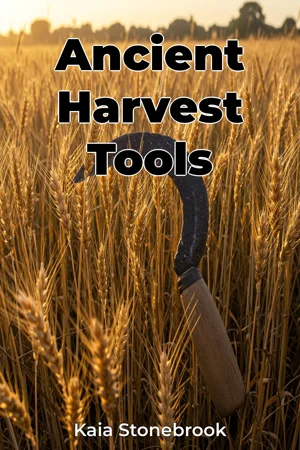
How did humanity transition from nomadic hunter-gatherers to settled agricultural societies, and what role did simple tools play in this profound transformation? This book, "Ancient Harvest Tools," delves into the ingenuity and resourcefulness of early civilizations in their quest to secure a stable food supply through manual crop gathering. We examine the critical period when humans began to cultivate crops and develop the initial implements that made harvesting more efficient, setting the stage for larger populations and the dawn of civilization. The book addresses three main topics: the evolution of harvesting tools across different cultures, the materials and techniques used in their construction, and the impact of these tools on early agricultural societies. These topics are important because they shed light on the technological foundations upon which complex societies were built. Understanding these early innovations provides insights into food security challenges. The narrative unfolds against the backdrop of the Neolithic Revolution, a period of significant social and technological change characterized by the domestication of plants and animals. No prior expertise in archaeology or ancient history is required to understand the concepts presented. We explore how environmental factors, available resources, and cultural practices shaped the design and use of tools, from the earliest flint sickles to more advanced harvesting knives and winnowing devices. The central argument of "Ancient Harvest Tools" is that the development and refinement of manual harvesting tools were not merely incremental improvements, but rather crucial catalysts in the advancement of agriculture and the establishment of settled communities. By analyzing various tool designs and their applications, this book demonstrates how these technologies substantially increased the efficiency and scale of crop production, enabling societies to support larger populations and engage in more complex social and economic activities. The book is structured to provide a comprehensive overview, beginning with an introduction to the fundamental concepts of early agriculture and the importance of harvesting. The initial chapters explore the origins of harvesting tools, focusing on early hand-held implements and the use of natural materials. The subsequent sections examine specific tool types, such as sickles, scythes, and harvesting knives, analyzing their construction, use, and regional variations. We further explore techniques like winnowing and threshing, and the tools employed to perform them. The book culminates with a discussion of the social and economic implications of these tools, including their impact on labor organization, food storage, and trade. The evidence presented in this book draws upon a range of archaeological findings, including excavated tools, agricultural sites, and ancient artwork depicting harvesting activities. We analyze tool designs from various regions, including Mesopotamia, Egypt, and the Indus Valley, to identify commonalities and differences in their construction and use. Furthermore, we incorporate ethnographic studies of traditional farming practices to gain insights into the practical application of these tools and their impact on daily life. "Ancient Harvest Tools" also connects to other fields of study, such as anthropology, environmental science, and material science. By examining the social and cultural contexts in which these tools were used, we gain a deeper understanding of the relationship between technology and society. By analyzing the materials used in tool construction, we learn about the environmental resources available to early civilizations and their impact on the landscape. The book offers a unique perspective by combining archaeological evidence with insights from experimental archaeology, in which researchers recreate and use ancient tools to better understand their capabilities and limitations. This hands-on approach provides a more nuanced understanding of the challenges faced by early farmers and the ingenuity they employed to overcome them. Written in a fact-based, informative style, "Ancient Harvest Tools" is targeted towards readers with an interest in history, archaeology, and the origins of agriculture. It will appeal to history buffs, students, and anyone curious about the technological innovations that shaped early human societies. This book recognizes the conventions of historical non-fiction, thoroughly citing sources and presenting evidence-based arguments. The scope of "Ancient Harvest Tools" is limited to manual harvesting tools used in ancient civilizations, excluding later innovations such as animal-drawn machinery. This focus allows for an in-depth exploration of the technologies that played a crucial role in the early development of agriculture. The information presented can be applied by readers to gain a better understanding of the present day food systems, origins and challenges faced by cultures worldwide. It also gives context to how technology can shape civilizations. Currently, debates exist regarding the precise dating and interpretation of archaeological finds related to early agricultural practices. This book addresses these controversies by presenting multiple perspectives and highlighting the limitations of current evidence. "Ancient Harvest Tools" provides a comprehensive and accessible account of the manual tools that enabled early civilizations to cultivate crops and transform their societies.
How did humanity transition from nomadic hunter-gatherers to settled agricultural societies, and what role did simple tools play in this profound transformation? This book, "Ancient Harvest Tools," delves into the ingenuity and resourcefulness of early civilizations in their quest to secure a stable food supply through manual crop gathering. We examine the critical period when humans began to cultivate crops and develop the initial implements that made harvesting more efficient, setting the stage for larger populations and the dawn of civilization. The book addresses three main topics: the evolution of harvesting tools across different cultures, the materials and techniques used in their construction, and the impact of these tools on early agricultural societies. These topics are important because they shed light on the technological foundations upon which complex societies were built. Understanding these early innovations provides insights into food security challenges. The narrative unfolds against the backdrop of the Neolithic Revolution, a period of significant social and technological change characterized by the domestication of plants and animals. No prior expertise in archaeology or ancient history is required to understand the concepts presented. We explore how environmental factors, available resources, and cultural practices shaped the design and use of tools, from the earliest flint sickles to more advanced harvesting knives and winnowing devices. The central argument of "Ancient Harvest Tools" is that the development and refinement of manual harvesting tools were not merely incremental improvements, but rather crucial catalysts in the advancement of agriculture and the establishment of settled communities. By analyzing various tool designs and their applications, this book demonstrates how these technologies substantially increased the efficiency and scale of crop production, enabling societies to support larger populations and engage in more complex social and economic activities. The book is structured to provide a comprehensive overview, beginning with an introduction to the fundamental concepts of early agriculture and the importance of harvesting. The initial chapters explore the origins of harvesting tools, focusing on early hand-held implements and the use of natural materials. The subsequent sections examine specific tool types, such as sickles, scythes, and harvesting knives, analyzing their construction, use, and regional variations. We further explore techniques like winnowing and threshing, and the tools employed to perform them. The book culminates with a discussion of the social and economic implications of these tools, including their impact on labor organization, food storage, and trade. The evidence presented in this book draws upon a range of archaeological findings, including excavated tools, agricultural sites, and ancient artwork depicting harvesting activities. We analyze tool designs from various regions, including Mesopotamia, Egypt, and the Indus Valley, to identify commonalities and differences in their construction and use. Furthermore, we incorporate ethnographic studies of traditional farming practices to gain insights into the practical application of these tools and their impact on daily life. "Ancient Harvest Tools" also connects to other fields of study, such as anthropology, environmental science, and material science. By examining the social and cultural contexts in which these tools were used, we gain a deeper understanding of the relationship between technology and society. By analyzing the materials used in tool construction, we learn about the environmental resources available to early civilizations and their impact on the landscape. The book offers a unique perspective by combining archaeological evidence with insights from experimental archaeology, in which researchers recreate and use ancient tools to better understand their capabilities and limitations. This hands-on approach provides a more nuanced understanding of the challenges faced by early farmers and the ingenuity they employed to overcome them. Written in a fact-based, informative style, "Ancient Harvest Tools" is targeted towards readers with an interest in history, archaeology, and the origins of agriculture. It will appeal to history buffs, students, and anyone curious about the technological innovations that shaped early human societies. This book recognizes the conventions of historical non-fiction, thoroughly citing sources and presenting evidence-based arguments. The scope of "Ancient Harvest Tools" is limited to manual harvesting tools used in ancient civilizations, excluding later innovations such as animal-drawn machinery. This focus allows for an in-depth exploration of the technologies that played a crucial role in the early development of agriculture. The information presented can be applied by readers to gain a better understanding of the present day food systems, origins and challenges faced by cultures worldwide. It also gives context to how technology can shape civilizations. Currently, debates exist regarding the precise dating and interpretation of archaeological finds related to early agricultural practices. This book addresses these controversies by presenting multiple perspectives and highlighting the limitations of current evidence. "Ancient Harvest Tools" provides a comprehensive and accessible account of the manual tools that enabled early civilizations to cultivate crops and transform their societies.
"Ancient Harvest Tools" explores the pivotal role of early implements in transforming nomadic hunter-gatherers into settled agricultural societies. It highlights how the Neolithic Revolution was propelled by innovations in manual crop gathering, setting the stage for population growth and complex civilizations. Early farmers ingeniously crafted tools from available resources, with the development of flint sickles marking a significant advancement. These tools not only increased efficiency but also facilitated the development of more intricate social and economic structures. The book delves into the evolution of harvesting tools across diverse cultures, examining the materials and techniques employed in their construction. Through archaeological findings and ethnographic studies, the narrative reveals how environmental factors and cultural practices influenced tool design, from winnowing devices to specialized harvesting knives. "Ancient Harvest Tools" emphasizes the importance of these tools in addressing early food security challenges, providing insights into the technological foundations of complex societies. Structured to offer a comprehensive overview, the book progresses from the origins of harvesting tools to their social and economic implications. It analyzes specific tool types and techniques, culminating in a discussion of their impact on labor organization, food storage, and trade. This approach connects archaeology with anthropology, environmental science, and material science, offering a unique perspective on the interplay between technology and society in ancient civilizations.
Book Details
ISBN
9788233995706
Publisher
Publifye AS
Your Licenses
You don't own any licenses for this book
Purchase a license below to unlock this book and download the EPUB.
Purchase License
Select a tier to unlock this book
Need bulk licensing?
Contact us for enterprise agreements.